

Operation Process and Working Principle of High-Temperature Ash Pneumatic Conveying Lines
High-temperature ash pneumatic conveying lines are critical components in industrial facilities that handle hot ash and particulate materials. These systems are designed to transport ash from sources like boilers or incinerators to disposal or processing locations efficiently and safely. The technology employed in such lines ensures reliable material movement while maintaining operational safety and environmental compliance. This article provides an overview of the operation process and working principles of high-temperature ash pneumatic conveying lines, highlighting key aspects that contribute to their effectiveness in industrial applications.
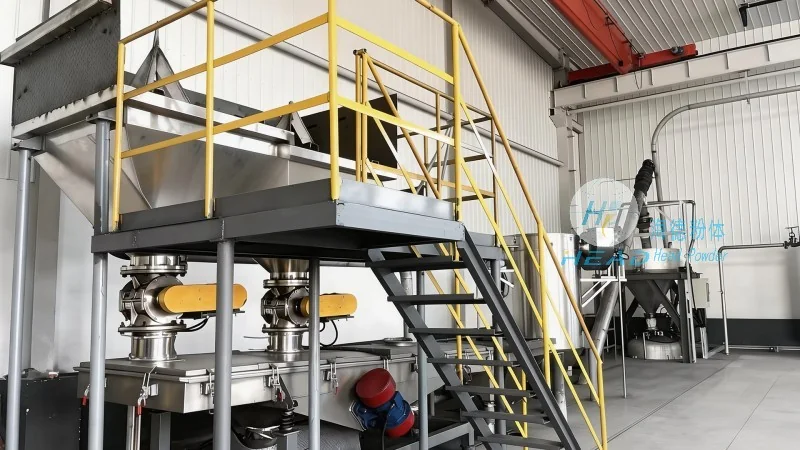
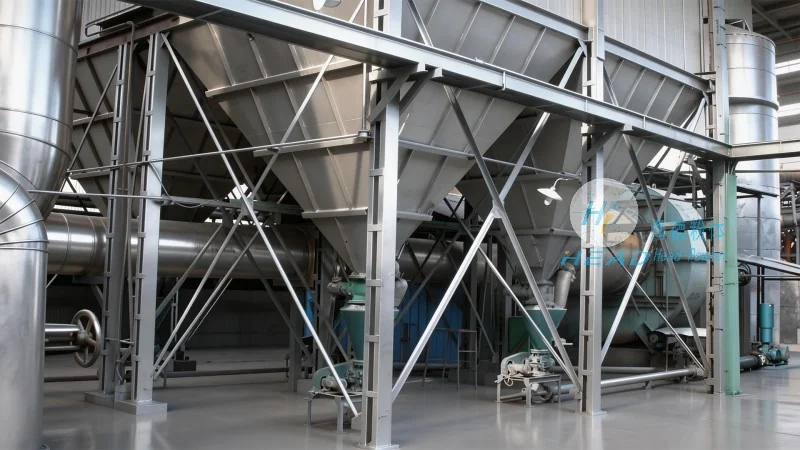
Company Profile: Shandong HeadPowder Engineering Co., Ltd.
HeadPowder, a leading provider in the field of material handling and processing equipment, specializes in the design, manufacturing, and installation of advanced pneumatic conveying systems. With a strong commitment to innovation and quality, the company has established itself as a trusted partner for industries requiring efficient and reliable solutions for handling high-temperature and abrasive materials. HeadPowder's expertise in engineering and manufacturing ensures that their products meet the highest standards of performance and durability, making them suitable for demanding industrial environments. The company's headquarters is located in Shandong, China, where it operates a state-of-the-art facility dedicated to research, development, and production of cutting-edge material handling technologies.
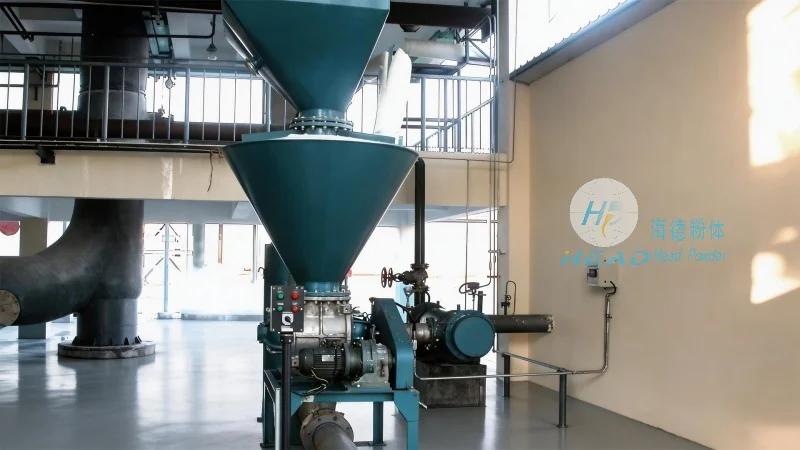
Working Principle of High-Temperature Ash Pneumatic Conveying Lines
The core working principle of high-temperature ash pneumatic conveying lines involves the use of air or gas as the conveying medium to transport ash particles. The system typically consists of a series of components, including a hopper for material storage, a feeder to control the flow of ash, a compressor or blower to generate the necessary air pressure, and a pipeline network that transports the ash to the destination. The process begins with ash being fed from the hopper into the pipeline. The feeder ensures a consistent flow rate, which is crucial for maintaining system efficiency and preventing blockages. As the ash enters the pipeline, it is entrained by the high-velocity air stream generated by the compressor. This air stream carries the ash particles through the pipeline, overcoming the gravitational force and any resistance within the system. The conveying velocity is carefully controlled to ensure that the ash particles remain suspended in the air stream, preventing deposition and ensuring smooth transport. At the destination, the ash is separated from the air stream through a separator, such as a cyclone or filter, and collected for further processing or disposal. The air, now free of ash particles, is then discharged or recirculated back into the system to maintain energy efficiency.
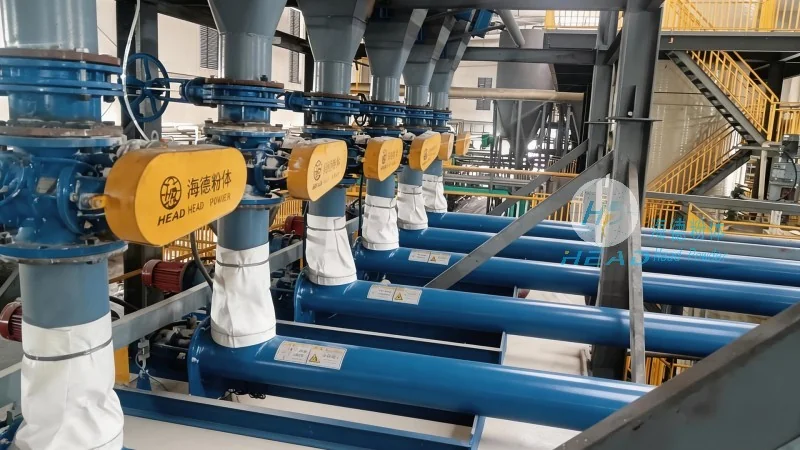
Operation Process of High-Temperature Ash Pneumatic Conveying Lines
The operation process of high-temperature ash pneumatic conveying lines involves several sequential steps that ensure the system functions optimally. The first step is the preparation phase, where the ash is collected from the source and transferred into the hopper. This may involve the use of a conveyor or other material handling equipment to move the ash from the boiler or incinerator to the hopper. The hopper is designed to store the ash and provide a consistent feed to the feeder. The feeder then regulates the flow of ash into the pipeline, ensuring that the material is introduced at a controlled rate. The next step is the generation of the conveying air. The compressor or blower is activated, and the air is pressurized to the required level. The air pressure is typically maintained at a level sufficient to overcome the resistance in the pipeline and to keep the ash particles suspended. As the ash is fed into the pipeline, the air stream carries the particles through the system. The pipeline network may include bends, valves, and other components that direct the flow of ash and air. The system is equipped with sensors and controls to monitor the pressure, flow rate, and temperature, ensuring that the operation remains within safe and efficient parameters. The final step is the discharge of the ash at the destination. The separator separates the ash from the air, and the ash is collected in a container or transported further for disposal or processing. The air, now clean, is either discharged to the atmosphere or recirculated back into the system to minimize energy consumption. Throughout the operation process, regular maintenance and monitoring are essential to ensure the longevity and reliability of the system. This includes checking for wear and tear on components, cleaning the separator, and ensuring that the air pressure and flow rates are maintained at optimal levels.