

Working Principle and Characteristics of Vanadium Oxide Powder Pneumatic Conveying
Vanadium oxide powder, a critical material in various industrial applications, often requires efficient and reliable transportation methods. Pneumatic conveying stands out as a preferred solution for handling such powders due to its ability to transport materials through a pipeline using air or other gas streams. This method offers advantages such as reduced contamination, improved safety, and enhanced process control compared to traditional mechanical conveying systems.
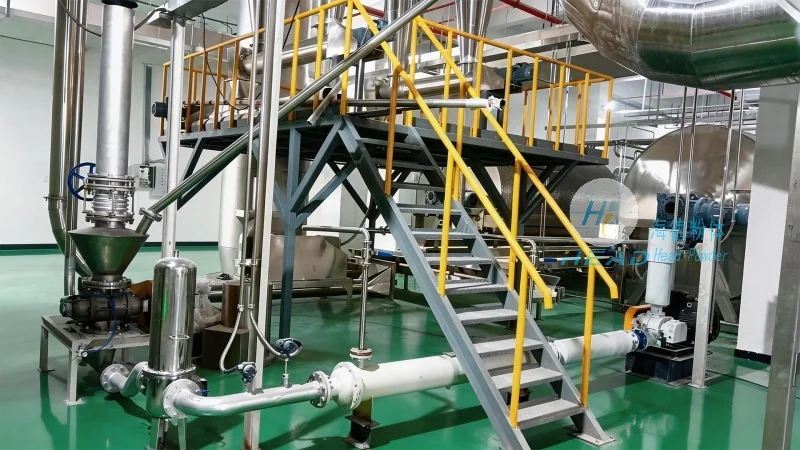
Working Principle of Vanadium Oxide Powder Pneumatic Conveying
The core mechanism of pneumatic conveying for vanadium oxide powder involves the creation of a flow of air or gas through a pipeline. The powder is introduced into the system, typically at a hopper or feeder, and is then entrained by the moving air stream. The air velocity is carefully controlled to ensure that the powder particles are suspended and transported along the pipeline. The process can be categorized into two main types: dilute-phase and dense-phase conveying. Dilute-phase systems operate at higher air velocities, resulting in a more turbulent flow where particles are suspended individually. Dense-phase systems, on the other hand, use lower air velocities and higher powder concentrations, leading to a more stable, plug-like flow. For vanadium oxide powder, the choice between these systems depends on factors like particle size, moisture content, and the required conveying distance. The working principle also involves the use of appropriate equipment such as blowers, filters, and cyclones to manage the air flow and collect the powder at the destination. The entire system is designed to maintain a consistent air-powder ratio, ensuring efficient and continuous operation. The process begins with the powder being fed into the conveying line, where it is mixed with the air stream. The air velocity is maintained above the minimum fluidization velocity of the powder particles to keep them suspended. As the mixture travels through the pipeline, it may encounter various components like bends, expansions, or restrictions, which are designed to minimize pressure losses and maintain the flow stability. At the receiving end, the powder is separated from the air using a filter or cyclone, and the clean air is then discharged or recirculated. The control of air pressure and flow rate is crucial for optimizing the conveying efficiency and preventing issues such as particle degradation or system blockages.
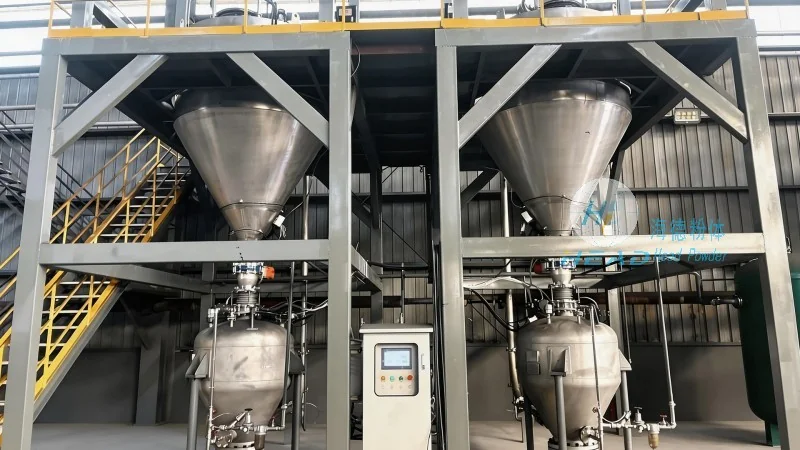
Key Characteristics of Vanadium Oxide Powder Pneumatic Conveying
Several distinct characteristics define the pneumatic conveying of vanadium oxide powder, making it suitable for specific industrial applications. One of the primary advantages is the ability to handle fine or abrasive powders without causing excessive wear on the system components. Vanadium oxide powder often has a high density and can be prone to agglomeration, which can be effectively managed through the controlled air flow. The system also offers flexibility in terms of conveying distance and layout, as the pipeline can be arranged in various configurations to suit the plant layout. Another important characteristic is the reduced risk of dust contamination compared to mechanical conveying, which is essential for maintaining product purity in sensitive applications. The process also allows for integration with other processing steps, such as mixing or blending, by delivering the powder directly to the required location. Additionally, pneumatic conveying systems can be equipped with dust collection and filtration systems to comply with environmental regulations and ensure workplace safety. The characteristics also include the ability to handle varying powder flow rates, from low to high, by adjusting the air pressure and flow. This adaptability makes the system suitable for both small-scale laboratory applications and large-scale industrial operations. The efficiency of the system is further enhanced by the use of energy-efficient blowers and optimized pipeline designs, which minimize energy consumption while maintaining high conveying rates. Overall, the characteristics of vanadium oxide powder pneumatic conveying make it a reliable and efficient method for transporting this critical material in various industrial settings.
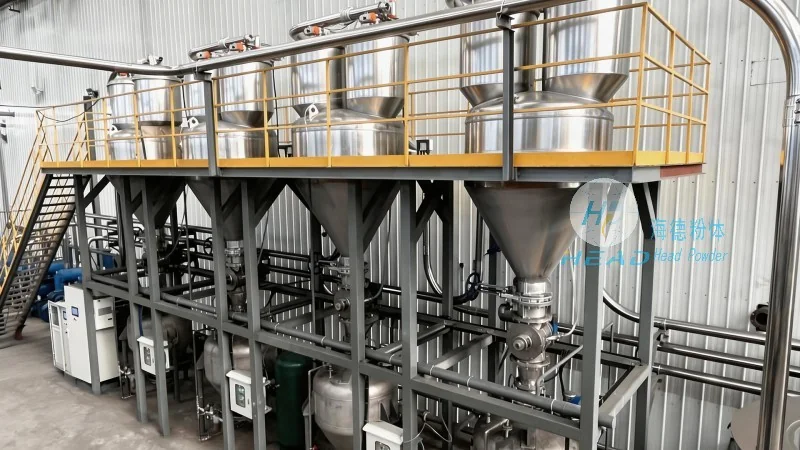
Applications and Benefits in Industrial Settings
Vanadium oxide powder is widely used in industries such as battery manufacturing, catalyst production, and steel production. The pneumatic conveying method is particularly beneficial in these applications due to its ability to handle the material efficiently and maintain its quality. In battery manufacturing, vanadium oxide is used as an electrode material, and the pneumatic conveying system ensures that the powder is delivered to the production line without contamination or degradation. This is crucial for maintaining the performance and lifespan of the batteries. In catalyst production, the powder is used as a component in the catalyst formulation, and the system helps in delivering the powder to the mixing and reaction stages with precision. The benefits of pneumatic conveying in these applications include improved product quality, reduced downtime, and enhanced safety. The system also allows for better process control, as the flow rate and pressure can be monitored and adjusted in real-time. This leads to more consistent product output and reduced waste. Furthermore, the use of pneumatic conveying reduces the need for manual handling of the powder, which minimizes the risk of exposure to dust and other health hazards. The industrial settings where this method is applied often require high throughput and reliability, and the pneumatic conveying system meets these requirements by providing consistent and continuous operation. The benefits also extend to cost savings, as the system reduces the need for additional equipment like conveyors or elevators, and minimizes maintenance costs due to the absence of moving parts in the conveying line. Overall, the applications and benefits of vanadium oxide powder pneumatic conveying highlight its importance in modern industrial processes, where efficiency, quality, and safety are paramount.