

Technical Analysis of Calcium Oxide Dry Powder Pneumatic Conveying Systems: A Comparison of Positive
HeadPowder, a leading engineering firm based in Shandong, China, specializes in the design and implementation of advanced dry powder pneumatic conveying systems. This article provides a technical analysis of such systems, specifically focusing on calcium oxide, and compares the two primary conveying modes: positive pressure and negative pressure.
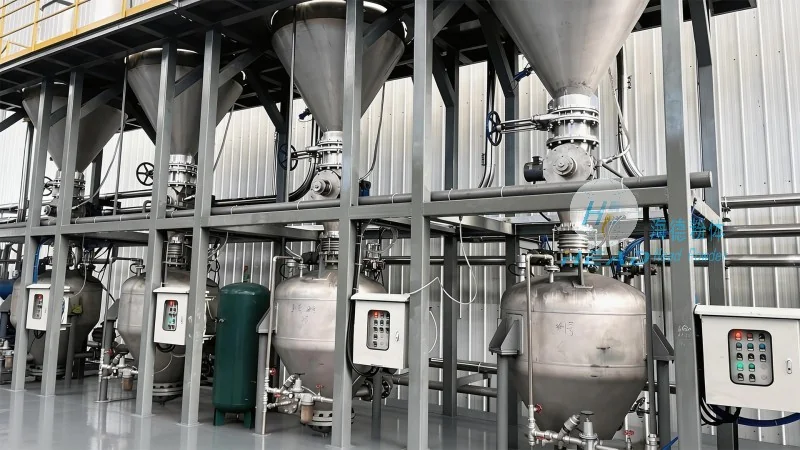
Introduction to Calcium Oxide Dry Powder Pneumatic Conveying
Calcium oxide, commonly known as quicklime, is a widely used industrial material in processes like flue gas desulfurization, steelmaking, and chemical manufacturing. Efficient and reliable transportation of calcium oxide powder is crucial for maintaining production efficiency and ensuring product quality. Pneumatic conveying systems offer a solution by transporting dry powders through a pipeline using air or gas as the conveying medium. For calcium oxide, which is often abrasive and can be sensitive to moisture, the choice of conveying mode significantly impacts system performance, maintenance, and operational costs.
Positive Pressure Conveying Mode
Positive pressure conveying operates by generating pressurized air or gas within the conveying line. The system forces the powder and air mixture through the pipeline, typically using a positive displacement blower or a rotary lobe pump as the air source. This mode is often preferred for long-distance or high-capacity applications due to its ability to maintain consistent flow rates and handle abrasive materials effectively. In the context of calcium oxide, positive pressure systems can handle high concentrations of powder, reducing the risk of clogging and ensuring stable operation. However, they require robust sealing and filtration to prevent dust leakage and maintain air quality. The system design for positive pressure conveying involves a closed loop with a receiver, conveying line, and a discharge point, ensuring that the entire process is contained and controlled.
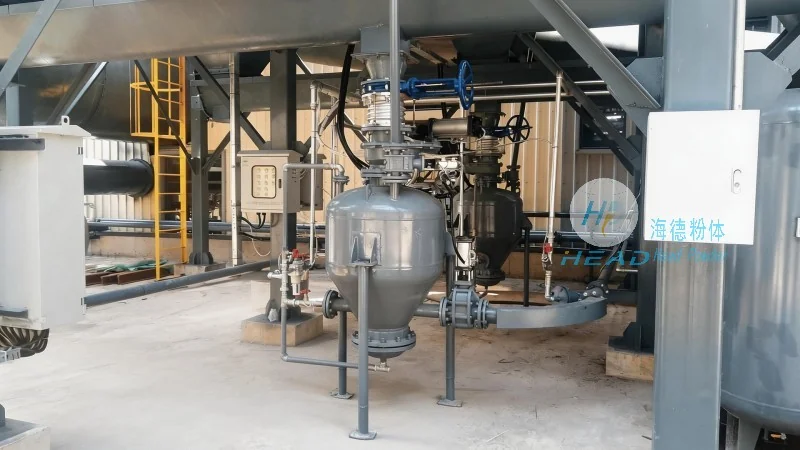
Negative Pressure Conveying Mode
Negative pressure conveying, also known as suction conveying, operates by creating a vacuum in the conveying line. The system draws the powder and air mixture into the pipeline using a vacuum pump or fan. This mode is generally more suitable for shorter distances or applications where the material is less abrasive and less prone to clogging. For calcium oxide, negative pressure systems are often used in applications where the powder is less dense or where the system needs to handle smaller quantities. The key advantage of negative pressure is its lower initial cost and simpler setup, as it does not require high-pressure components. However, it is less efficient for long-distance transport and may struggle with highly abrasive or sticky powders, leading to increased maintenance and potential system downtime.
Comparison of Positive and Negative Pressure Modes for Calcium Oxide
When comparing positive and negative pressure conveying for calcium oxide, several factors must be considered. The choice of mode depends on the specific application requirements, such as the distance of transport, the quantity of material, and the characteristics of the powder. Positive pressure systems excel in long-distance, high-capacity applications and are better suited for abrasive materials like calcium oxide, as they can maintain consistent flow and reduce clogging risks. Negative pressure systems, while more cost-effective for short distances, may not be as efficient for handling large volumes or highly abrasive powders. From an operational perspective, positive pressure systems require more maintenance due to the higher pressure components, but they offer greater reliability and control. Negative pressure systems are simpler to maintain but may have lower efficiency and are more susceptible to system failures if the vacuum is compromised.
Key Considerations for System Design
When designing a pneumatic conveying system for calcium oxide, several technical considerations are critical. The first is the material's properties, including its density, particle size distribution, and abrasiveness. Calcium oxide particles are typically fine and can be highly abrasive, which affects the choice of equipment like pumps, valves, and pipelines. The system must be constructed from materials resistant to corrosion and wear, such as stainless steel or special alloys, to ensure longevity. Another critical factor is the conveying distance and capacity. For long distances or high capacities, positive pressure systems are preferred, while negative pressure systems are more suitable for shorter distances or lower capacities. The system's air source is also a key consideration. Positive pressure systems use blowers that can handle high pressures, while negative pressure systems use vacuum pumps that operate at lower pressures. The choice of air source impacts the system's energy consumption and efficiency. Additionally, the system's sealing and filtration are essential to prevent dust leakage and maintain air quality, which is important for both operational safety and environmental compliance.
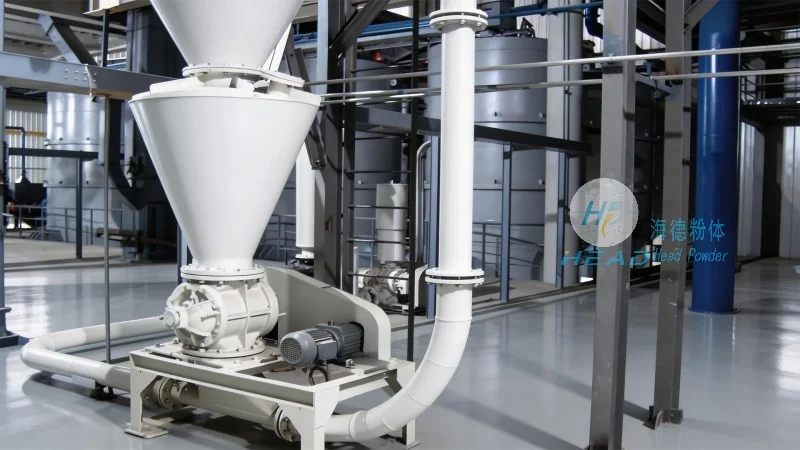
Application Examples
Calcium oxide dry powder pneumatic conveying systems are widely used in various industrial applications. For instance, in flue gas desulfurization plants, calcium oxide is used to neutralize acidic gases. The system must transport the quicklime powder from storage to the reaction tower efficiently. A positive pressure system is often used here due to the long distance and high capacity required. In steelmaking, calcium oxide is used as a flux to remove impurities from the molten steel. The conveying system must handle the abrasive quicklime and ensure consistent delivery to the furnace. In chemical manufacturing, calcium oxide is used as a raw material in the production of other chemicals. The system must be reliable and maintain product quality throughout the conveying process. These applications highlight the importance of choosing the right conveying mode based on the specific operational needs and material characteristics.
Conclusion
In conclusion, the choice between positive pressure and negative pressure conveying modes for calcium oxide dry powder systems is a critical decision that impacts system performance, efficiency, and cost. Positive pressure systems offer greater reliability and are better suited for long-distance, high-capacity applications, while negative pressure systems are more cost-effective for shorter distances and lower capacities. The selection of the appropriate mode depends on the specific application requirements, including the material's properties, conveying distance, and operational constraints. By carefully evaluating these factors, industrial facilities can select the most suitable pneumatic conveying system to ensure efficient and reliable transportation of calcium oxide, thereby optimizing production processes and reducing operational costs.