

Operation Process and Working Principle of Automatic Quantitative Powder Pneumatic Conveying Line
The automatic quantitative powder pneumatic conveying line is a sophisticated industrial system designed for the efficient and precise handling of bulk powder materials. Developed by Shandong HeadPowder Engineering Co., Ltd., this advanced equipment integrates cutting-edge technology to ensure reliable and consistent performance in various industrial applications. The system is engineered to handle a wide range of powder types, from fine powders to bulkier granules, while maintaining high levels of accuracy in material measurement and transportation.
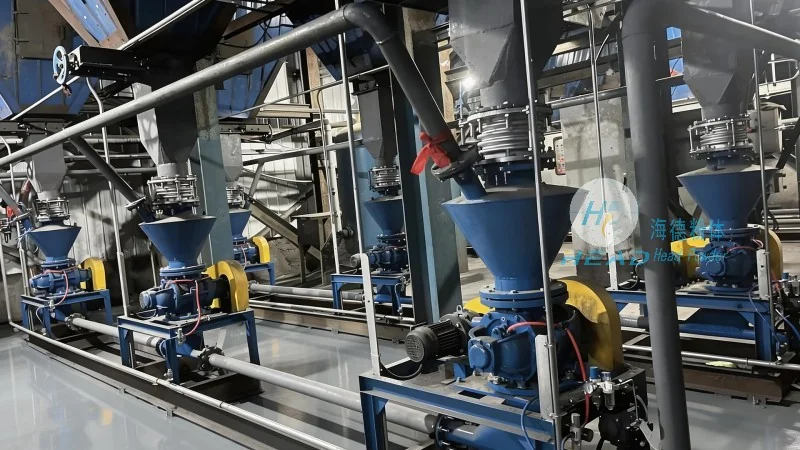
Key Components and Their Functions
The automatic quantitative powder pneumatic conveying line consists of several core components that work in tandem to achieve optimal operation. These include the hopper for material storage, a rotary valve for controlled material discharge, a pneumatic conveying system with a blower or compressor to generate the necessary air pressure, and a dosing mechanism to ensure precise quantity control. Each component plays a critical role in the overall efficiency and reliability of the system.
Operation Process: Step-by-Step Overview
The operation of the automatic quantitative powder pneumatic conveying line follows a systematic sequence to ensure smooth material handling. Initially, the bulk powder is fed into the hopper, where it accumulates until the required level is reached. The rotary valve then opens to allow a controlled amount of powder to enter the pneumatic conveying line. Simultaneously, the blower or compressor generates a high-pressure air stream that propels the powder through the pipeline. The dosing mechanism, often integrated with a sensor or control system, monitors the flow rate and adjusts the valve opening to maintain the desired quantity. The powder is then transported to the destination point, such as a silo or processing unit, where it is discharged. The system continuously repeats this cycle, ensuring a steady and consistent supply of powder without manual intervention.
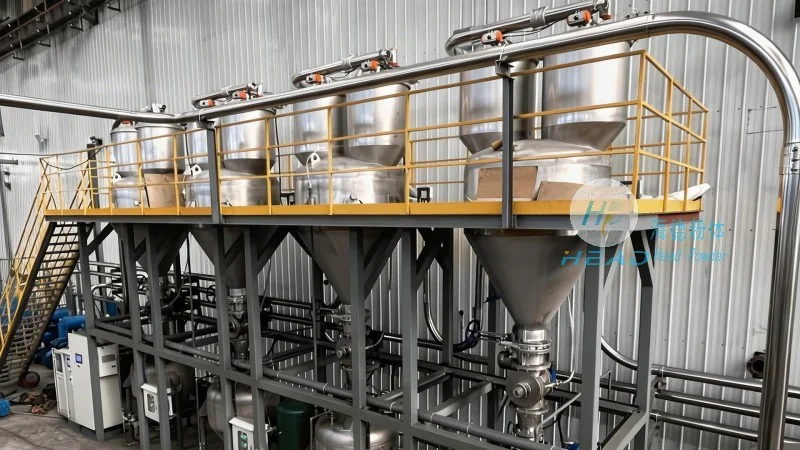
Working Principle: How the System Transmits Power and Material
The working principle of the automatic quantitative powder pneumatic conveying line is based on the fundamental concept of pneumatic transport, where air is used as the medium to move powder particles. The system operates by creating a pressure differential between the inlet and outlet of the conveying line. The blower or compressor supplies compressed air, which is introduced into the hopper or the material inlet. As the air flows through the pipeline, it entrains the powder particles, forming a dense phase or dilute phase flow depending on the system design. The dosing mechanism, typically a rotary valve or a variable-speed feeder, regulates the amount of powder that is introduced into the air stream. This ensures that the powder is conveyed at a controlled rate, preventing clogging and maintaining system efficiency. The system also incorporates safety features, such as pressure relief valves and air filtration systems, to protect against overpressure and maintain air quality.
Advantages and Applications in Industrial Settings
The automatic quantitative powder pneumatic conveying line offers numerous advantages over traditional material handling methods, making it an ideal solution for various industrial sectors. Its key benefits include high efficiency in material transport, reduced labor costs due to automation, precise quantity control, and improved safety by minimizing manual handling of powders. The system is widely used in industries such as pharmaceuticals, food processing, chemical manufacturing, and cement production, where the handling of fine or bulk powders requires accuracy and reliability. By integrating advanced control systems and sensors, the line can adapt to varying material properties and production demands, ensuring consistent performance in diverse applications.
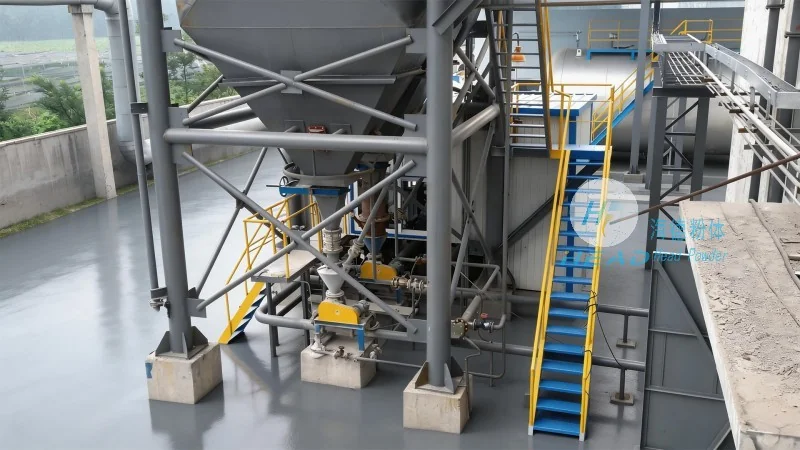
Maintenance and Operational Considerations
To ensure the long-term performance and reliability of the automatic quantitative powder pneumatic conveying line, regular maintenance is essential. This includes cleaning the hopper and conveying lines to prevent powder buildup and clogging, inspecting the rotary valve and dosing mechanism for wear and tear, and checking the blower or compressor for optimal air pressure and flow. The system should also be equipped with monitoring tools to detect any deviations in performance, such as changes in air pressure or material flow rate. Proper maintenance not only extends the lifespan of the equipment but also ensures consistent quality and efficiency in material handling. Additionally, training operators on the proper operation and troubleshooting of the system is crucial to prevent downtime and maintain smooth production processes.
Conclusion: The Role of Shandong HeadPowder in Advanced Material Handling
In conclusion, the automatic quantitative powder pneumatic conveying line represents a significant advancement in industrial material handling technology. Developed by Shandong HeadPowder Engineering Co., Ltd., this system combines precision, efficiency, and automation to meet the demanding requirements of modern industries. By understanding the operation process and working principles of the system, users can leverage its capabilities to enhance productivity, reduce costs, and improve safety in their operations. As a leading provider of engineering solutions, Shandong HeadPowder continues to innovate and provide high-quality equipment that meets the evolving needs of the industrial sector.