High-calcium powder materials are widely used in various industrial sectors, including food processing, pharmaceuticals, and chemical manufacturing. The efficient and reliable transportation of these powders is crucial for maintaining production efficiency and product quality. Pneumatic conveying equipment has emerged as a preferred solution for handling high-calcium powders due to its ability to transport materials in a closed system, minimizing dust and contamination. This article explores the working principle and key features of high-calcium powder material pneumatic conveying machines, providing insights into their operational mechanisms and advantages.
Working Principle of High-Calcium Powder Pneumatic Conveying Equipment
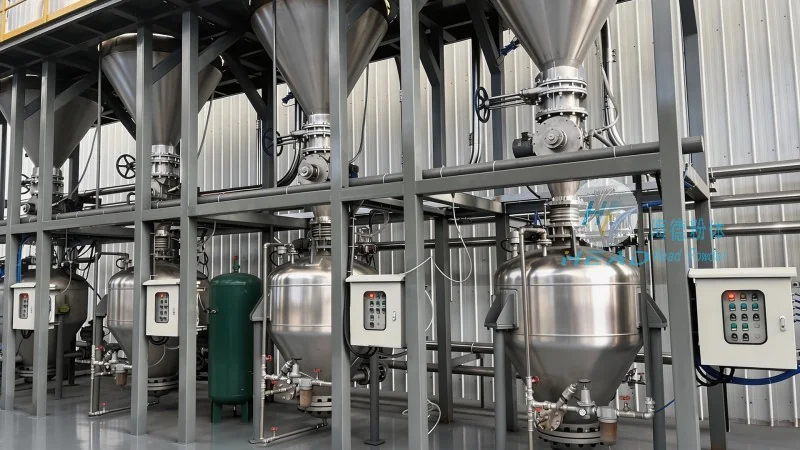
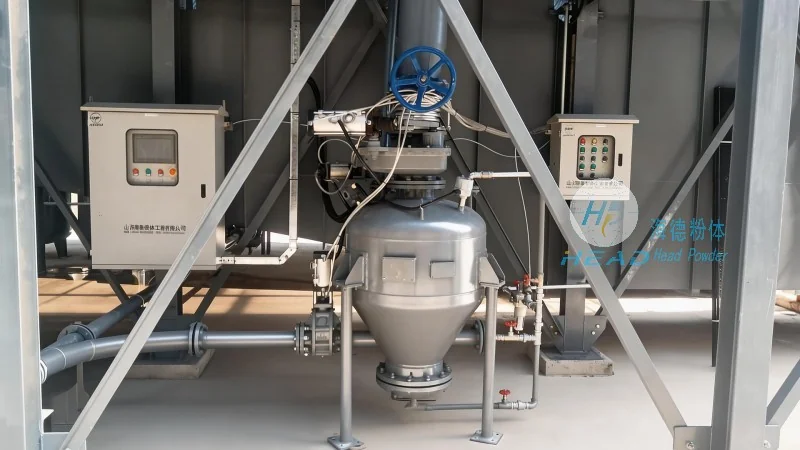
The core of high-calcium powder pneumatic conveying systems lies in the use of air pressure to move powder particles through a pipeline. There are two primary types of pneumatic conveying: positive pressure and negative pressure systems. Positive pressure systems generate air pressure at the inlet, pushing the powder forward through the pipeline. Negative pressure systems, on the other hand, create a vacuum at the outlet, drawing the powder into the system. For high-calcium powders, which often have high density and potential for agglomeration, positive pressure systems are commonly preferred as they provide better control over flow rates and prevent material blockages. The process typically involves a hopper where the powder is stored, a feeder that controls the discharge rate, a compressor that generates the air pressure, and a pipeline network that transports the powder to the destination. The air and powder mixture travels through the pipeline, with the air providing the necessary kinetic energy to move the particles. At the receiving end, a separator or cyclone separates the powder from the air, allowing the powder to be deposited in a container while the air is either recirculated or discharged.
Key Features and Advantages of High-Calcium Powder Pneumatic Conveying Machines
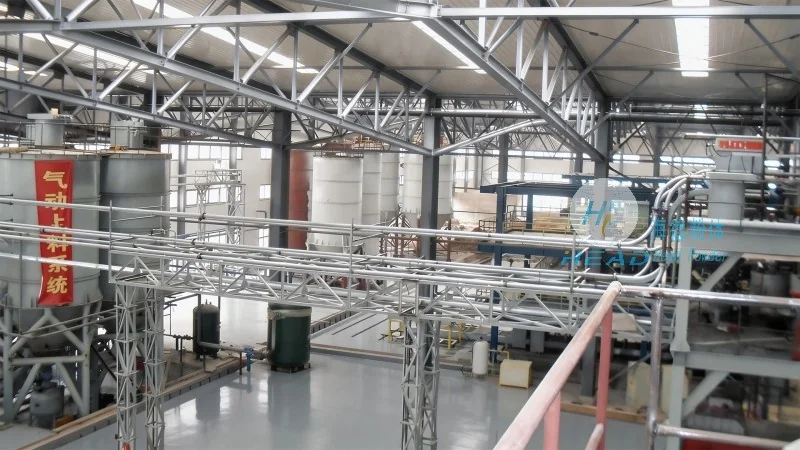
High-calcium powder pneumatic conveying machines offer several distinct advantages that make them ideal for industrial applications. One of the most significant features is their ability to handle fine powders without generating excessive dust, which is critical for maintaining a clean and safe working environment. The closed system design also prevents contamination from external sources, ensuring that the high-calcium powder remains pure and meets quality standards. Another key feature is the high efficiency in material transport, as these systems can move large volumes of powder over long distances with minimal energy consumption compared to traditional methods like bucket elevators or belt conveyors. Additionally, pneumatic conveying systems are highly flexible, allowing for easy integration into existing production lines and the ability to change the direction of the pipeline as needed. The equipment is also relatively compact, requiring less floor space compared to other bulk material handling solutions. Furthermore, the positive pressure systems used for high-calcium powders provide excellent control over the flow rate, which is essential for maintaining consistent product quality and preventing overloading of downstream equipment. The durability of the components, such as the pipeline and separators, is another important feature, as they are designed to withstand the abrasive nature of high-calcium powders and the high pressures involved in the conveying process.
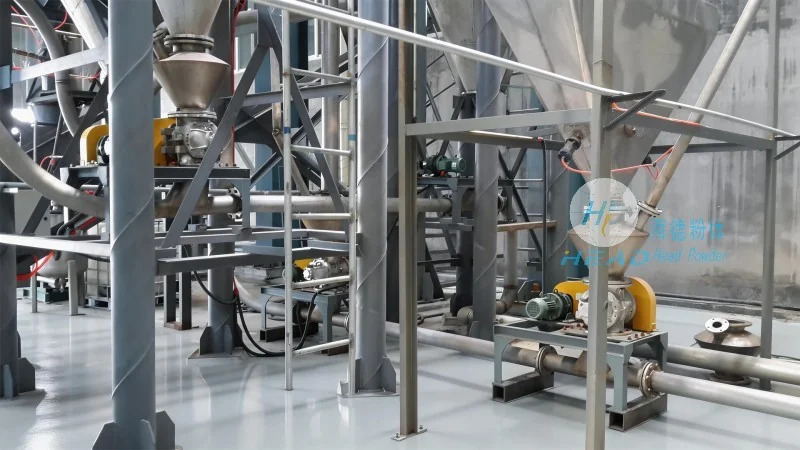
Manufactured by Shandong HeadPowder Engineering Co., Ltd. (headpowder), these high-calcium powder pneumatic conveying machines are engineered to meet the demanding requirements of industrial applications. The company’s expertise in bulk material handling has led to the development of systems that combine efficiency, reliability, and durability, ensuring that customers can rely on consistent performance in their production processes.




