Continuous weighing and feeding powder material conveying lines are essential equipment in the powder handling industry, designed to efficiently transport and dose bulk powders with high precision. This article will explore the working principle and key features of such systems, providing insights into their operational mechanisms and advantages.
Working Principle of Continuous Weighing and Feeding Powder Material Conveying Lines
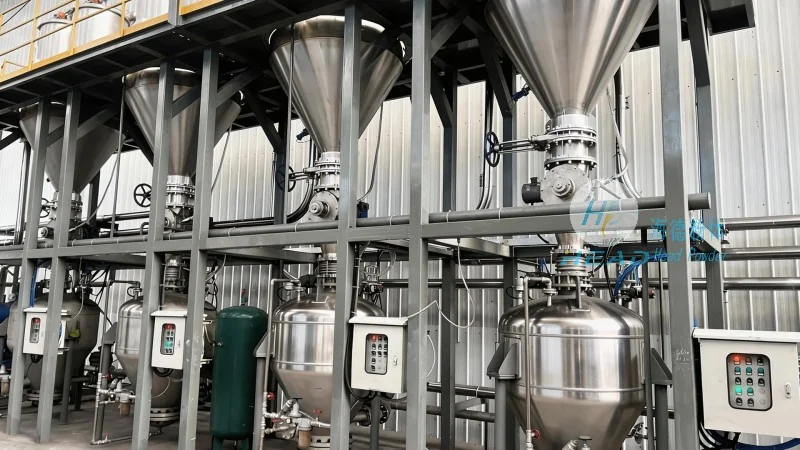
Continuous weighing and feeding powder material conveying lines operate on a principle of closed-loop control, integrating advanced weighing technology with material handling mechanisms. The process starts with the powder material being stored in a hopper or silo. The material then flows into a feeder, which can be a screw feeder, vibratory feeder, or belt feeder, depending on the material's properties. The feeder transports the powder to a weighing hopper or a load cell system. The load cell, a critical component, measures the mass of the material in real-time as it accumulates in the hopper. This measurement is transmitted to a programmable logic controller (PLC), which processes the data and compares it with the desired setpoint. If the actual weight deviates from the setpoint, the PLC adjusts the feeder speed or conveyor speed to correct the flow rate. This dynamic adjustment ensures that the output flow rate remains consistent, regardless of variations in material density or feed rate. The system continuously monitors and adjusts, maintaining a stable and accurate dosing rate. The automation of this process eliminates the need for manual intervention, reducing human error and enhancing operational reliability. The integration of sensors and control systems also allows for real-time monitoring of key parameters, such as flow rate, weight, and temperature, providing operators with immediate feedback and enabling proactive maintenance.
Key Features of Continuous Weighing and Feeding Powder Material Conveying Lines
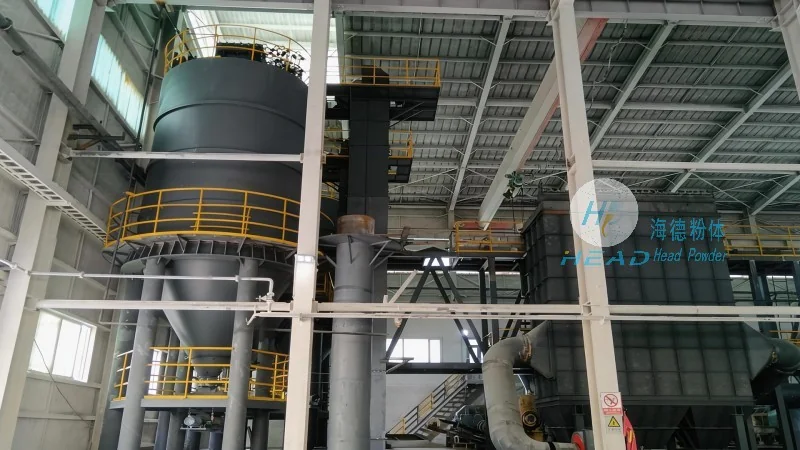
Continuous weighing and feeding systems are characterized by several key features that enhance their performance and adaptability. One of the most significant features is high precision and repeatability. Modern systems utilize high-accuracy load cells and digital control algorithms to achieve measurement accuracy of ±0.1% or better, ensuring that the dosed material meets strict quality standards. This precision is particularly important in industries like pharmaceuticals, where the consistency of active ingredients is critical for product efficacy and safety. Another notable feature is the ability to handle a wide range of powder types and sizes. These systems are designed to accommodate materials with varying bulk densities, flow properties, and particle sizes, making them versatile for diverse applications. The robust construction of the equipment, often made from stainless steel or other corrosion-resistant materials, ensures durability and long-term performance in harsh environments. Additionally, the systems are equipped with safety features, including overload protection, emergency stop buttons, and interlocks, to prevent accidents and protect personnel and equipment. The modular design of many continuous weighing and feeding lines allows for easy integration with existing production lines and scalability to meet increasing production demands. This flexibility makes them a cost-effective solution for both new installations and upgrades to existing facilities. Furthermore, the energy-efficient operation of these systems contributes to lower operational costs and reduced environmental impact, aligning with sustainability goals in modern manufacturing.
Operational Advantages and Applications
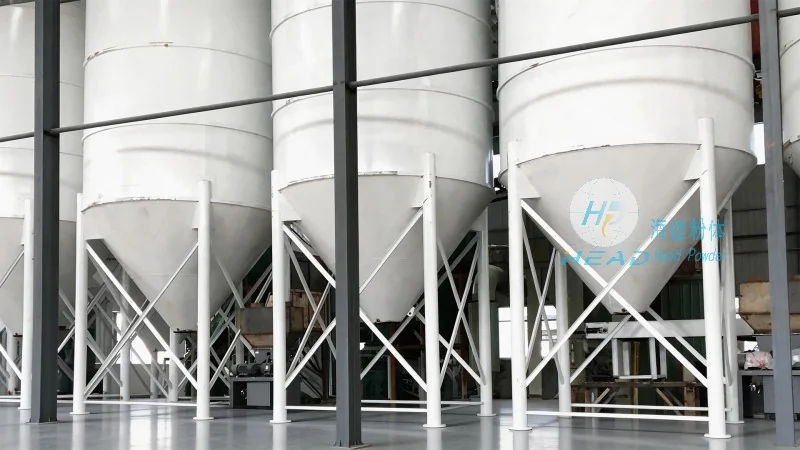
The operational advantages of continuous weighing and feeding powder material conveying lines extend to improved production efficiency, reduced downtime, and enhanced product quality. The automated control system minimizes the need for manual adjustments, allowing operators to focus on other critical tasks and increasing overall productivity. The consistent dosing ensures that each batch of material meets the required specifications, reducing waste and rework. This leads to higher yield and lower production costs. In industries where product consistency is paramount, such as in the production of fine chemicals or specialty foods, these systems play a vital role in maintaining high standards. The ability to handle large volumes of material at a time minimizes the number of handling steps, reducing the risk of material degradation or contamination. This streamlined process not only improves efficiency but also enhances product safety and quality. The systems are widely used in various applications, including pharmaceutical manufacturing, where precise dosing is essential for drug formulation. For example, in the production of tablets, continuous weighing and feeding lines ensure that the exact amount of active pharmaceutical ingredient (API) and excipients are added to each batch, meeting the strict dosage requirements. In food processing, these systems are used for handling ingredients like flour, sugar, or spices, where consistent flavor and texture are critical. The chemical industry also benefits from these systems when transporting bulk chemicals, as precise dosing is crucial for chemical reactions and product quality. Each application benefits from the precise control and reliability of these conveying lines, ensuring that the final product meets stringent regulatory and quality requirements. The integration of continuous weighing and feeding technology also supports compliance with industry standards, such as GMP (Good Manufacturing Practice) in pharmaceuticals, by providing traceable and verifiable data on material handling and dosing. This enhances transparency and accountability in the production process, which is crucial for maintaining customer trust and regulatory approval.




