

What is PVB Powder Pneumatic Conveying? And What Are Its Design Principles?
For industries dealing with polyvinyl butyral (PVB) powders, understanding the principles of pneumatic conveying is crucial for efficient material handling. PVB, a polymer widely used in applications like optical adhesives and safety glass laminates, presents unique challenges when it comes to powder transport due to its fine particle size and cohesive properties. This article explores the fundamentals of PVB powder pneumatic conveying systems and the key design principles that ensure reliable operation.
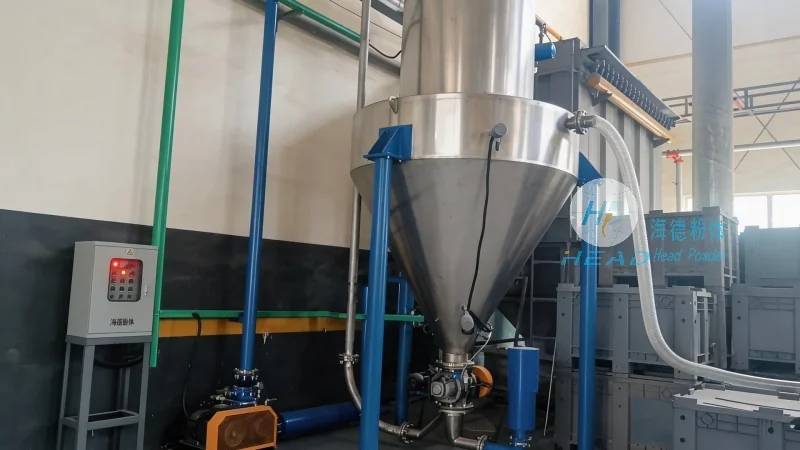
Shandong HeadPowder Engineering Co., Ltd., a leading provider of specialized engineering solutions, specializes in the design and implementation of pneumatic conveying systems tailored to the needs of various industries. With a focus on precision and efficiency, the company leverages decades of experience to deliver customized solutions that optimize material flow and minimize operational costs for clients in China and beyond.
PVB Powder Pneumatic Conveying: An Overview
Pneumatic conveying is a method of transporting bulk materials through a pipeline using a gas stream, typically air or other gases. In the case of PVB powders, this technology is essential for moving the fine, often hygroscopic particles from storage to processing equipment without the need for mechanical components like conveyors or elevators. The process involves creating a pressure differential within the system, either by suction (negative pressure) or pressure (positive pressure), to draw or push the powder through the pipeline.
PVB powders are known for their high surface energy and tendency to agglomerate, which can lead to blockages and reduced system efficiency if not properly managed. Therefore, the design of a PVB pneumatic conveying system must address these challenges through careful consideration of particle size distribution, moisture content, and the material's flow characteristics. HeadPowder's engineers take these factors into account when designing systems, ensuring that the equipment is optimized for the specific PVB formulation being handled.
Key Design Principles for PVB Powder Pneumatic Conveying Systems
Several critical design principles underpin the successful operation of PVB powder pneumatic conveying systems. The first is the selection of the appropriate conveying type, which can be categorized as either dilute phase or dense phase. Dilute phase systems operate at low pressure and high air velocity, suitable for transporting fine powders over moderate distances. Dense phase systems, on the other hand, use higher pressure and lower air velocity to move material in a slurry-like state, reducing the risk of particle degradation and system wear.
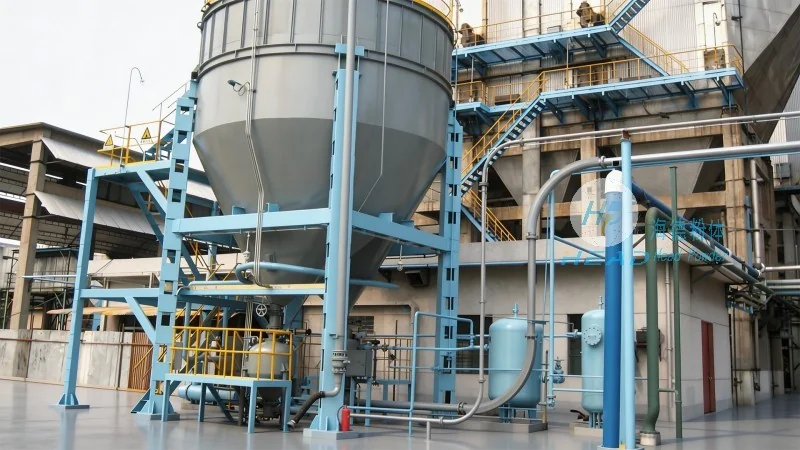
Another key principle is the design of the feeding mechanism. PVB powders are prone to bridging and caking in hoppers, which can cause uneven flow and system downtime. To mitigate this, HeadPowder employs advanced feeding solutions such as rotary valves, star feeders, or pneumatic feeders that ensure a consistent and controlled feed rate. These devices are equipped with features like anti-clogging mechanisms and adjustable speed controls to maintain optimal material flow.
The pipeline design is also a critical aspect of the system. For PVB powders, the choice of pipeline material is essential to prevent corrosion or contamination. Stainless steel or food-grade plastics are commonly used to ensure the integrity of the PVB material. The pipeline layout must be designed to minimize bends and changes in direction, as sharp turns can cause particle attrition and system inefficiencies. HeadPowder's engineers use computational fluid dynamics (CFD) simulations to optimize the pipeline geometry and ensure smooth material transport.
Control and Monitoring Systems
Effective control and monitoring are vital for maintaining the performance and reliability of PVB powder pneumatic conveying systems. HeadPowder integrates advanced control systems that allow for real-time monitoring of pressure, flow rate, and temperature within the pipeline. These systems can detect anomalies such as blockages or pressure drops and trigger automatic responses, such as adjusting the air flow or activating cleaning mechanisms.
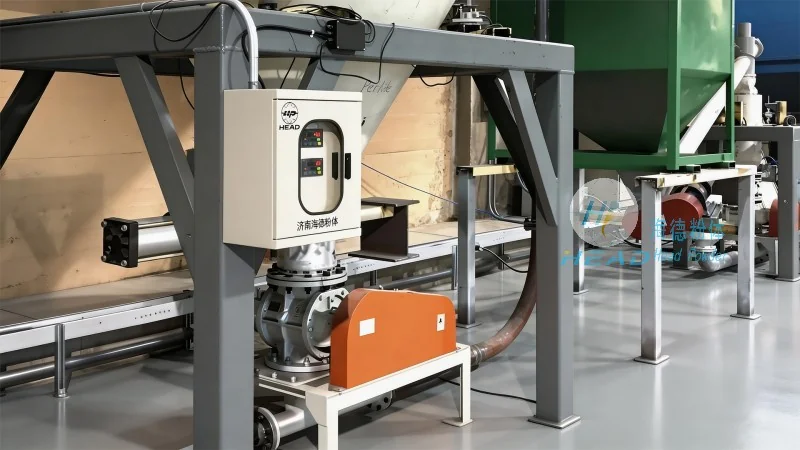
Additionally, the company incorporates sensors and indicators to monitor the condition of the PVB powder, including moisture content and particle size distribution. By continuously tracking these parameters, operators can proactively address issues before they impact system performance. The control systems are designed to be user-friendly, with intuitive interfaces that allow operators to adjust settings and monitor system status without extensive training.
Benefits of PVB Powder Pneumatic Conveying
Implementing a well-designed PVB powder pneumatic conveying system offers numerous benefits for industrial operations. First and foremost, it eliminates the need for mechanical components, reducing maintenance costs and minimizing the risk of equipment failure. The system also provides a hygienic and dust-free environment, which is particularly important for PVB powders used in food and pharmaceutical applications.
Furthermore, pneumatic conveying allows for the integration of multiple processing steps, such as blending, drying, and packaging, into a single, continuous process. This streamlines operations and improves overall efficiency. The ability to transport PVB powders over long distances without the need for intermediate storage also reduces inventory costs and improves supply chain management.
Finally, the flexibility of pneumatic conveying systems enables easy adaptation to changing production needs. Whether increasing or decreasing production rates, or switching between different PVB formulations, the system can be adjusted to meet the new requirements without significant modifications. This adaptability makes PVB powder pneumatic conveying an attractive solution for industries with fluctuating demand.