HeadPowder, a leading provider of material handling solutions, specializes in the efficient and reliable transportation of calcium carbonate powder through advanced pneumatic conveying systems. This article provides a detailed comparison between positive pressure and negative pressure conveying methods, offering insights into their operational principles, advantages, and practical applications in industrial settings.
Introduction to Pneumatic Conveying Systems for Calcium Carbonate Powder
Calcium carbonate (CaCO₃) is a widely used industrial material, often found in applications such as paper manufacturing, plastics, and coatings. The effective handling of this fine powder requires specialized equipment to ensure minimal product degradation and operational efficiency. Pneumatic conveying systems have emerged as a preferred method for transporting calcium carbonate powder due to their ability to handle fine, dusty materials with precision. Two primary approaches dominate this field: positive pressure conveying and negative pressure conveying. Understanding the differences between these methods is crucial for selecting the most suitable solution for specific industrial needs.
Positive Pressure Conveying: Principles and Operational Characteristics
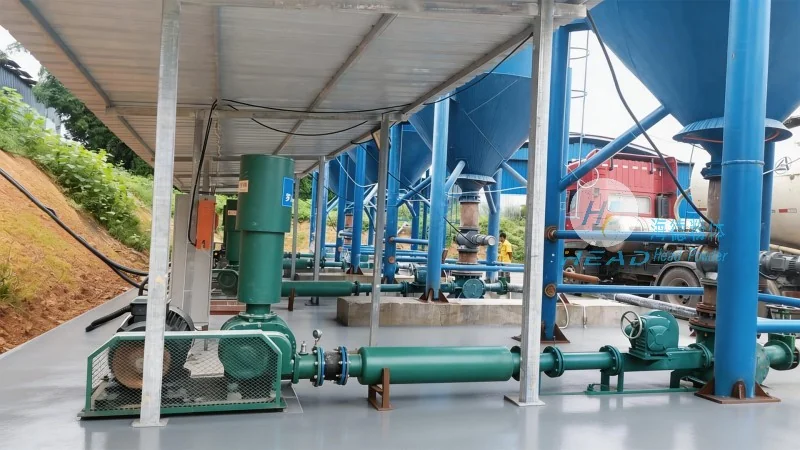
Positive pressure conveying, also known as pressure conveying, operates by blowing air or gas under pressure through the conveying line to move the material. In this system, the entire pipeline is pressurized above atmospheric pressure, ensuring that the material is continuously pushed forward. This method is particularly effective for long-distance or high-capacity applications, as it can maintain consistent flow rates and minimize material degradation due to friction or impact.
Key operational features of positive pressure conveying include: high conveying velocities, which enable efficient movement of fine powders; the ability to handle abrasive or sticky materials without excessive wear on equipment; and the capacity to transport materials over significant distances without the need for intermediate storage or transfer points. The system typically uses a positive displacement blower or a rotary lobe pump as the air source, which provides a stable and controllable pressure output.
For calcium carbonate powder, positive pressure conveying offers several advantages. It allows for the transportation of large quantities of material in a continuous flow, reducing downtime and increasing overall productivity. The pressurized environment also helps to prevent dust emissions and maintain product purity, which is critical for applications where the powder's quality is paramount. However, this method may require more robust equipment and higher energy consumption compared to negative pressure systems, especially for very fine or low-density powders.
Negative Pressure Conveying: Principles and Operational Characteristics
Negative pressure conveying, or vacuum conveying, works by creating a vacuum in the conveying line to draw the material from the source into the system. The material is then carried by the suction force of the vacuum pump, which pulls the powder through the pipeline. This approach is often preferred for shorter distances or when the material needs to be transported from a low elevation to a higher one, as the vacuum can effectively pull the material upward.
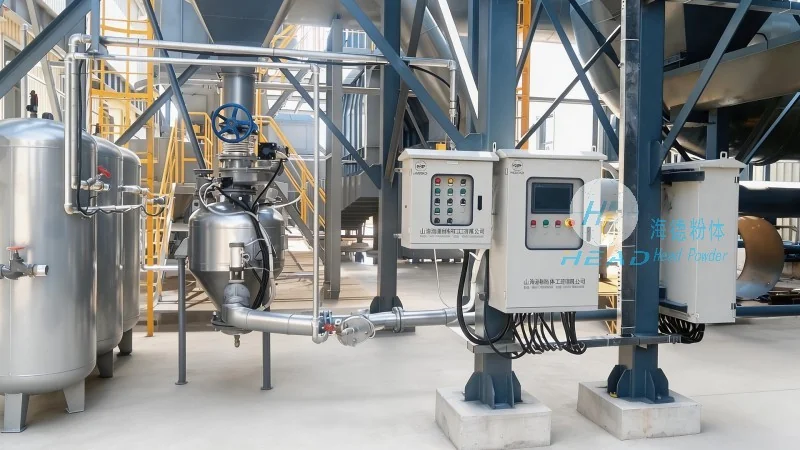
Key operational features of negative pressure conveying include: lower conveying velocities compared to positive pressure systems, which can reduce the risk of material degradation and equipment wear; the ability to handle materials that are sensitive to pressure or temperature changes; and the simplicity of the system, which often requires fewer components and lower maintenance costs. The system typically uses a rotary vane or roots-type vacuum pump as the air source, which creates a consistent vacuum level to ensure reliable material transport.
For calcium carbonate powder, negative pressure conveying presents its own set of benefits. It is particularly effective for handling fine powders that are prone to caking or agglomeration, as the suction force helps to break up clumps and maintain a uniform flow. The system also allows for the collection of dust at the source, reducing the need for additional filtration equipment downstream. However, negative pressure conveying may have limitations in terms of conveying distance and capacity, as the vacuum strength diminishes over longer distances, potentially leading to reduced flow rates or material blockages.
Comparative Analysis: Positive vs. Negative Pressure Conveying
When selecting between positive and negative pressure conveying for calcium carbonate powder, several factors must be considered. The primary differences lie in the operational pressure, energy consumption, and suitability for specific material characteristics and application requirements.
Energy consumption is a significant factor. Positive pressure systems generally require more energy due to the need to maintain a constant pressure above atmospheric levels, while negative pressure systems consume less energy as they rely on suction rather than pressure. However, the actual energy costs may vary depending on the system design, the length of the conveying line, and the type of pump used.
Conveying distance is another critical consideration. Positive pressure conveying is better suited for long-distance applications, as the pressure can be maintained over extended lengths without significant loss. Negative pressure systems, on the other hand, are more effective for shorter distances or when the material needs to be lifted vertically. For calcium carbonate powder, if the application involves transporting the material over several hundred meters or more, positive pressure conveying is often the preferred choice.
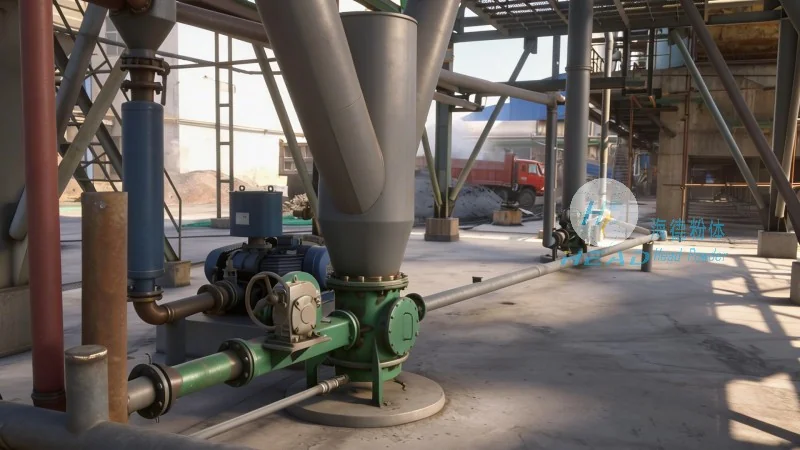
Material characteristics also play a role in the selection process. Fine, low-density powders like calcium carbonate may be more susceptible to degradation in positive pressure systems due to high velocities and friction. In such cases, negative pressure conveying may be more suitable, as it reduces the risk of particle breakage and maintains product quality. Conversely, if the material is abrasive or sticky, positive pressure conveying's ability to handle these challenges may make it the better option.
Equipment maintenance and operational complexity are additional factors to consider. Positive pressure systems typically require more robust components, such as high-pressure blowers and reinforced pipelines, which may increase maintenance costs and downtime. Negative pressure systems, while simpler in design, may require more frequent filter changes and pump maintenance due to the accumulation of dust and debris.
Practical Applications and Recommendations
HeadPowder recommends evaluating the specific requirements of each application when choosing between positive and negative pressure conveying for calcium carbonate powder. For high-volume, long-distance transportation in industries such as paper manufacturing or plastics production, positive pressure conveying may offer the most efficient solution. The consistent flow rates and ability to handle abrasive materials make it ideal for these applications.
For applications involving shorter distances, material handling in research or laboratory settings, or when the powder is sensitive to pressure changes, negative pressure conveying may be more appropriate. The lower velocities and reduced risk of material degradation make it suitable for these scenarios.
Ultimately, the choice between positive and negative pressure conveying depends on a balance of operational efficiency, energy costs, material characteristics, and equipment availability. By understanding the principles and characteristics of each method, industrial operators can select the most effective pneumatic conveying system to meet their specific needs and ensure the reliable handling of calcium carbonate powder.




