Positive and negative electrode powders are critical components in the production of lithium-ion batteries, and efficient powder conveying is essential for maintaining production efficiency and product quality. This article provides an overview of the powder conveying systems used for these materials, focusing on their structural principles and operational mechanisms.
Company Profile: HeadPowder
HeadPowder, or Shandong HeadPowder Engineering Co., Ltd., is a leading manufacturer specializing in powder handling solutions tailored for the battery materials industry. With a strong presence in China, particularly in Shandong, the company has established itself as a trusted provider of advanced conveying technologies for positive and negative electrode powders. HeadPowder's expertise lies in designing systems that ensure reliable, low-dust, and high-precision transport of sensitive battery materials, which are crucial for the performance and safety of lithium-ion batteries.
Structural Principles of Powder Conveying Systems
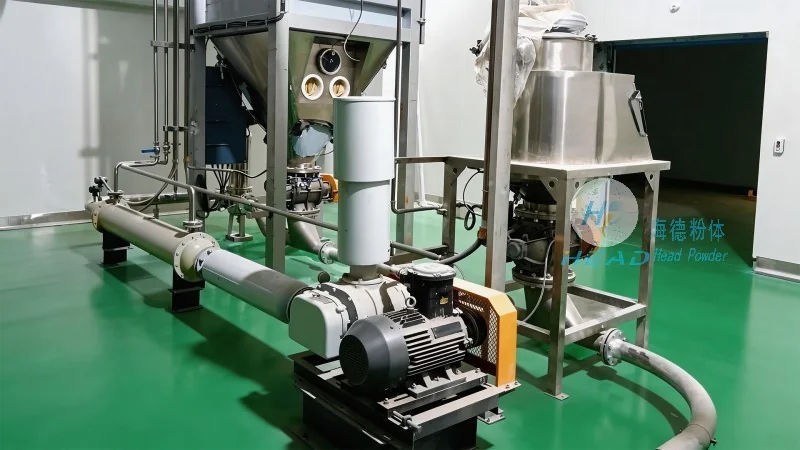
The core of any powder conveying system for electrode materials is its ability to handle fine, abrasive powders without causing degradation or contamination. HeadPowder's systems typically incorporate several key structural components to achieve this. One of the primary elements is the hopper or feed hopper, which is designed to store and feed the electrode powders into the conveying line. The hopper is often equipped with a discharge valve or feeder to control the flow rate, preventing overloading or underflow that could affect the conveying efficiency. The material of construction is also critical; HeadPowder uses corrosion-resistant and wear-resistant materials, such as stainless steel or specialized alloys, to withstand the abrasive nature of the powders and ensure long-term durability.
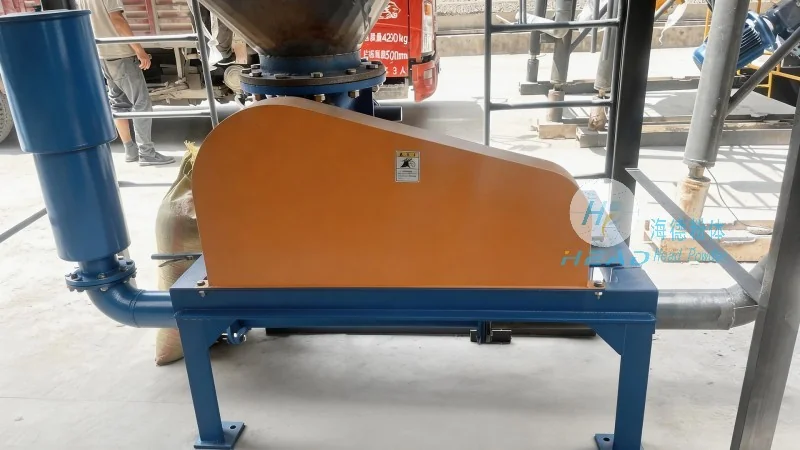
Another essential component is the conveyor itself, which can be either pneumatic or mechanical. Pneumatic conveying systems use air to transport the powder particles through a pipeline, while mechanical systems employ screws, belts, or buckets to move the material. For electrode powders, pneumatic systems are often preferred due to their ability to handle fine powders with minimal particle breakage and low pressure drop. The pipeline design is optimized to minimize friction and maintain consistent flow, with bends and fittings that are carefully engineered to avoid powder accumulation or blockages. HeadPowder's systems incorporate features like pulse-jet cleaning or self-cleaning mechanisms to prevent clogging, ensuring continuous operation.
Working Mechanisms and Operational Efficiency
The operational mechanism of a powder conveying system involves several steps. First, the electrode powder is loaded into the feed hopper. The feeder then controls the discharge rate, ensuring a steady flow into the conveyor. In a pneumatic system, the powder is mixed with air and drawn into the pipeline by a vacuum or pressure source. The air-powder mixture travels through the pipeline, with the air velocity maintained at a level sufficient to keep the powder suspended and prevent settling. The system is designed to minimize pressure loss, which is crucial for maintaining the conveying capacity over long distances. At the discharge end, the powder is separated from the air, often using cyclones or filters, and collected in a receiving hopper or container.
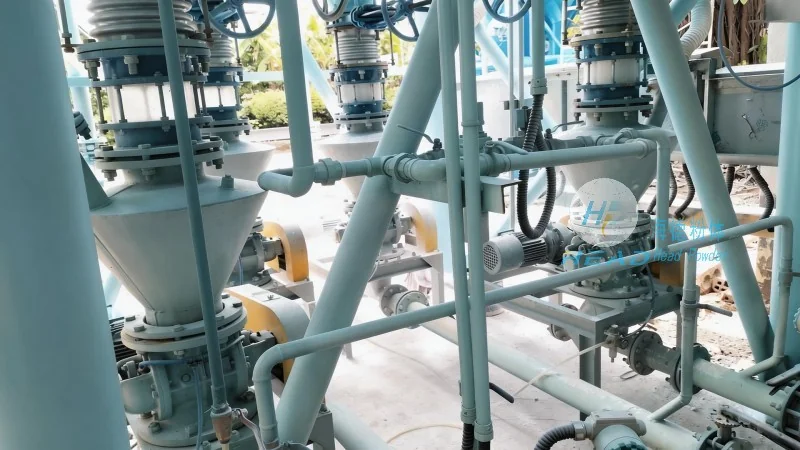
HeadPowder's systems are engineered to maximize operational efficiency while maintaining product integrity. The control systems are typically equipped with sensors and feedback mechanisms to monitor flow rates, pressure, and temperature. This allows for real-time adjustments to maintain optimal conveying conditions. Additionally, the company's systems are designed for easy maintenance, with accessible components and modular designs that facilitate repairs and upgrades. By ensuring consistent and reliable powder transport, HeadPowder's solutions help battery manufacturers improve production throughput, reduce material waste, and enhance overall product quality.
Applications and Industry Impact
Powder conveying systems from HeadPowder are widely used in the production lines of lithium-ion batteries, where positive and negative electrode powders are transported from raw material storage to mixing, coating, and other processing stages. The reliability of these systems is critical, as any interruption in powder supply can lead to production delays and increased costs. HeadPowder's solutions are tailored to meet the specific requirements of different battery chemistries and production scales, from small-scale laboratory applications to large-scale industrial manufacturing. The company's expertise in material handling and process optimization has contributed to the advancement of battery technology, enabling the production of high-performance batteries with improved energy density and safety features.




