

Operation Process and Working Principle of Metal Silicon Powder Pneumatic Conveying System
HeadPowder, a leading engineering company based in Shandong, China, specializes in the design, manufacturing, and implementation of advanced pneumatic conveying systems for metal silicon powders. This article provides a detailed overview of the operation process and working principles of such systems, highlighting the technical aspects and operational efficiency crucial for industrial applications.
Introduction to Metal Silicon Powder Pneumatic Conveying Systems
Pneumatic conveying systems are essential for the efficient and safe transport of metal silicon powders in various industrial settings. These systems utilize air or other gases to move bulk materials through pipelines, offering advantages such as reduced material handling costs, improved process control, and enhanced safety compared to traditional mechanical conveying methods. The system typically consists of a hopper, a blower or compressor, a pipeline network, and a discharge unit, all working in tandem to ensure smooth material flow.
Key Components of the Pneumatic Conveying System
The metal silicon powder pneumatic conveying system comprises several critical components that work together to achieve effective material transport. The primary components include:
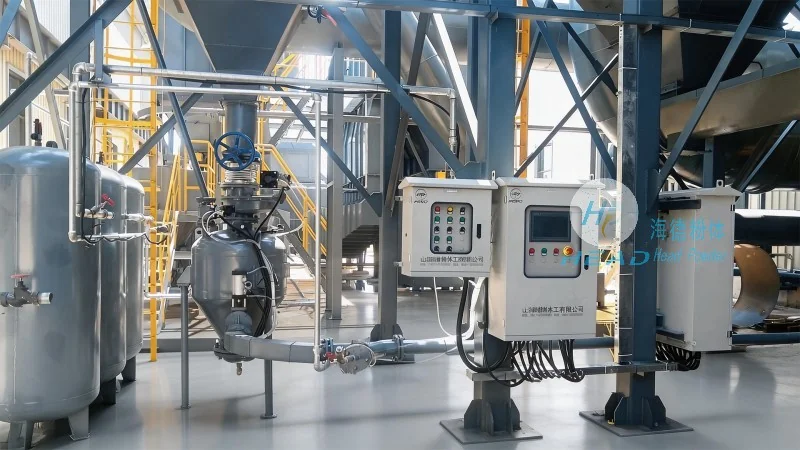
- Hopper: A storage vessel where metal silicon powder is loaded before being conveyed. It is designed to maintain a consistent material level and prevent clogging, often equipped with level sensors and feeding mechanisms.
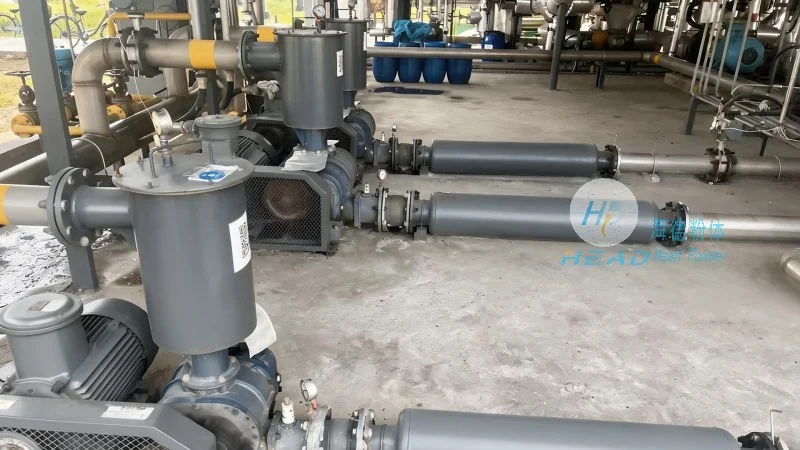
- Blower or Compressor: The power source that generates the necessary air pressure or vacuum to move the powder through the pipeline. The choice between a positive displacement blower and a centrifugal compressor depends on the system's capacity, pressure requirements, and material characteristics.
- Pipeline Network: A network of pipes that transports the powder-air mixture from the hopper to the discharge point. The pipeline design considers factors like material flow rate, pressure drop, and material abrasiveness to ensure optimal performance.
- Discharge Unit: The component where the metal silicon powder is released from the system, typically into a processing unit or storage container. It may include filters, cyclones, or other separation devices to maintain material purity and prevent dust emissions.
Operation Process of the Metal Silicon Powder Pneumatic Conveying System
The operation process of the metal silicon powder pneumatic conveying system involves several sequential steps to ensure efficient material transport. The process begins with the loading of metal silicon powder into the hopper. Once the hopper is filled, the feeding mechanism (such as a rotary valve or screw feeder) releases the powder into the pipeline. Simultaneously, the blower or compressor starts operating, generating the required airflow to create a pressure differential within the system.
As the air flows through the pipeline, it entrains the metal silicon powder particles, forming a dense or dilute phase flow depending on the system design. The powder-air mixture then travels through the pipeline network to the discharge unit. At the discharge point, the mixture is separated from the air, typically using a cyclone or filter system. The separated metal silicon powder is collected in the discharge container, while the air is either recirculated or vented to the atmosphere, depending on the system's configuration.
Working Principle of the Pneumatic Conveying System
The working principle of the metal silicon powder pneumatic conveying system is based on the fundamental concept of fluidization and particle transport. The system operates by creating a pressure difference between the hopper and the discharge point, which drives the movement of the powder-air mixture. The key principles include:
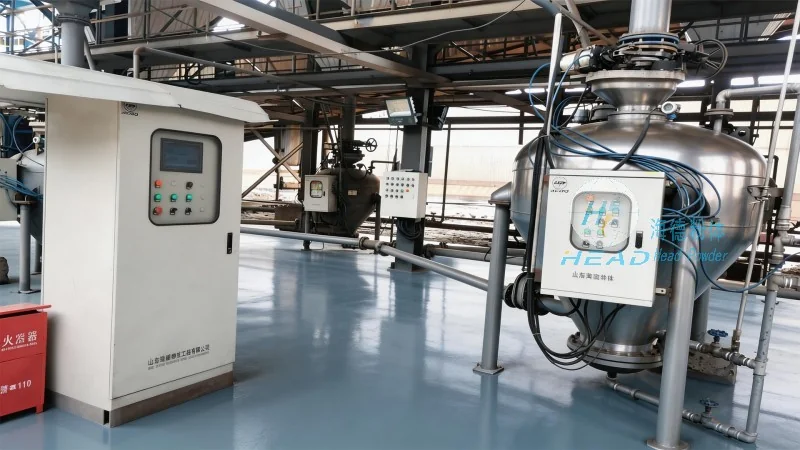
- Pressure Differential: The blower or compressor creates a higher pressure at the inlet of the pipeline, while the discharge point maintains a lower pressure. This pressure difference provides the necessary force to move the powder through the system.
- Particle Entrainment: The airflow generated by the blower or compressor entrains the metal silicon powder particles, suspending them in the air stream. The velocity of the air must be sufficient to overcome the gravitational force acting on the particles, ensuring stable transport.
- Flow Regimes: The system can operate in either dense phase or dilute phase flow. Dense phase flow involves a higher concentration of powder in the air stream, resulting in lower velocity and reduced wear on the pipeline. Dilute phase flow, on the other hand, involves a lower powder concentration and higher velocity, suitable for longer transport distances.
- Separation and Collection: At the discharge point, the air and powder are separated using devices like cyclones or filters. The separated powder is collected, while the air is either recirculated to improve energy efficiency or vented to the environment, depending on the system's design and regulatory requirements.
Technical Advantages and Applications
The metal silicon powder pneumatic conveying system offers several technical advantages that make it suitable for various industrial applications. These advantages include:
- Efficient Material Transport: The system enables the efficient transport of metal silicon powder over long distances with minimal material loss and high throughput.
- Reduced Maintenance: Compared to mechanical conveying systems, pneumatic conveying systems have fewer moving parts, leading to lower maintenance costs and longer equipment lifespan.
- Improved Process Control: The system allows for precise control of material flow rates and pressure, enabling better process monitoring and adjustment.
- Enhanced Safety: By eliminating the need for manual handling of bulk materials, the system reduces the risk of dust explosions and other safety hazards associated with traditional material handling methods.
These advantages make the metal silicon powder pneumatic conveying system an ideal solution for industries such as metallurgy, chemical processing, and material handling, where the efficient and safe transport of metal silicon powders is critical for operational success.