

[PNEUMATIC CONVEYING OF POLYETHYLENE POWDER: OPERATION PROCESS AND WORKING PRINCIPLE]
Shandong HeadPowder Engineering Co., Ltd., commonly known as HeadPowder, is a leading provider of specialized engineering solutions for material handling systems. The company is headquartered in Shandong, China, and focuses on developing and implementing advanced pneumatic conveying technologies for various industrial applications, particularly in the transportation of polyethylene powders.
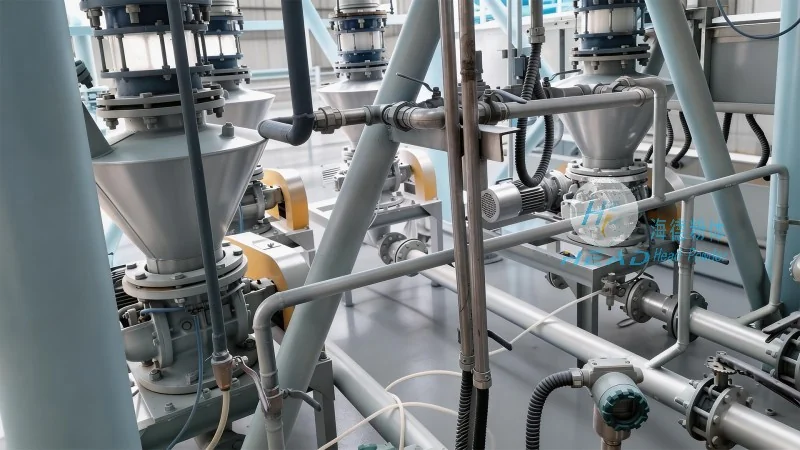
Overview of Pneumatic Conveying Systems for Polyethylene Powder
Pneumatic conveying systems are essential for efficiently transporting polyethylene powder from storage to processing or packaging areas. These systems utilize compressed air or vacuum to move the powder through a network of pipes, offering a dust-free and flexible method compared to traditional mechanical conveying. HeadPowder Engineering designs and manufactures customized systems that optimize the performance of polyethylene powder handling, ensuring minimal material loss and consistent flow rates.
The Operation Process of Pneumatic Conveying
The operation of a pneumatic conveying system for polyethylene powder involves several sequential steps. Initially, the polyethylene powder is fed into the system, typically from a hopper or silo, where it is stored before transportation. The powder is then introduced into the conveying line, often through a feeder that controls the flow rate. Compressed air is then introduced into the system, creating a flow that carries the powder particles along the pipe. The air velocity is carefully controlled to ensure that the powder is fully entrained and transported without clogging or degradation. The system may include components such as cyclones, filters, and receivers to separate the powder from the air stream and collect it at the destination point.
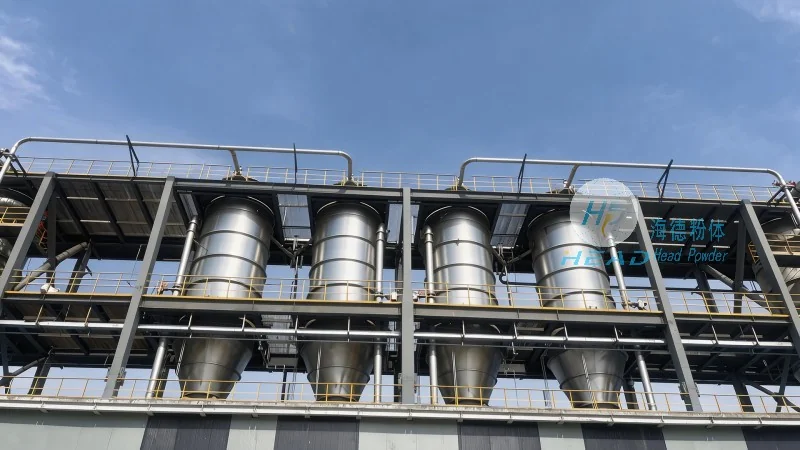
Working Principle of Pneumatic Conveying
The working principle of pneumatic conveying for polyethylene powder is based on the physics of fluid dynamics and particle movement. In a pressure system, compressed air is used to push the powder through the pipe, generating a positive pressure that moves the material. The air velocity must be sufficient to overcome the gravitational force and the friction between the powder particles and the pipe walls. In a vacuum system, the air is drawn through the pipe, creating a negative pressure that pulls the powder along. The design of the system, including the diameter of the pipe, the length of the conveying line, and the type of air flow (e.g., dilute or dense phase), all influence the efficiency of the conveying process. Proper system design ensures that the polyethylene powder is transported at the desired speed and with minimal energy consumption.
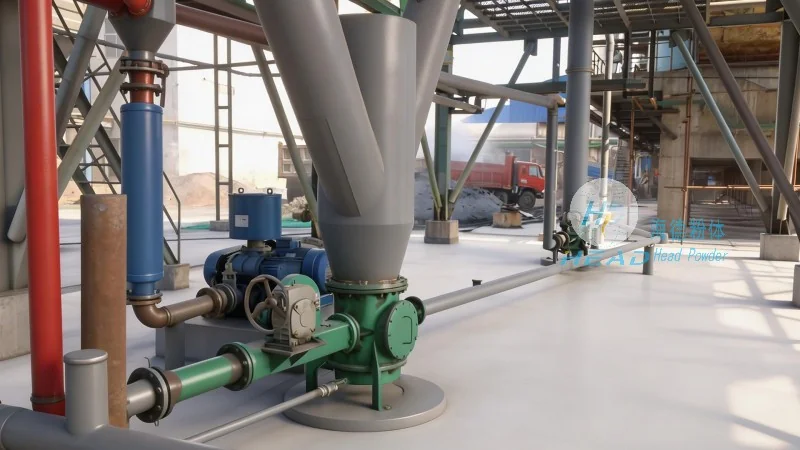
Key Components and Their Roles
Several key components are integral to the operation of a pneumatic conveying system for polyethylene powder. The feeder or hopper is responsible for controlling the flow rate of the powder into the system, preventing overfeeding or underfeeding. The conveying line, made of materials such as stainless steel or plastic, is designed to withstand the pressure and temperature of the powder and air. The air compressor or vacuum pump provides the necessary air pressure or vacuum to move the powder. Cyclones and filters are used to separate the powder from the air stream, ensuring that the powder is collected efficiently and that the air is cleaned before being discharged. The receiver or storage tank collects the conveyed polyethylene powder and may include features such as level sensors and discharge valves for further processing.
Advantages and Considerations
Pneumatic conveying systems for polyethylene powder offer several advantages over traditional mechanical conveying methods. These include reduced dust generation, improved safety due to enclosed systems, and flexibility in system layout. However, the design and operation of such systems require careful consideration of factors such as powder properties, system pressure, and energy consumption. HeadPowder Engineering provides expert consultation and system design services to ensure that the chosen pneumatic conveying solution is optimized for the specific application, minimizing operational costs and maximizing efficiency.