

Principle and Application Scenarios of Pneumatic Conveying Systems for Resin Powder Materials
HeadPowder, a leading provider in the field of material handling solutions, specializes in pneumatic conveying systems tailored for resin powder materials. With a strong presence in Shandong, China, the company has established itself as a trusted partner for industries requiring efficient and reliable material transport. This article delves into the fundamental principles of such systems and highlights the key application scenarios that define their operational effectiveness.
Understanding Pneumatic Conveying Systems for Resin Powders
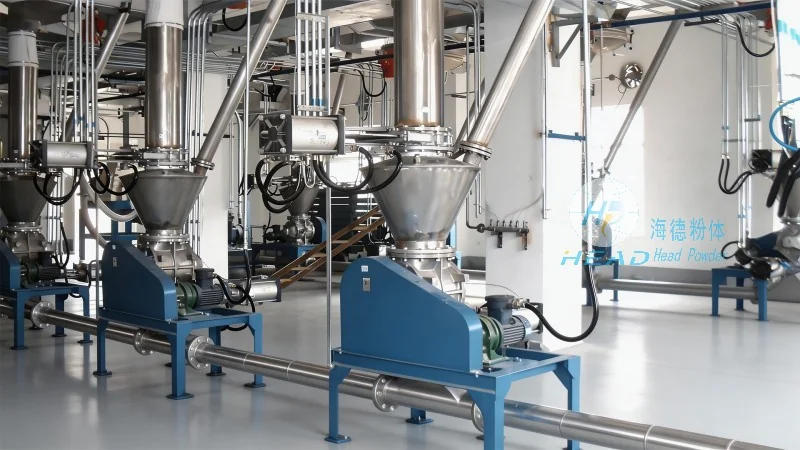
Pneumatic conveying systems utilize air or gas to transport bulk materials, such as resin powders, from one location to another. The core principle involves creating a pressure differential to move the material through a pipeline. For resin powders, which are often fine and abrasive, specialized designs are essential to ensure minimal degradation and efficient transport. The system typically consists of a hopper for material storage, a blower or compressor to generate airflow, and a pipeline network that guides the material to its destination. The choice of conveying method—whether dilute-phase or dense-phase—depends on factors like material properties, distance, and desired flow rate. Dilute-phase systems use higher air velocities to suspend the material, making them suitable for shorter distances and lighter loads. In contrast, dense-phase systems operate at lower velocities, allowing for more controlled and gentle transport, which is crucial for delicate resin powders that may be sensitive to high shear forces.
Key Application Scenarios and Operational Characteristics
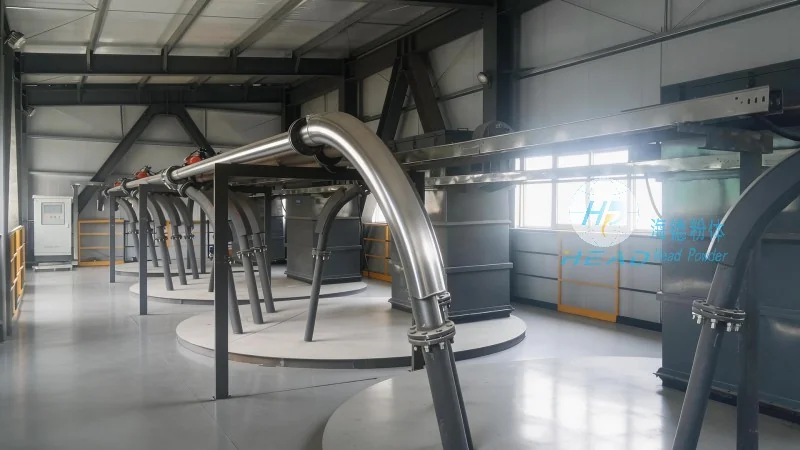
The effectiveness of a resin powder pneumatic conveying system is largely determined by its application scenario. Different industries and production environments demand specific features to optimize performance. For instance, in the manufacturing of plastic products, resin powders are often used in injection molding processes, where consistent and clean material delivery is critical. The system must maintain a low level of contamination and prevent clogging, as any interruption can halt production. In such cases, the system may incorporate features like in-line filters and pressure relief valves to ensure smooth operation. Another common scenario is in the chemical industry, where resin powders are used as raw materials for coatings or adhesives. Here, the system needs to handle varying particle sizes and moisture content, requiring adjustable airflow and temperature control to prevent material agglomeration. Additionally, in pharmaceutical or food processing applications, where hygiene is paramount, the system may be designed with stainless steel components and sealed connections to meet stringent regulatory standards. The operational characteristics, such as the ability to handle high volumes or operate under vacuum conditions, also play a role in selecting the appropriate system for a given scenario. For example, vacuum-assisted systems are ideal for transporting materials from multiple sources or in confined spaces, where traditional pressure systems may not be feasible.
Advantages and Considerations for Resin Powder Conveying
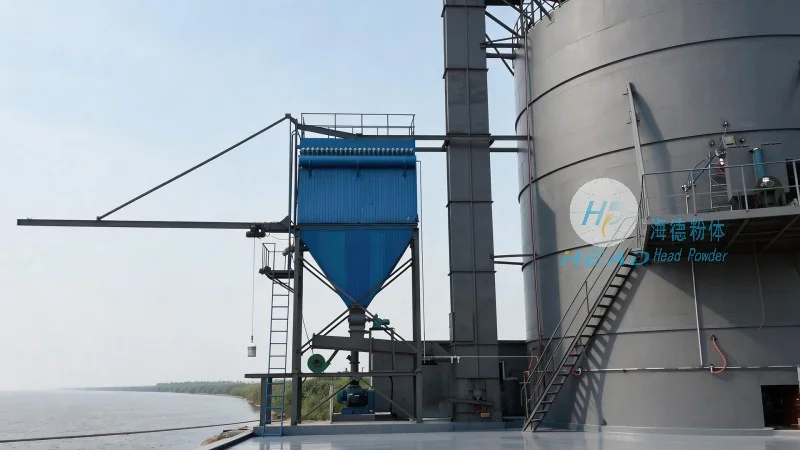
Implementing a pneumatic conveying system for resin powders offers several advantages over traditional methods like belt conveyors or manual handling. The primary benefit is the ability to transport materials in a closed system, which minimizes dust exposure and environmental contamination. This is particularly important for resin powders, which can be hazardous if inhaled or come into contact with skin. Additionally, the system reduces labor costs by automating the material transport process, allowing workers to focus on other critical tasks. However, there are also considerations to keep in mind. The initial investment for a pneumatic conveying system can be higher than for other methods, and maintenance requirements may be more complex due to the need for regular cleaning and component replacement. Moreover, the system's performance is highly dependent on the material's properties, such as particle size distribution and moisture content, which may require adjustments to the airflow rate or system design. Proper sizing of the blower or compressor is essential to ensure sufficient pressure to move the material through the pipeline without excessive energy consumption. The system's design also impacts its efficiency, with well-engineered systems achieving high material recovery rates and minimal loss. In conclusion, a well-designed pneumatic conveying system for resin powders can significantly enhance operational efficiency and safety while maintaining product quality.