

What is an Anhydrous Sodium Sulfate Powder Pneumatic Conveying Equipment? What Are Its Design Princi
Understanding the Anhydrous Sodium Sulfate Powder Pneumatic Conveying Equipment and Its Design Principles
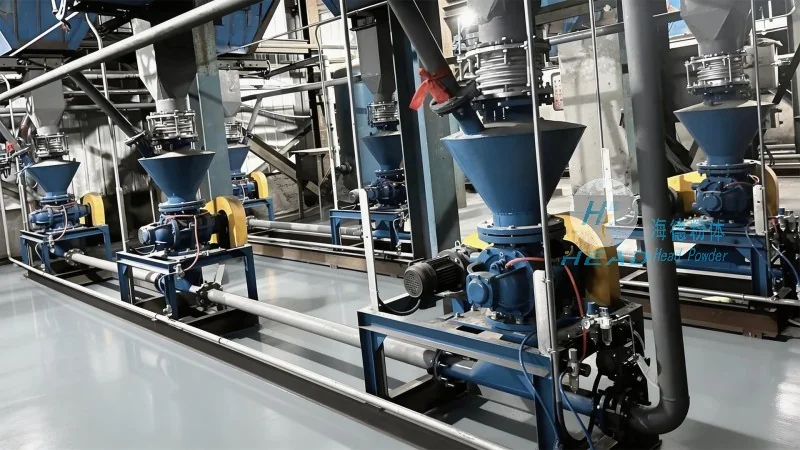
An Overview of Anhydrous Sodium Sulfate Powder Pneumatic Conveying Equipment
Anhydrous sodium sulfate, also known as anhydrous sodium sulfate (Na₂SO₄), is a white crystalline powder widely used in various industrial applications, including chemical manufacturing, glass production, and paper processing. The efficient and safe transportation of this powder is crucial for industrial operations, and pneumatic conveying equipment has emerged as a reliable solution. This equipment is designed to transport dry powder materials like anhydrous sodium sulfate through a pipeline system using air or other gases as the conveying medium. The process involves creating a pressure differential or using vacuum to move the powder particles along the pipeline, ensuring minimal product degradation and loss.
The Role of HeadPowder in Pneumatic Conveying Technology
HeadPowder, a leading manufacturer in the field of powder handling equipment, specializes in developing advanced pneumatic conveying systems tailored to the needs of industries dealing with anhydrous sodium sulfate and other similar powders. With years of experience and a commitment to innovation, HeadPowder has established itself as a trusted partner for companies seeking efficient and reliable powder transportation solutions. The company's expertise lies in understanding the unique properties of anhydrous sodium sulfate, such as its particle size, moisture content, and flow characteristics, and designing equipment that optimizes these factors for seamless operation.
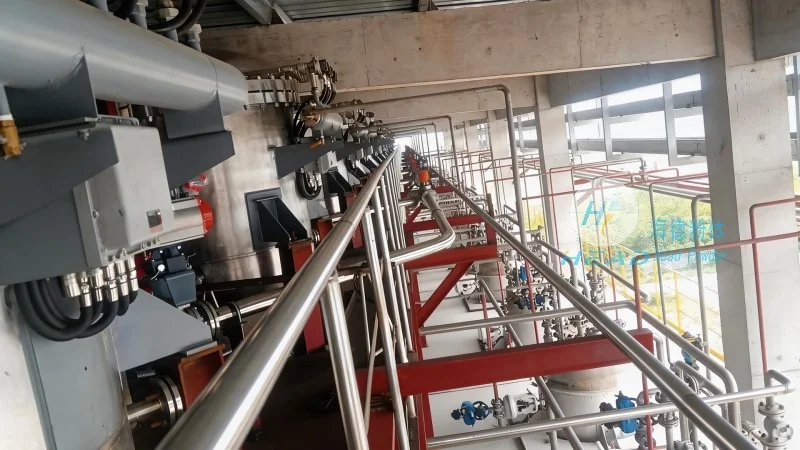
Key Design Principles of Pneumatic Conveying Equipment for Anhydrous Sodium Sulfate
The design of anhydrous sodium sulfate powder pneumatic conveying equipment follows several critical principles to ensure optimal performance and safety. First, the system must be capable of handling the specific physical properties of the powder, including its particle size distribution, bulk density, and cohesive behavior. The equipment is typically designed with a combination of positive and negative pressure conveying modes to accommodate different operational requirements. For example, a positive pressure system uses compressed air to push the powder through the pipeline, while a negative pressure system uses vacuum to draw the powder from the source. The choice of conveying mode depends on factors such as the distance to be covered, the volume of material to be transported, and the need to minimize product contamination.
Second, the equipment must incorporate proper material handling components to prevent product degradation and equipment wear. This includes features like cyclone separators, which separate the powder from the air stream, and filter bags or cartridge filters, which capture fine particles and prevent them from entering the air system. The design also considers the use of corrosion-resistant materials, such as stainless steel, to withstand the chemical properties of anhydrous sodium sulfate and ensure long-term durability. Additionally, the system is equipped with safety features, including pressure relief valves and overfill protection, to prevent accidents and maintain operational safety.
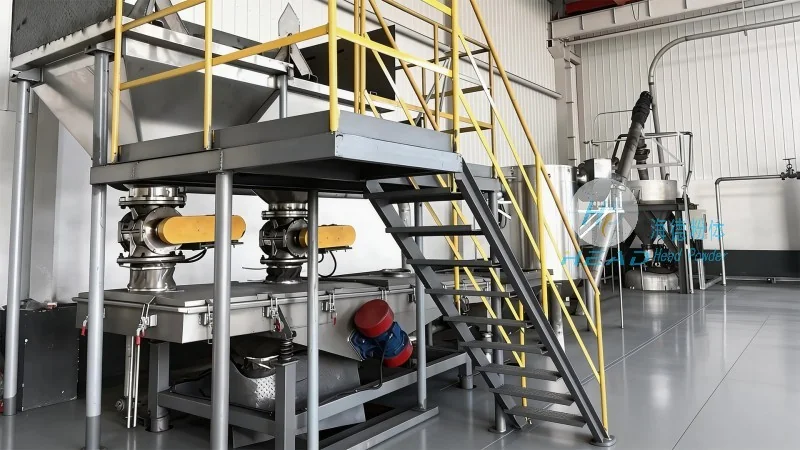
Components and Operation of the Pneumatic Conveying System
The anhydrous sodium sulfate powder pneumatic conveying equipment consists of several key components that work together to transport the material efficiently. The primary components include a hopper or silo for storing the powder, a feeder (such as a rotary valve or screw feeder) to control the flow rate, a conveying line (typically made of stainless steel or other corrosion-resistant materials), and a receiver or discharge hopper at the destination. The system may also include a blower or compressor to generate the necessary air pressure or vacuum, and a control panel to monitor and regulate the operation.
The operation of the system begins with the powder being fed from the hopper into the feeder. The feeder then controls the flow rate of the powder into the conveying line. The blower or compressor provides the air pressure or vacuum, which moves the powder particles along the pipeline. As the powder travels through the system, it passes through cyclone separators and filters, where the powder is separated from the air and collected in the receiver. The air, now clean of powder particles, is discharged to the atmosphere or recirculated if necessary. The entire process is automated and controlled by the system's control panel, ensuring consistent and reliable operation.