

What is a Fine Sand Powder Conveying Machine? And What Are Its Design Principles?
When it comes to handling fine sand and other powders in industrial settings, the choice of equipment can significantly impact operational efficiency and product quality. A fine sand powder conveying machine is a specialized device engineered to transport fine particulate materials, such as sand, cement, or other powders, with precision and reliability. This article explores the fundamental aspects of such machines, focusing on their design principles and the role of Shandong HeadPowder Engineering Co., Ltd. in providing advanced powder handling solutions.
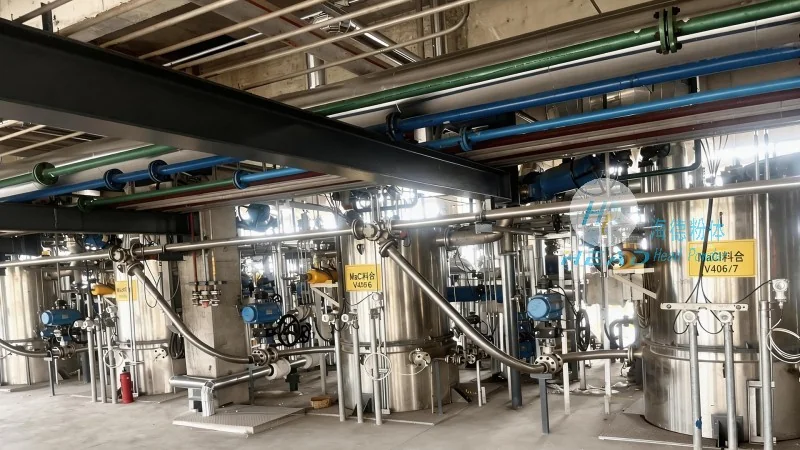
Understanding Fine Sand Powder Conveying Machines: An Overview
Fine sand powder conveying machines are integral to industries that rely on the consistent movement of fine powders, including construction, mining, and chemical processing. These machines are designed to handle materials with particle sizes typically ranging from 0.1 to 2 millimeters, which can present unique challenges due to their fine nature and tendency to create dust or clog traditional conveying systems. The primary goal of these machines is to ensure smooth, low-damage transport while maintaining material integrity and minimizing environmental impact.
The Role of Shandong HeadPowder Engineering Co., Ltd. in Powder Handling Solutions
Shandong HeadPowder Engineering Co., Ltd., a leading manufacturer based in China, specializes in developing and manufacturing high-quality powder conveying equipment. With a strong presence in the industry since its establishment, the company has built a reputation for innovation and reliability in addressing the complex needs of fine powder handling. HeadPowder's expertise lies in tailoring conveying systems to meet specific operational requirements, ensuring that clients receive solutions that are both efficient and cost-effective. The company's headquarters and main operations are located in Shandong, China, where it leverages local resources and industry knowledge to stay at the forefront of powder handling technology.
Design Principles Underpinning Fine Sand Conveying Systems
The design of a fine sand powder conveying machine is governed by several key principles aimed at optimizing performance and durability. One of the most critical considerations is the selection of appropriate materials for the conveying components, such as the hopper, conveyor tubes, and drive mechanisms. These parts must be resistant to abrasion and corrosion, as fine sand can be highly abrasive and may contain acidic or alkaline substances. Additionally, the machine's design incorporates features to prevent material buildup and blockages, such as smooth internal surfaces and self-cleaning mechanisms.
Another essential design principle is the control of air flow and pressure within the system. Fine powders are often transported using pneumatic conveying methods, where air is used to move the material through a pipeline. The design must ensure that the air velocity is sufficient to prevent particle settling but not so high as to cause excessive wear on the equipment or generate excessive dust. This balance is crucial for maintaining system efficiency and minimizing maintenance requirements.
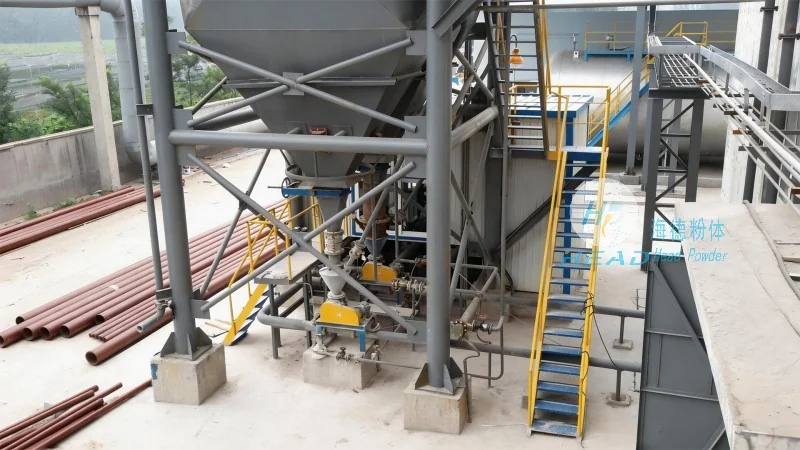
Key Components and Their Functionality in Fine Sand Powder Conveying
A fine sand powder conveying machine typically consists of several interconnected components, each playing a vital role in the overall operation. The hopper serves as the storage and feeding unit, where the fine sand is loaded and then transferred to the conveyor system. The hopper is designed with a sloped bottom to facilitate smooth material flow and may include a feeder mechanism, such as a rotary valve or a screw feeder, to regulate the discharge rate.
The conveyor itself is the core of the system, responsible for transporting the fine sand through the pipeline. There are two main types of pneumatic conveyors: dilute-phase and dense-phase. Dilute-phase systems use high air velocities to move the material, while dense-phase systems use lower velocities with higher material concentrations. The choice between these depends on the specific application and the characteristics of the fine sand being handled. The conveyor tubes are usually made of stainless steel or other corrosion-resistant materials to withstand the abrasive nature of the material.
The drive mechanism, often a blower or a fan, provides the necessary air pressure to move the material. It is designed to deliver consistent airflow and pressure, ensuring that the conveying process is stable and efficient. The control system, which may include sensors and automation, monitors the flow rate, pressure, and other parameters to maintain optimal operation and prevent system failures.
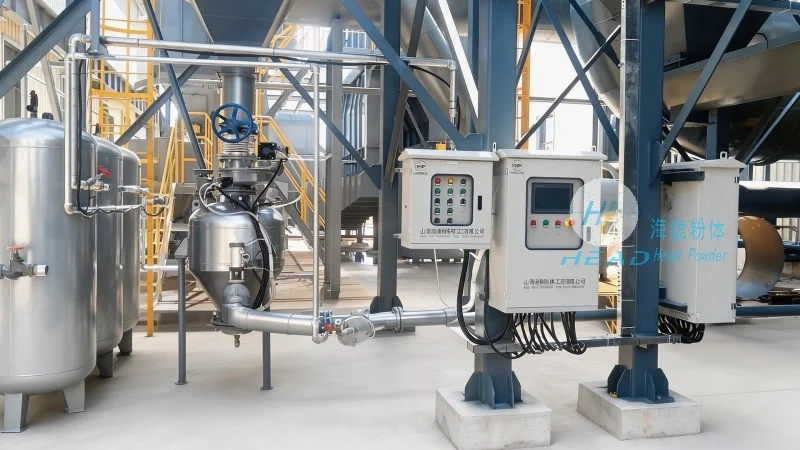
Application Scenarios and Operational Efficiency
Fine sand powder conveying machines are widely used in various industrial applications where the transport of fine powders is essential. In the construction industry, they are used to move sand for concrete production, ensuring a consistent supply of material to mixing plants. In mining operations, they help transport fine ore particles from processing facilities to storage or further treatment areas. The chemical industry also relies on these machines for transporting fine powders, such as pigments or catalysts, in manufacturing processes.
Operational efficiency is a key factor in the success of any conveying system. Shandong HeadPowder Engineering Co., Ltd. focuses on designing machines that minimize downtime and maintenance costs. By incorporating features like self-cleaning mechanisms and durable materials, their conveying systems reduce the frequency of maintenance and extend the lifespan of the equipment. This not only improves productivity but also lowers the overall cost of ownership for clients.
Technical Advantages and Industry Standards
Modern fine sand powder conveying machines offer several technical advantages that make them superior to traditional conveying methods. One of the main advantages is the ability to handle fine powders without the need for mechanical components that can cause wear and tear. Pneumatic conveying systems are also more flexible, as they can be easily reconfigured to accommodate changes in material flow or process requirements. Additionally, these machines are more environmentally friendly, as they minimize dust emissions and reduce the risk of material contamination.
Shandong HeadPowder Engineering Co., Ltd. adheres to international industry standards when designing and manufacturing its conveying equipment. This includes compliance with safety regulations, environmental standards, and quality control measures. The company's commitment to quality is reflected in its rigorous testing and certification processes, ensuring that each machine meets the highest standards of performance and reliability. By choosing HeadPowder's fine sand powder conveying machines, clients can expect a product that is not only efficient but also compliant with global industry requirements.