

What is a Sulfur Powder Pneumatic Conveying System? And What Are Its Design Principles?
When dealing with sulfur powder in industrial processes, the need for efficient and safe material handling becomes paramount. A sulfur powder pneumatic conveying system is a specialized piece of equipment designed to transport bulk sulfur powder from one point to another using air as the conveying medium. This technology is widely adopted across various sectors, including chemical manufacturing, mining, and agricultural processing, due to its ability to handle fine powders like sulfur with high efficiency and minimal dust generation. The system’s design focuses on ensuring reliable transport while maintaining product quality and safety standards.
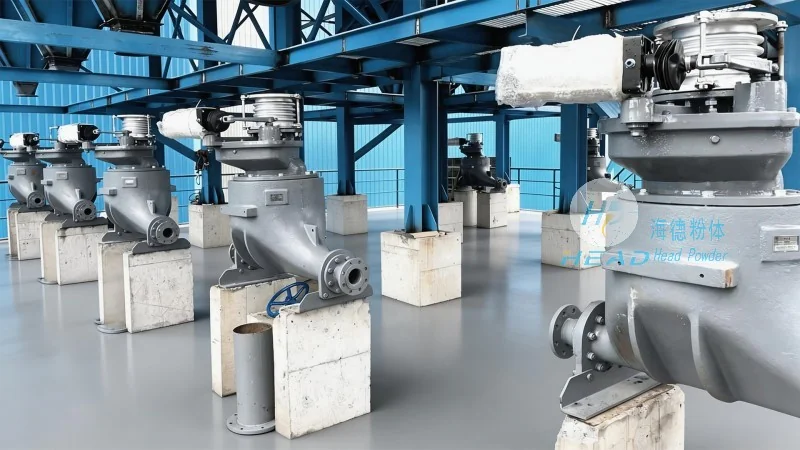
Components of a Sulfur Powder Pneumatic Conveying System
The sulfur powder pneumatic conveying system comprises several critical components that work in concert to achieve effective material transport. The primary components include a storage hopper for holding the sulfur powder, a blower or compressor that generates the necessary air pressure, a pipeline network for conveying the powder-air mixture, a separator that separates the powder from the air at the destination, and a dust collection system to comply with environmental regulations. Each component is meticulously designed to handle the specific characteristics of sulfur powder, such as its particle size, density, and potential reactivity. The hopper is typically equipped with a feeder to control the flow of powder into the system, while the blower provides the force needed to move the powder through the pipeline. The pipeline system may include bends, valves, and filters to ensure smooth and unobstructed flow. The separator, often a cyclone or baghouse, captures the sulfur powder and returns it to the process, while the air is filtered and released. This integrated approach ensures that the system operates efficiently and safely, minimizing downtime and maintenance.
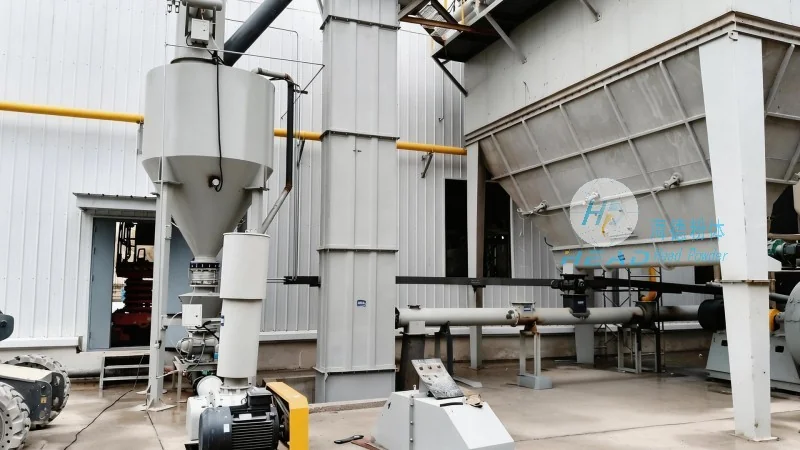
Design Principles of the Sulfur Powder Pneumatic Conveying System
The design of a sulfur powder pneumatic conveying system is guided by several fundamental principles to optimize performance and safety. The first principle is the selection of appropriate air velocity and pressure. The air velocity must be high enough to overcome the resistance of the powder particles in the pipeline but not so high as to cause excessive wear on the system components or increase energy consumption. The pressure level is determined by the distance and height the sulfur powder needs to be transported, with higher pressures required for longer or steeper vertical lifts. Another critical principle is the consideration of the powder’s physical properties, including particle size distribution, bulk density, and moisture content. These factors directly impact the conveying capacity and the system’s design, as larger or more cohesive particles may require higher air velocities or different pipeline configurations. Additionally, the system must be designed to address the potential hazards associated with sulfur powder, such as its reactivity and the risk of dust explosions. This involves incorporating safety features like explosion-proof components, proper ventilation, and dust suppression systems to ensure compliance with industrial safety standards and prevent accidents.
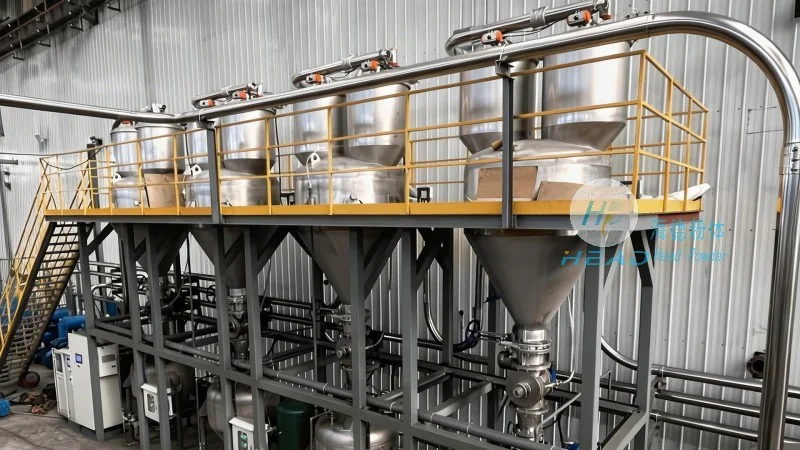
Advantages of Using a Sulfur Powder Pneumatic Conveying System
Implementing a sulfur powder pneumatic conveying system offers numerous advantages over traditional material handling methods. One of the most significant benefits is the reduction in labor costs and operational time. Unlike manual or mechanical conveying methods, which require constant human intervention, the pneumatic system can transport large quantities of sulfur powder over long distances with minimal supervision. This not only increases productivity but also reduces the risk of human error and workplace injuries. The system also minimizes product contamination and degradation, as the enclosed pipeline prevents exposure to air, moisture, and other contaminants that could affect the quality of the sulfur powder. This is particularly important in applications where the sulfur powder is used in sensitive processes, such as the production of high-purity sulfuric acid or fertilizers. Furthermore, the system reduces dust emissions and improves workplace safety by containing the powder within the system and using filtration and dust collection systems. This not only complies with environmental regulations but also enhances the overall safety of the industrial facility, reducing the risk of respiratory issues or dust-related accidents among workers.