

Design and Calculation of Rare Earth Powder Pneumatic Conveying and Equipment Selection
For industries dealing with rare earth powders, efficient and reliable material handling is crucial. The design and selection of pneumatic conveying systems for rare earth powders require careful consideration of material properties, process requirements, and operational conditions. This article provides an overview of the key aspects involved in designing a pneumatic conveying system for rare earth powders, including design calculations and equipment selection criteria.
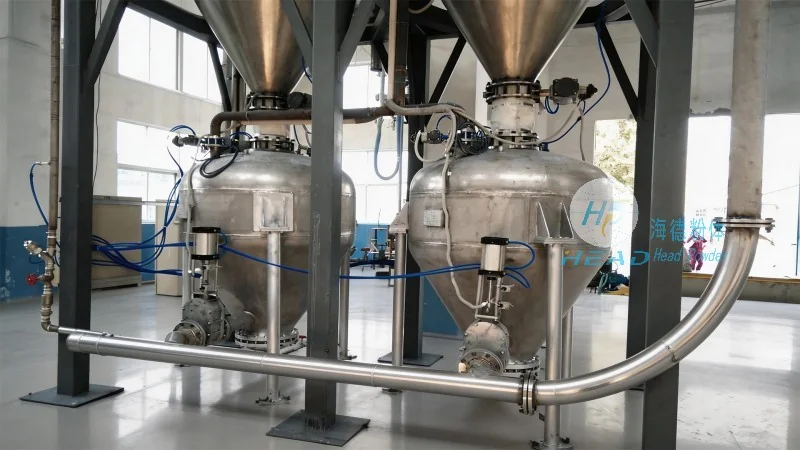
Key Factors in Rare Earth Powder Pneumatic Conveying Design
The successful implementation of a rare earth powder pneumatic conveying system hinges on several critical factors. First, the physical and chemical properties of the rare earth powder, such as particle size distribution, density, moisture content, and flowability, must be thoroughly analyzed. These properties directly impact the system's performance and the type of conveying equipment required. For instance, fine powders with high moisture content may necessitate different air flow rates and pressure levels compared to dry, coarse powders. Additionally, the process flow rate, which determines the amount of material to be conveyed per unit time, is a fundamental parameter that influences the system's capacity and energy consumption. The operating environment, including ambient temperature and pressure, also plays a role in the design, as it affects the air density and, consequently, the conveying velocity.
Design Calculations for Rare Earth Powder Pneumatic Conveying
Design calculations for rare earth powder pneumatic conveying systems involve several steps to ensure optimal performance. The first step is to determine the required conveying velocity, which is typically based on the material's terminal velocity and the desired system efficiency. The terminal velocity of the powder particles in the air stream is calculated using the drag force equation, accounting for particle size, density, and air properties. Once the terminal velocity is known, the conveying velocity is set to be at least 1.5 to 2 times the terminal velocity to ensure stable transport and prevent particle deposition or clogging. The air flow rate is then calculated based on the required conveying velocity and the cross-sectional area of the conveying line. The pressure drop across the system components, including the feed point, conveying line, and discharge point, is also calculated to determine the necessary blower or compressor capacity. This involves using empirical formulas or computational fluid dynamics (CFD) simulations to model the flow behavior and pressure losses.
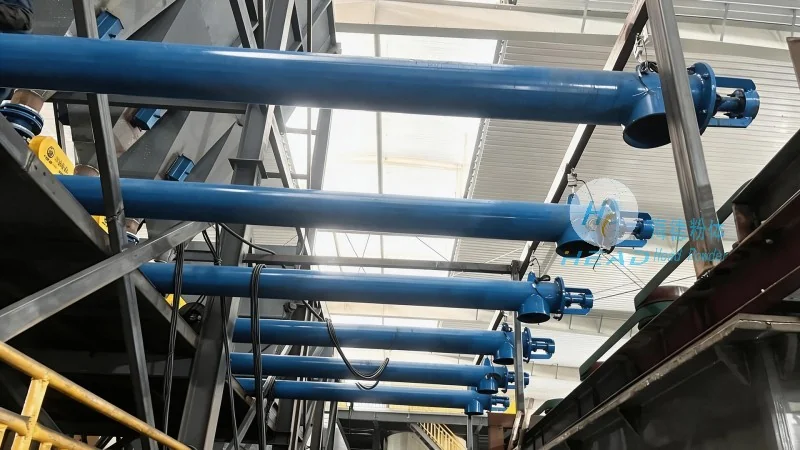
Equipment Selection for Rare Earth Powder Pneumatic Conveying
Equipment selection is a critical step in the design of a rare earth powder pneumatic conveying system. The choice of equipment depends on the system's capacity, the material's properties, and the operational requirements. For low to medium capacity systems, positive displacement blowers or rotary lobe blowers are commonly used as the air source, providing consistent pressure and flow. For high-capacity systems, centrifugal blowers or compressors may be more suitable, offering higher flow rates and lower operating costs. The conveying line material is typically selected based on the material's corrosiveness and abrasiveness. Stainless steel or special alloys are often used for rare earth powders, which may be chemically reactive or abrasive. The feed and discharge equipment, such as rotary valves, feeders, and cyclone separators, are chosen to match the material's flow characteristics and to prevent material buildup or blockages. For example, rotary valves with adjustable speed controls are used to regulate the feed rate, while cyclone separators are employed to separate the powder from the air stream at the discharge point.
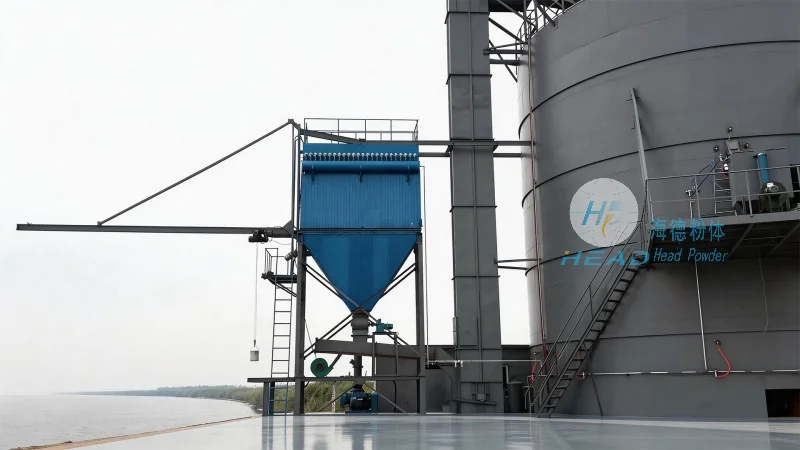
Company Profile: Shandong HeadPowder Engineering Co., Ltd.
Shandong HeadPowder Engineering Co., Ltd., operating under the brand name headpowder, specializes in the design, manufacturing, and installation of pneumatic conveying systems for various industrial applications, including rare earth powder handling. With a strong focus on engineering excellence and customer satisfaction, headpowder provides comprehensive solutions tailored to the specific needs of each client. The company's team of experienced engineers and technicians utilizes advanced design tools and methodologies to ensure that each system is optimized for performance, reliability, and cost-effectiveness. Headpowder's commitment to quality and innovation has made it a trusted partner for industries relying on efficient material handling solutions.
Conclusion
In conclusion, the design and selection of a rare earth powder pneumatic conveying system require a thorough understanding of the material properties, process requirements, and operational conditions. By carefully considering these factors and performing accurate design calculations, the optimal equipment can be selected to ensure efficient and reliable material transport. Companies like Shandong HeadPowder Engineering Co., Ltd. play a vital role in providing expert guidance and customized solutions to meet the diverse needs of industries dealing with rare earth powders.