HeadPowder, a leading engineering firm based in Shandong, China, specializes in the design and selection of equipment for pneumatic conveying systems handling glass particles. This article provides a comprehensive overview of the design calculations and equipment selection processes essential for efficient and reliable glass particle transport.
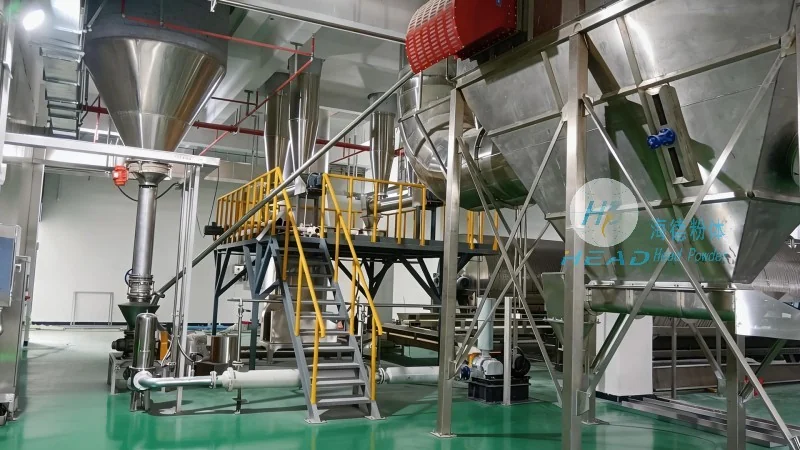
Key Design Considerations for Glass Particle Pneumatic Conveying
When designing a pneumatic conveying system for glass particles, several critical factors must be considered to ensure optimal performance and system longevity. The first step involves assessing the physical properties of the glass particles, such as particle size distribution, density, and moisture content. These characteristics directly impact the selection of conveying air velocity, pressure, and system configuration. For instance, fine glass powders may require higher air velocities to prevent particle deposition and ensure smooth flow, while larger particles might necessitate lower velocities to avoid excessive wear on system components.
Design Calculations for Pneumatic Conveying Systems
The design process begins with determining the required air flow rate and pressure. This is calculated based on the material's bulk density, the conveying distance, and the system's layout. The formula for air velocity, often referred to as the "minimum conveying velocity," is derived from the relationship between particle size, density, and air properties. For glass particles, typical conveying velocities range from 20 to 40 meters per second, depending on particle size and system design. Additionally, the pressure drop across the system components, including pipelines, bends, and valves, must be calculated to ensure the system operates within the specified pressure limits. This involves using empirical correlations and computational fluid dynamics (CFD) simulations to model airflow and particle behavior.
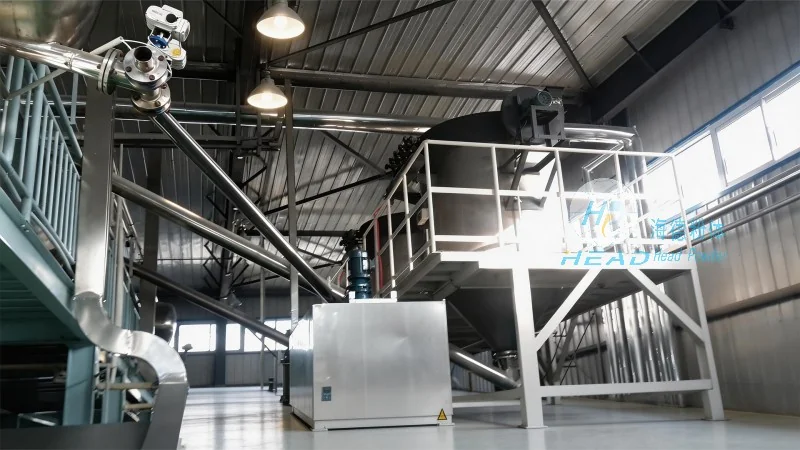
Equipment Selection for Glass Particle Pneumatic Conveying
HeadPowder recommends a combination of components tailored to the specific requirements of glass particle handling. The primary equipment includes a positive displacement blower or a rotary lobe compressor to generate the necessary air pressure. For systems requiring high air flow rates, a centrifugal fan may be used, but it is less suitable for fine glass powders due to potential particle clogging. The conveying pipeline is typically made of stainless steel or PVC to prevent corrosion and ensure durability. Bends and elbows are designed with smooth transitions to minimize pressure losses and reduce particle attrition. Additionally, a filter system is essential to capture fine glass particles and maintain air quality, preventing contamination of downstream processes.
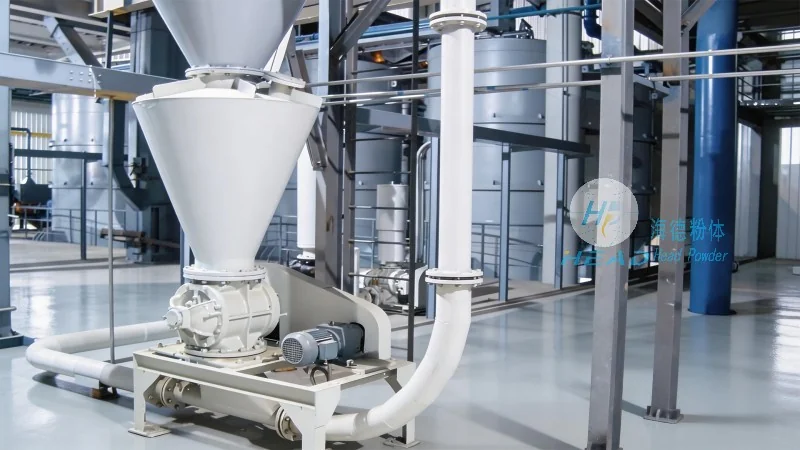
Case Study: Successful Implementation by HeadPowder
One of HeadPowder's recent projects involved designing a pneumatic conveying system for a glass manufacturing plant in Shandong. The system was tasked with transporting fine glass powders from a storage silo to a production line over a distance of 50 meters. Through detailed design calculations, the team determined the optimal air velocity and pressure, selecting a rotary lobe compressor with a capacity of 10,000 cubic meters per hour. The pipeline was constructed using stainless steel with a diameter of 150 mm, and the system incorporated multiple bends and a filter unit. The final system achieved a conveying efficiency of over 95%, with minimal particle loss and reduced maintenance costs compared to traditional mechanical conveying methods.
Conclusion and Recommendations
Efficient pneumatic conveying of glass particles requires a systematic approach that integrates accurate design calculations with appropriate equipment selection. HeadPowder's expertise in this field ensures that clients receive tailored solutions that meet their specific operational needs. By considering the physical properties of the glass particles and applying proven engineering principles, businesses can enhance productivity, reduce operational costs, and improve overall system reliability. For companies seeking to optimize their glass particle handling processes, HeadPowder offers comprehensive engineering services, including system design, equipment selection, and installation support.




