

Operating Process and Working Principle of Lysine Powder Pneumatic Conveying Equipment
Lysine is a vital amino acid extensively utilized in animal feed and food sectors. Efficient and reliable transportation of lysine powder is crucial for maintaining product quality and operational efficiency within production lines. Pneumatic conveying systems provide a solution for handling fine powders like lysine, offering advantages such as dust-free operation, reduced product contamination, and the capability to transport materials over long distances without mechanical components. This article explores the operating process and working principles of a typical lysine powder pneumatic conveying system, highlighting key components and the steps involved in material transfer.
Key Components of the Pneumatic Conveying System
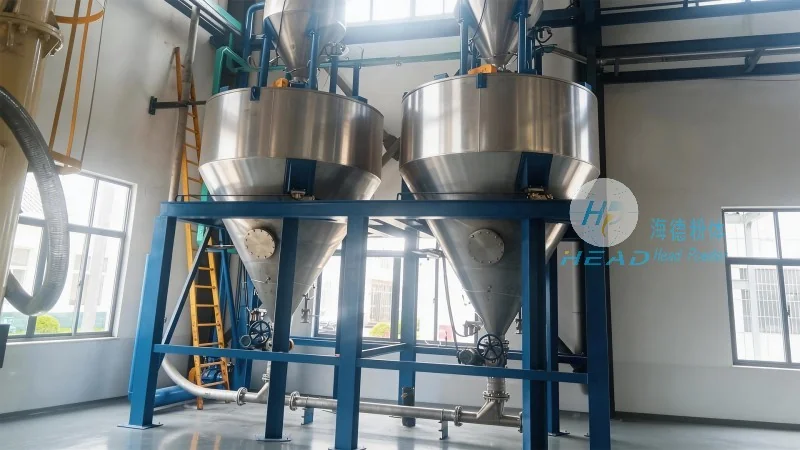
The lysine powder pneumatic conveying equipment typically comprises several essential components that operate in coordination to achieve efficient material transport. The main components include a hopper for storing lysine powder, a rotary valve or feeder to control material flow rate, a conveying pipeline, a blower or air compressor to generate necessary air pressure, a filter system to remove dust and particles from the air, and a discharge hopper or silo for received material. Each component plays a critical role in ensuring smooth system operation and maintaining lysine powder quality throughout the conveying process.
Operating Process of the Lysine Powder Pneumatic Conveying Equipment
The operation of the lysine powder pneumatic conveying system begins with loading lysine powder into the storage hopper. The powder is then fed into the conveying pipeline via a rotary valve or feeder, which regulates flow rate to prevent overloading or underfeeding. Simultaneously, the blower or air compressor initiates air flow, creating a pressure differential within the pipeline. The air flow draws lysine powder particles into the pipeline, where they are carried along by the air stream. The conveying pipeline may include bends, expansions, or other fittings to direct material to the desired destination. At the receiving end, the air and powder mixture passes through a filter system, separating air from powder. The filtered air is discharged, while lysine powder is collected in the discharge hopper or silo. The system continues to operate as long as feed and air supply are maintained, ensuring continuous material flow.
Working Principle of the Pneumatic Conveying System
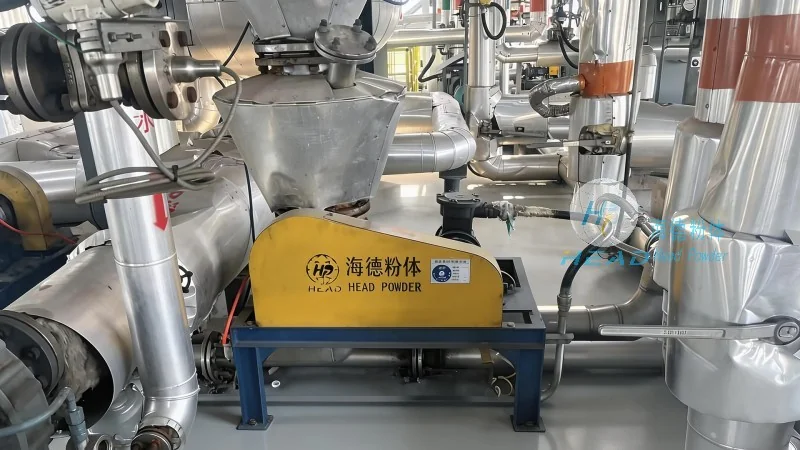
The working principle of the lysine powder pneumatic conveying system is based on using air as the conveying medium to transport powder. The system operates under either positive or negative pressure, depending on design and application. In positive pressure systems, the blower or air compressor supplies air under pressure into the pipeline, pushing powder forward. In negative pressure systems, air is drawn out of the pipeline by a vacuum created by the blower, pulling powder along. Efficient conveying relies on balancing air velocity with powder particle size and density. Air velocity must be sufficient to overcome gravitational and frictional forces, ensuring particles remain suspended and transported through the pipeline. The filter system is crucial for maintaining lysine powder quality by preventing dust and particles from being released into the environment or contaminating receiving equipment.
Advantages of Using Pneumatic Conveying for Lysine Powder
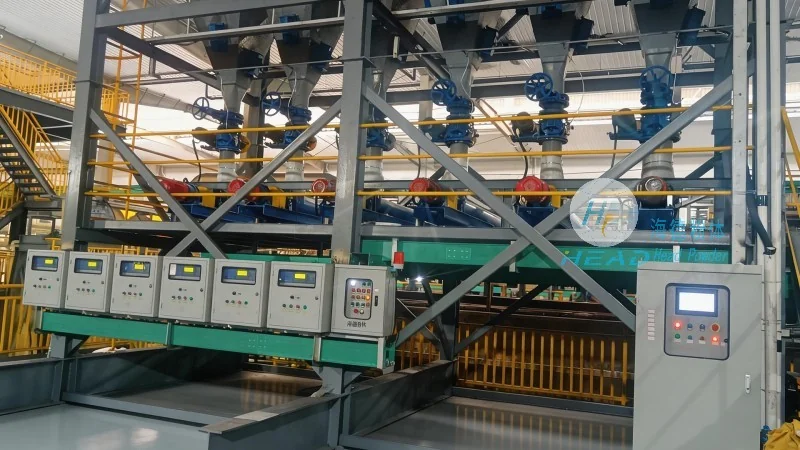
Implementing a pneumatic conveying system for lysine powder offers advantages over traditional mechanical conveying methods. First, it provides dust-free operation, essential for product quality and safe working environments. The enclosed system prevents fine particle release, reducing inhalation and contamination risks. Second, pneumatic conveying reduces product contamination by minimizing external surface contact and preventing cross-contamination. Third, the system allows long-distance transportation without intermediate storage or handling, improving operational efficiency and reducing downtime. Additionally, the system can be easily integrated with other production equipment like mixers or granulators to form continuous production lines. Flexibility allows adjustments in flow rate and pressure to accommodate varying production demands.
Maintenance and Operational Considerations
To ensure reliable and efficient operation of the lysine powder pneumatic conveying equipment, regular maintenance and proper operational considerations are essential. The rotary valve or feeder should be checked regularly for correct function and consistent flow rate. The blower or air compressor should be inspected for proper air pressure and flow, with the filter system cleaned or replaced as needed for optimal performance. The conveying pipeline should be inspected for blockages or leaks affecting system efficiency. The system should be operated within recommended pressure and flow rates to prevent component damage and maintain lysine powder quality. Proper operator training on system operation and maintenance is also crucial to minimize downtime and maximize system lifespan.