

Principles and Application Scenarios of AlN Material Pneumatic Conveying
Aluminum nitride (AlN) is a high-performance ceramic material widely used in semiconductor, electronics, and optical industries due to its excellent thermal conductivity, electrical insulation properties, and chemical stability. The efficient handling and transportation of AlN powders or granules are critical for industrial processes, and pneumatic conveying has emerged as a preferred method for such applications. This article explores the fundamental principles of AlN material pneumatic conveying and highlights the key characteristics of its working scenarios, with a focus on the expertise of Shandong HeadPowder Engineering Co., Ltd. (referred to as HeadPowder).
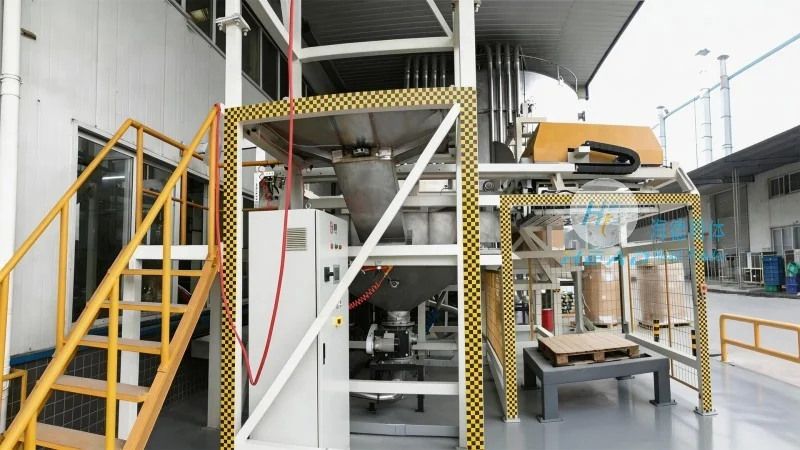
Company Overview: HeadPowder
HeadPowder, formally known as Shandong HeadPowder Engineering Co., Ltd., is a leading manufacturer specializing in engineering solutions for powder handling and material transport systems. With a strong presence in China, particularly in Shandong province, the company has built a reputation for delivering reliable and efficient pneumatic conveying systems tailored to the unique needs of the AlN industry. HeadPowder's commitment to innovation and quality ensures that their solutions meet the stringent requirements of modern manufacturing processes, providing clients with robust and durable equipment for AlN material handling.
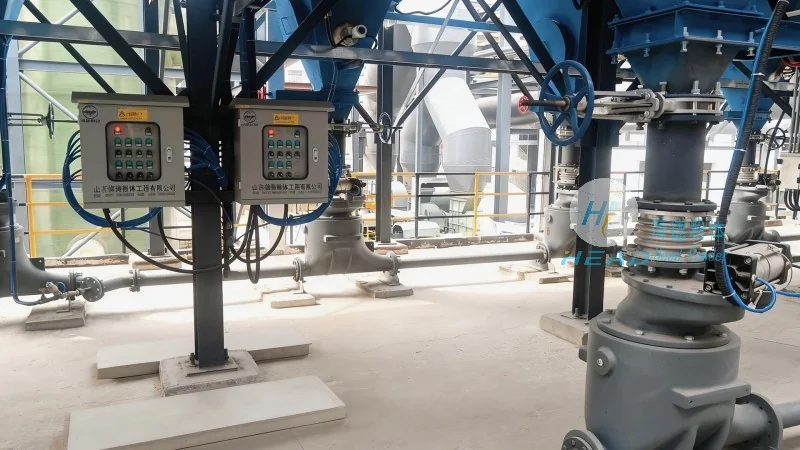
Principles of Pneumatic Conveying for AlN Materials
Pneumatic conveying, also known as pneumatic transport, is a technology that uses pressurized air or gas to move bulk materials through a pipeline system. For AlN materials, which are often fine powders or granules, this method offers several advantages over traditional mechanical conveying. The core principle involves creating a flow of air that entrains the AlN particles, carrying them from the source to the destination. This process relies on the balance between the air velocity and the particle size, density, and shape. In HeadPowder's systems, advanced design considerations ensure optimal air flow rates and pressure differentials to achieve efficient and low-loss transport of AlN materials. The system typically includes components such as a feeder, a conveying line, a separator, and a receiver, each playing a crucial role in maintaining the integrity of the AlN material during transport.
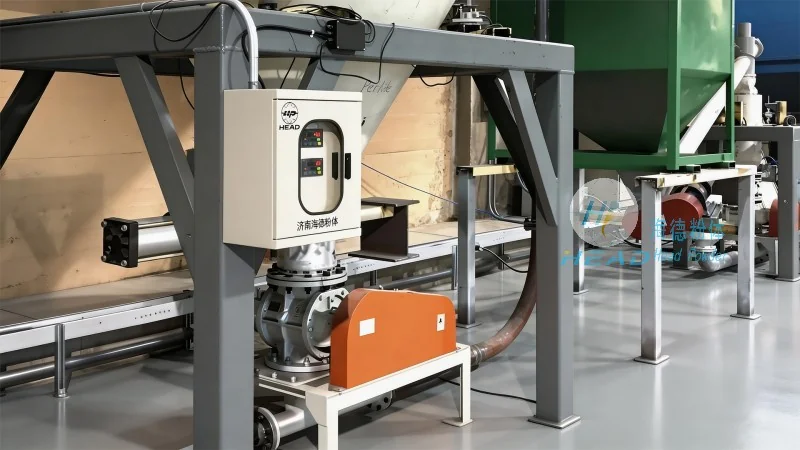
Key Features and Working Scenarios of AlN Pneumatic Conveying
The working scenarios of AlN material pneumatic conveying systems are diverse and tailored to specific industrial applications. These systems are designed to handle AlN powders in various forms, including fine powders, agglomerates, or pre-formed granules. The key features include high transport efficiency, minimal material degradation, and the ability to operate in both positive and negative pressure modes. Positive pressure systems, where air is forced through the pipeline, are commonly used for long-distance or high-volume transport, while negative pressure systems, which draw air and material into the system, are suitable for applications requiring dust control and environmental protection. HeadPowder's systems are engineered to adapt to these different scenarios, ensuring flexibility and reliability in various industrial settings.
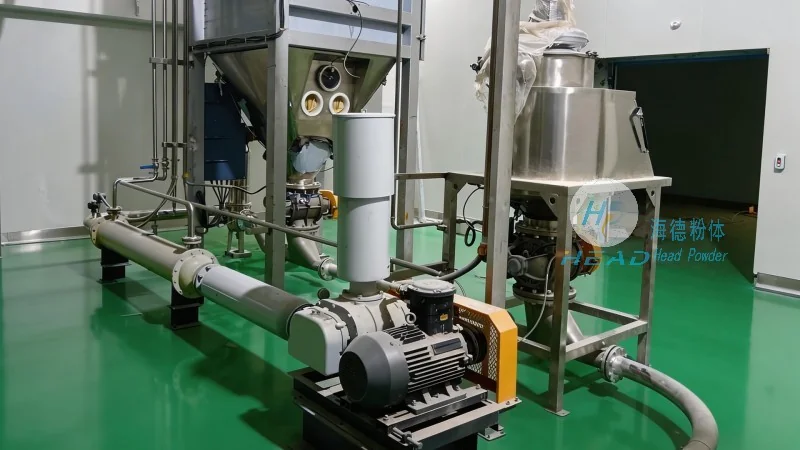
Application Examples and Benefits
AlN material pneumatic conveying systems are widely adopted in the production lines of semiconductor wafer manufacturing, where precise control over the material flow is essential. In these applications, the systems help maintain the purity of AlN powders, preventing contamination from external sources. Another common use case is in the production of AlN-based ceramics and composites, where consistent material transport is critical for achieving uniform product properties. The benefits of using HeadPowder's pneumatic conveying systems include reduced labor costs, improved safety by eliminating manual handling of powders, and enhanced process efficiency through optimized material flow. Additionally, the systems contribute to environmental sustainability by minimizing dust emissions and improving overall process control.