

Working Principle and Characteristics of Cement Gray Material Pneumatic Conveying
HeadPowder, a leading provider in the field of material handling solutions, specializes in the design, manufacturing, and installation of pneumatic conveying systems for various industrial applications. This article focuses on the working principle and key characteristics of pneumatic conveying systems specifically for cement gray material, a common and challenging material in many industrial processes.
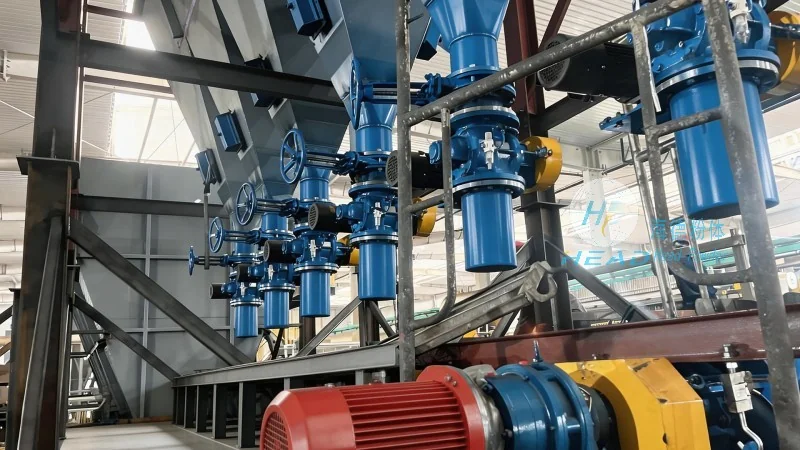
Working Principle of Cement Gray Material Pneumatic Conveying
The core of pneumatic conveying for cement gray material lies in the use of air as the conveying medium to transport the material from a source to a destination. The process typically involves several key components and steps. First, the material is fed into a hopper or feeder, where it is then introduced into a pipeline. Simultaneously, a fan or blower generates a high-velocity airflow within the pipeline. This airflow creates a negative pressure or positive pressure environment, depending on the system design, which pulls or pushes the material particles along with the air stream. The material is then carried through the pipeline to the discharge point, where it is separated from the air and collected in a receiver or silo. The separation process often involves cyclones, filters, or other separation equipment to ensure the material is effectively separated from the air before final discharge.
Key Characteristics of Cement Gray Material Pneumatic Conveying Systems
When considering the characteristics of pneumatic conveying systems for cement gray material, several factors stand out as critical for efficient and reliable operation. First, the material's properties, such as its particle size distribution, moisture content, and flowability, significantly impact system design. Cement gray material often has a wide range of particle sizes, which can affect the air velocity required for proper transport. Additionally, the material's moisture content can influence its tendency to agglomerate or stick to surfaces, requiring special considerations in system design to prevent blockages. Flowability is another critical factor; if the material is cohesive or has poor flow characteristics, the system may need to incorporate vibrators, agitators, or other devices to ensure smooth material flow.
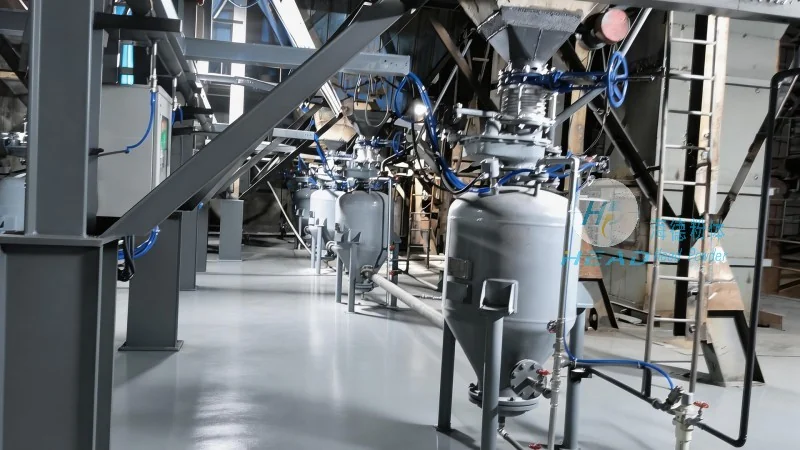
Another important characteristic is the system's pressure and velocity requirements. Pneumatic conveying systems can operate under either positive pressure or negative pressure (also known as suction or vacuum systems). For cement gray material, positive pressure systems are often preferred as they can handle higher material loads and are less susceptible to blockages compared to suction systems. The air velocity within the pipeline is a critical parameter, as it must be high enough to transport the material but not so high as to cause excessive wear on the system components or to generate too much dust. Proper air velocity ensures that the material particles are fully entrained by the air stream and transported efficiently without causing operational issues.
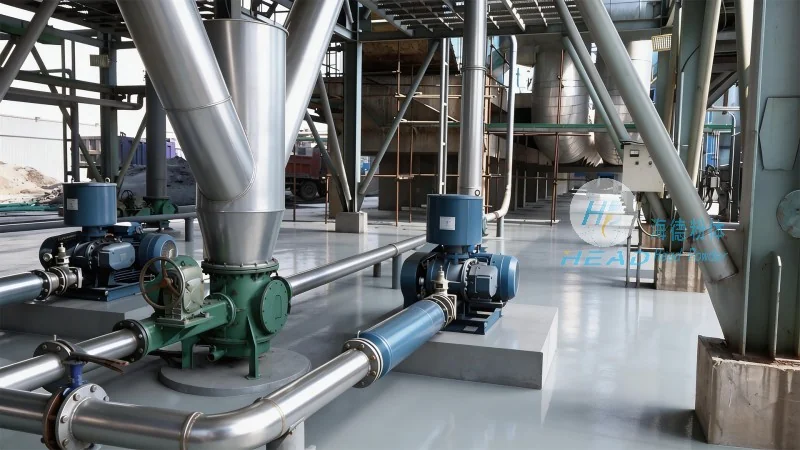
Advantages and Applications of Cement Gray Material Pneumatic Conveying
Pneumatic conveying systems for cement gray material offer several advantages over traditional mechanical conveying methods. One of the primary benefits is the ability to transport material over long distances without the need for multiple transfer points or intermediate storage. This reduces the overall system complexity and maintenance requirements. Additionally, pneumatic conveying can handle materials that are difficult to convey mechanically, such as those with high moisture content or those that tend to agglomerate. The system's enclosed design also helps to contain dust and prevent environmental contamination, which is particularly important for cement gray material, which can be a source of airborne dust particles.
These systems are widely used in various industrial applications, including cement production, where they are used to transport raw materials, finished cement products, and waste materials. In the chemical industry, pneumatic conveying is used to transport various powders and granules, including those with high moisture content or abrasive properties. The food and pharmaceutical industries also utilize pneumatic conveying systems for transporting bulk materials, as the enclosed design helps maintain product purity and prevent contamination. Overall, the versatility and efficiency of pneumatic conveying systems make them a preferred choice for handling cement gray material in a wide range of industrial settings.