

What is an Alumina Particle Material Pneumatic Conveying Line? What are its Design Principles?
Alumina, a critical industrial material, is often transported in bulk through pneumatic conveying systems. These systems are designed to efficiently move alumina particles from one location to another, ensuring minimal loss and maintaining product integrity. The alumina particle material pneumatic conveying line is a specialized solution tailored for the unique properties of alumina, such as its fine particle size and abrasive nature.
Core Design Principles of Pneumatic Conveying Systems
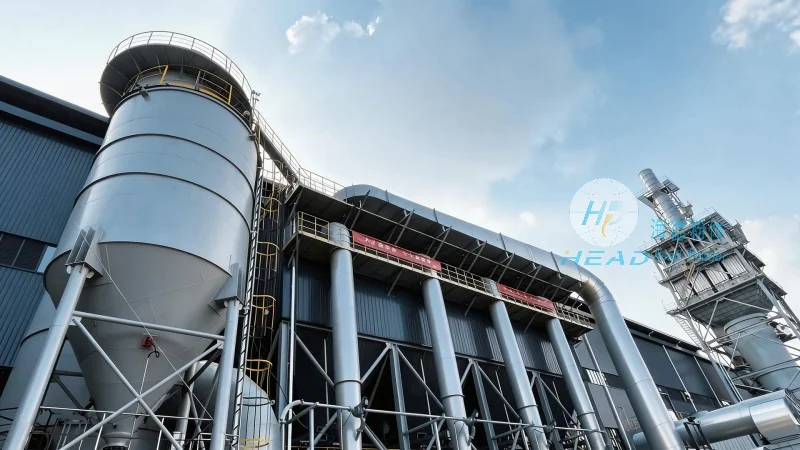
The design of an alumina particle material pneumatic conveying line is based on fundamental principles of fluid dynamics and material handling. The primary goal is to create a consistent flow of particles using air or other gases. Key components include the hopper, which holds the alumina, the conveyor line itself, and the receiver where the material is deposited. The system operates by generating a pressure differential, either through positive or negative pressure, to move the particles. For alumina, which can be abrasive, the design incorporates materials resistant to wear, such as stainless steel or specialized alloys, to ensure longevity and maintain product quality.
Components and Functionality of the Conveying Line
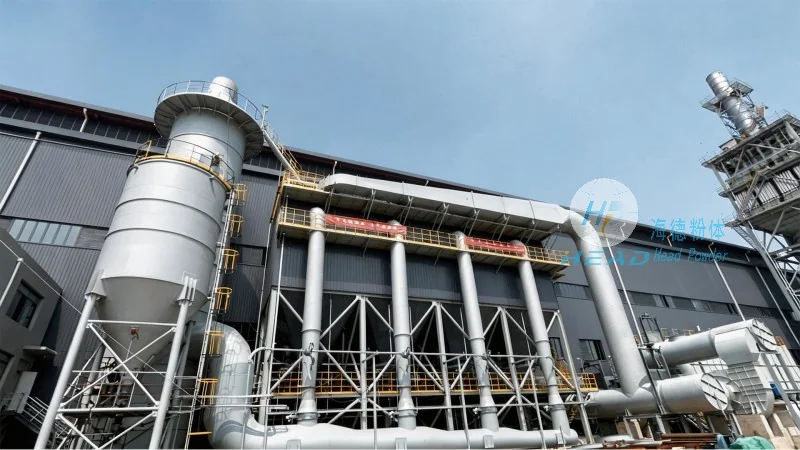
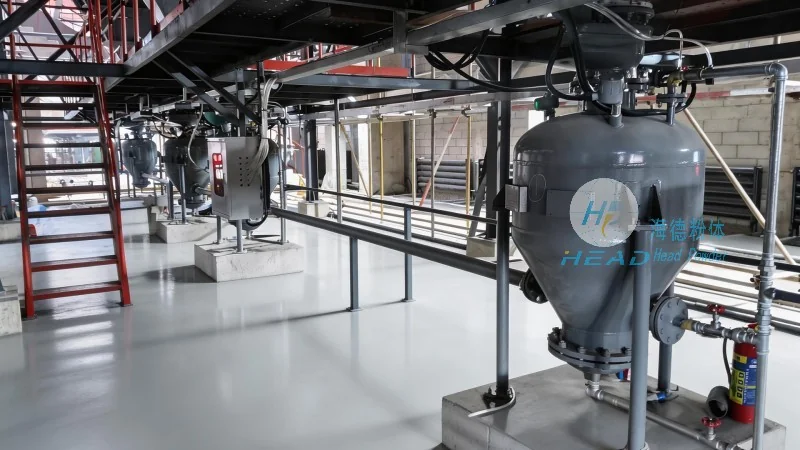
HeadPowder, a leading manufacturer based in Shandong, China, specializes in designing and supplying alumina particle material pneumatic conveying lines. The company’s approach focuses on integrating advanced engineering with practical application. The conveying line typically includes a hopper with a discharge valve, a rotary airlock to control material flow, and a pipeline system that may include bends, elbows, and filters. The air compressor or vacuum system provides the necessary pressure to transport the alumina particles. The receiver is designed to collect the material efficiently, often with a dust collection system to prevent environmental contamination. The entire system is engineered to handle the specific challenges of alumina, such as its tendency to agglomerate or create dust, ensuring a smooth and reliable operation.
Advantages of Using Pneumatic Conveying for Alumina
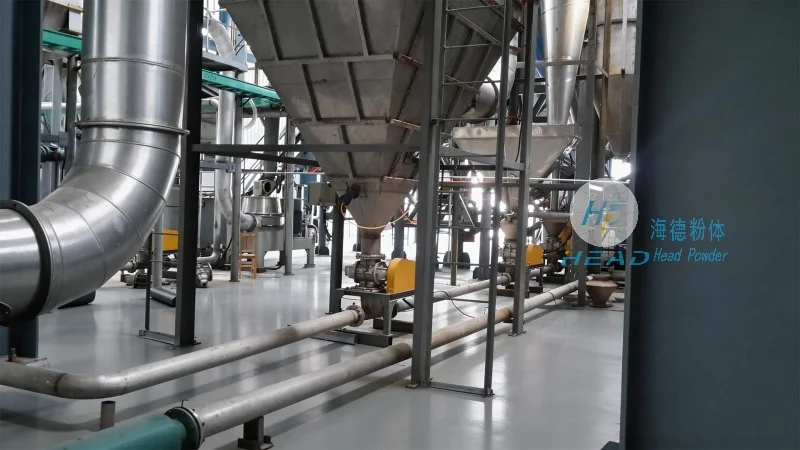
Compared to traditional methods like belt conveyors or bucket elevators, pneumatic conveying offers several advantages for alumina particle transport. It provides a closed system, reducing dust exposure and environmental impact. The system is also flexible, allowing for changes in the conveying route without major structural modifications. Additionally, pneumatic conveying can handle varying particle sizes and flow rates, making it suitable for different production stages. The design principles, such as maintaining consistent air flow and particle velocity, ensure that the alumina particles are transported without degradation, preserving their quality for downstream processes like sintering or grinding.
Customization and Application in Industrial Settings
HeadPowder’s alumina particle material pneumatic conveying lines are customizable to meet the specific needs of various industrial applications. Whether for a small-scale laboratory or a large-scale production facility, the system can be scaled to handle different volumes of alumina. The company’s engineers work closely with clients to understand their operational requirements, ensuring that the conveying line is optimized for efficiency and reliability. The design incorporates features such as variable speed drives, which allow for adjustment of the conveying rate based on production demands. This flexibility helps in maintaining a stable production process and reducing downtime. The use of high-quality materials and robust construction ensures that the system can withstand the abrasive nature of alumina, providing long-term performance and minimal maintenance.
Conclusion and Company Overview
In summary, an alumina particle material pneumatic conveying line is a sophisticated system designed to efficiently transport alumina particles while maintaining product integrity. The design principles, centered on fluid dynamics and material handling, ensure a reliable and efficient operation. HeadPowder, with its expertise and commitment to quality, provides customized solutions that meet the unique challenges of alumina transport. Based in Shandong, China, the company leverages advanced engineering and practical experience to deliver systems that enhance industrial productivity and safety. The alumina particle material pneumatic conveying line, when properly designed and maintained, is a critical component in the alumina processing industry, enabling smooth and efficient material movement from source to destination.