

Classification and Composition of Pneumatic Conveying Systems for Lithium-Ion Battery Nanomaterials
HeadPowder, a leading manufacturer based in Shandong, China, specializes in the design and production of advanced pneumatic conveying systems tailored for the handling of lithium-ion battery nanomaterials. These systems are critical in the modern battery manufacturing industry, ensuring efficient and safe material transport from raw material processing to final product assembly.
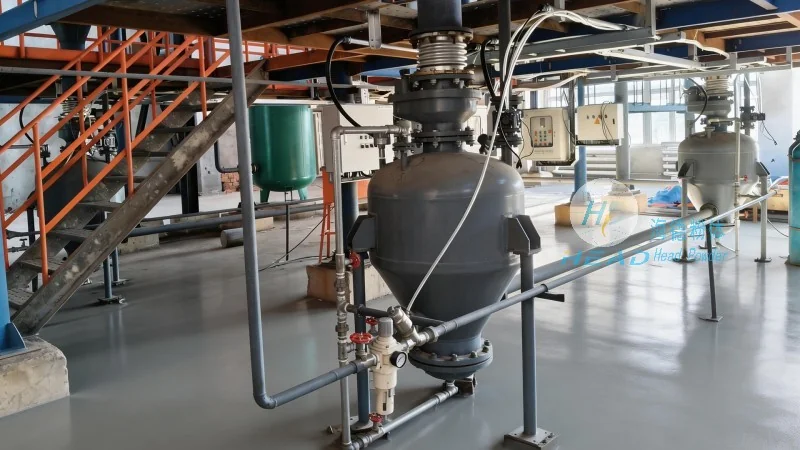
The pneumatic conveying systems for lithium-ion battery nanomaterials are categorized based on their operational principles and application scenarios. The primary classifications include dilute-phase and dense-phase conveying systems, each offering distinct advantages depending on the material properties and process requirements.
Types of Pneumatic Conveying Systems
Dilute-phase pneumatic conveying systems utilize low-pressure air to transport materials in a dispersed state, making them suitable for materials with low dust content and moderate flow rates. These systems are commonly used for transporting powders like lithium carbonate or lithium hydroxide, which are essential precursors in battery production. The design typically involves a venturi or a pressure drop section to create the necessary airflow, ensuring uniform material distribution and minimal blockage risks.
Dense-phase pneumatic conveying, on the other hand, operates at higher pressures and uses a higher proportion of material to air ratio. This method is ideal for handling sensitive nanomaterials that are prone to agglomeration or degradation under low-pressure conditions. The system employs a positive displacement pump or a pressure vessel to maintain a dense material stream, reducing the risk of particle attrition and preserving the material's integrity. This is particularly important for lithium battery cathode materials, which require precise particle size and morphology to optimize battery performance.
Key Components of Pneumatic Conveying Systems
The composition of a pneumatic conveying system for lithium-ion battery nanomaterials includes several essential components that work in tandem to ensure efficient operation. The primary components are the material feed system, the conveying line, the air supply unit, and the control and monitoring system.
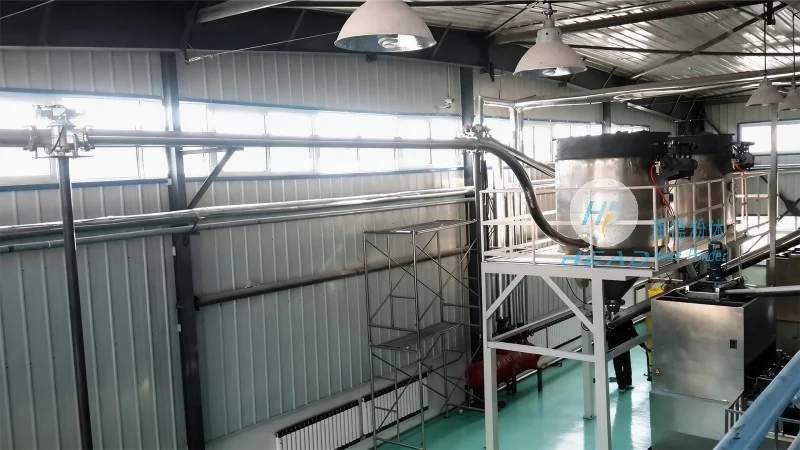
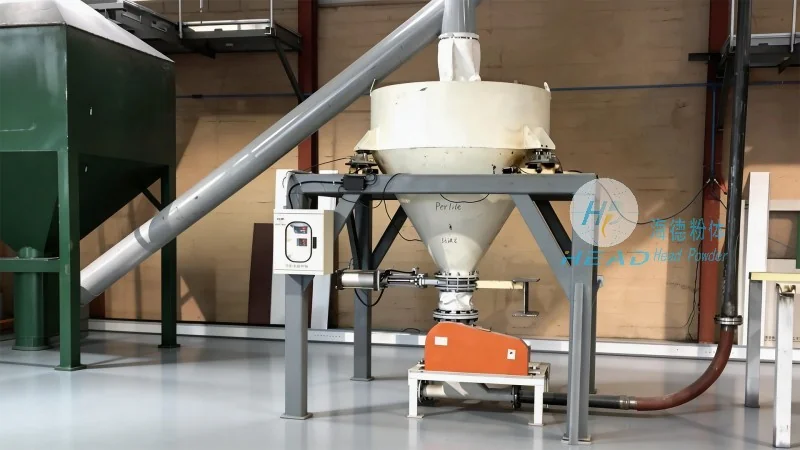
The material feed system is responsible for introducing the nanomaterials into the conveying line. This component typically includes a hopper or a feeder that can handle various material types, from fine powders to granules. For lithium battery nanomaterials, the feed system must be designed to prevent material bridging and ensure a consistent flow rate. Some systems incorporate vibration or mechanical agitators to maintain material mobility and prevent clogging.
The conveying line is the core of the system, consisting of pipes or ducts that transport the material and air mixture. The material of construction is critical, as it must resist corrosion and abrasion from the nanomaterials. Stainless steel or specialized alloys are commonly used to ensure durability and maintain material purity. The line design also considers the pressure drop and flow velocity, which directly impact the system's efficiency and material transport capacity.
The air supply unit provides the necessary airflow to move the material through the conveying line. This component includes a blower or a compressor, along with air filtration and drying systems to ensure the air quality is suitable for sensitive nanomaterials. The air must be free from contaminants that could affect the material's quality or cause equipment wear. In some cases, the system may incorporate a vacuum or pressure control mechanism to adjust the airflow based on the material's characteristics.
The control and monitoring system manages the operation of the entire pneumatic conveying process. This includes sensors for material flow rate, pressure, and temperature, as well as control valves and automation software. The system allows for real-time monitoring and adjustment, ensuring optimal performance and preventing operational issues such as blockages or overpressure. For lithium battery nanomaterials, precise control is essential to maintain the material's quality and prevent degradation during transport.
Application and Benefits
HeadPowder's pneumatic conveying systems for lithium-ion battery nanomaterials are widely used in various stages of battery production, from raw material processing to electrode manufacturing. The systems offer several key benefits, including improved material handling efficiency, reduced labor costs, and enhanced safety compared to traditional mechanical conveying methods.
One of the primary advantages is the ability to handle fine and sensitive nanomaterials without causing particle degradation or agglomeration. The low-impact transport method minimizes material attrition, preserving the particle size distribution and surface properties that are critical for battery performance. This is particularly important for lithium battery cathode materials, which require uniform particle size to achieve optimal electrochemical performance.
Additionally, the pneumatic conveying systems provide a closed-loop operation, reducing dust emissions and improving workplace safety. This is crucial in battery manufacturing facilities, where dust from nanomaterials can pose health risks and environmental concerns. The closed system also helps maintain material purity by preventing contamination from external sources.
The systems also offer flexibility in material handling, allowing for the transport of different materials in the same line by adjusting the air pressure and flow rate. This reduces equipment costs and simplifies the material handling process in multi-material production environments. Furthermore, the compact design of the systems makes them suitable for installation in limited space, which is common in modern battery manufacturing plants.