

Working Principle and Features of the Trilithium Lithium-Ion Battery Powder Handling System
Trilithium lithium-ion battery powder handling systems are critical components in the production and processing of lithium-ion batteries, particularly for the handling of active materials like cathode powders. These systems are designed to efficiently transport, store, and manage the fine powders used in battery manufacturing, ensuring consistent quality and process reliability. The following sections will explore the working principles and key features of such systems, providing insights into how they operate and the advantages they offer.
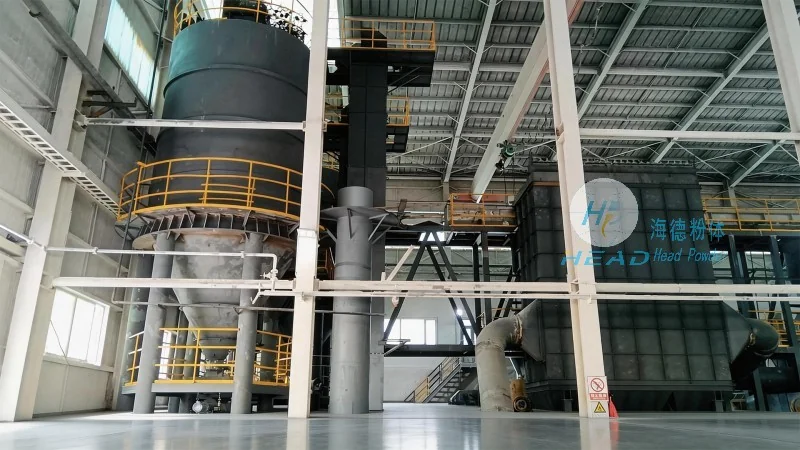
Working Principle of Trilithium Powder Handling Systems
The core working principle of trilithium powder handling systems revolves around the integration of advanced material handling technologies tailored to the specific properties of lithium-ion battery powders. These powders, typically composed of active materials such as lithium cobalt oxide (LCO), lithium nickel manganese cobalt oxide (NMC), or lithium iron phosphate (LFP), are characterized by their fine particle size, hygroscopic nature, and sensitivity to contamination. To address these challenges, modern powder handling systems employ a combination of mechanisms including pneumatic conveying, mechanical conveying, and automated control systems.
Pneumatic conveying, for instance, utilizes compressed air to transport powders through a network of pipes, allowing for continuous and dust-free movement from storage silos to processing equipment. This method is particularly effective for handling large volumes of fine powders while maintaining particle integrity and preventing agglomeration. Mechanical conveying systems, on the other hand, rely on screw conveyors, belt conveyors, or bucket elevators to move powders through enclosed or open channels, offering flexibility in layout and compatibility with various production environments.
Automated control systems play a pivotal role in optimizing the operation of powder handling processes. These systems typically include sensors for level monitoring, flow rate control, and particle size analysis, as well as programmable logic controllers (PLCs) that regulate the operation of conveying equipment based on real-time data. By integrating these technologies, trilithium powder handling systems can achieve precise control over powder flow, minimize material loss, and enhance overall process efficiency.
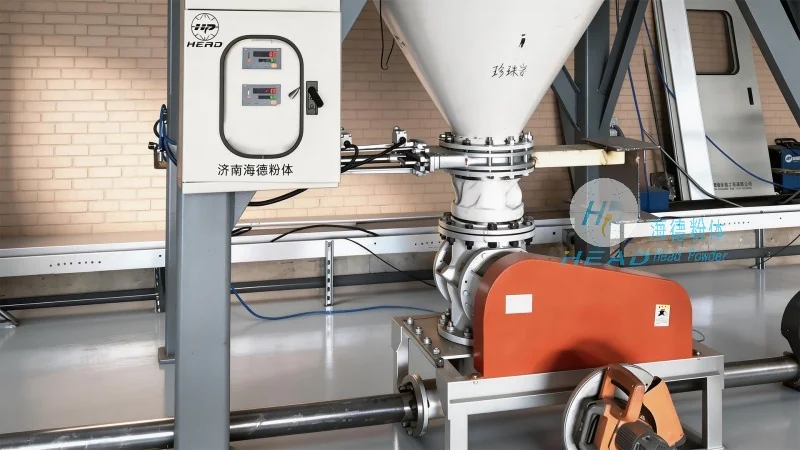
Key Features of Trilithium Powder Handling Systems
Trilithium powder handling systems are distinguished by several key features that make them suitable for high-performance battery manufacturing. One of the most notable features is their ability to maintain a clean and controlled environment, which is essential for preventing contamination of sensitive battery powders. Advanced dust collection and filtration systems are integrated into the design to capture and remove airborne particles, ensuring that the powder remains free from impurities that could affect battery performance.
Another critical feature is the system's efficiency in handling large volumes of material while minimizing energy consumption. By optimizing the conveying velocity and pressure, trilithium powder handling systems can achieve high throughput without excessive energy use, contributing to cost savings and environmental sustainability. This efficiency is further enhanced by the use of modular components, which allow for easy maintenance and scalability, enabling manufacturers to adapt the system to changing production demands.
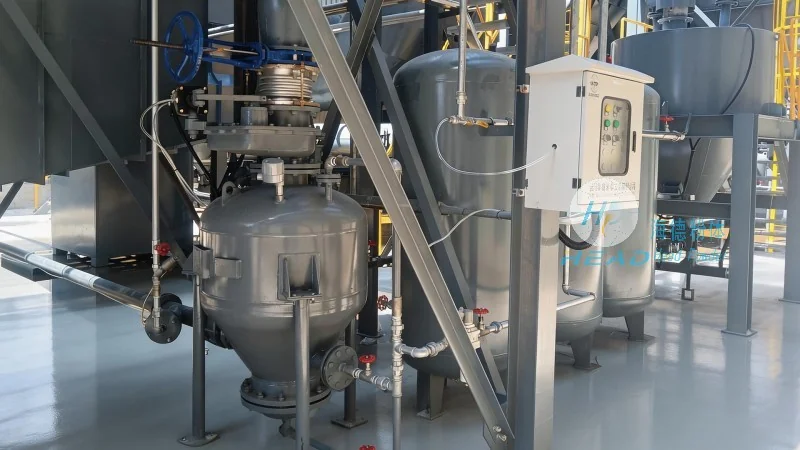
Precision and consistency are also paramount in trilithium powder handling systems. The systems are equipped with advanced measurement and control technologies to ensure that the powder flow rate, density, and particle size remain within tight tolerances. This level of precision is crucial for maintaining the uniformity of battery electrodes, which directly impacts the performance and lifespan of the final battery product. Additionally, the systems often incorporate feedback mechanisms that adjust operation in real time, further improving process stability and reducing variability.
Application and Industry Relevance
Trilithium powder handling systems are widely used in the lithium-ion battery industry, particularly in the production of high-energy density batteries for electric vehicles and renewable energy storage systems. The systems are essential for managing the active materials that form the cathode and anode of the battery, ensuring that these components are processed with the highest degree of accuracy and purity. By providing reliable and efficient powder handling solutions, these systems contribute to the overall quality and reliability of lithium-ion batteries, which are increasingly critical to modern energy solutions.
Shandong HeadPowder Engineering Co., Ltd., a leading manufacturer in the field, specializes in the design and production of advanced powder handling systems tailored to the needs of the battery industry. With facilities located in Shandong, China, the company leverages its expertise in material science and engineering to develop systems that meet the stringent requirements of modern battery manufacturing. The company's commitment to innovation and quality has made its trilithium powder handling systems a trusted choice for manufacturers seeking to enhance their production processes and improve product performance.