

Working Principle and Features of Fly Ash Pneumatic Conveying Systems
For industrial applications, especially in power plants and cement factories, the efficient handling of fly ash is crucial for operational efficiency and environmental compliance. A key technology in this regard is the fly ash pneumatic conveying system, which uses air as the medium to transport fly ash from one location to another. This system offers a flexible and effective solution for material transport, addressing the challenges associated with traditional methods like gravity or mechanical conveyors.
Working Principle of the Fly Ash Pneumatic Conveying System
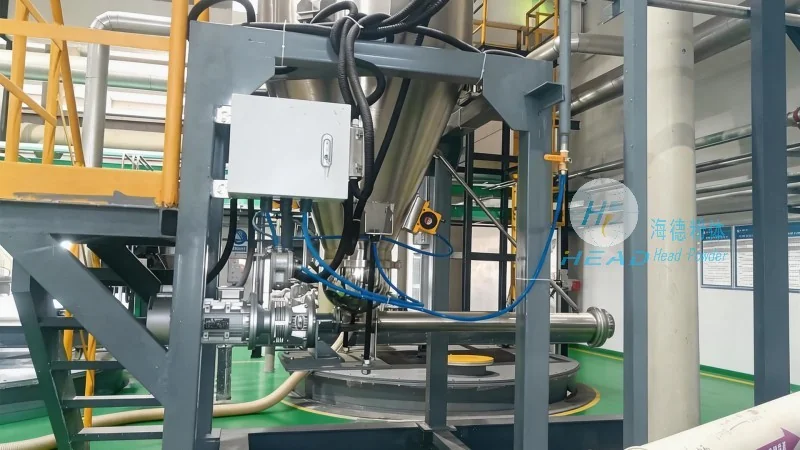
The working principle of the fly ash pneumatic conveying system revolves around the use of air as a transport medium to move fly ash particles through a pipeline. The system can be categorized into two main types: positive pressure systems and negative pressure systems, each with distinct operational characteristics. In a positive pressure system, a blower or compressor generates high-pressure air that is forced through the pipeline, carrying the fly ash particles. This type is suitable for short to medium transport distances and can handle a wide range of particle sizes. The positive pressure system ensures that the material is continuously moved forward, preventing blockages and ensuring consistent flow. On the other hand, a negative pressure system, also known as a vacuum system, uses a vacuum pump to create a low-pressure environment within the pipeline, drawing the fly ash particles into the system. This method is ideal for long-distance transport and for applications where dust control is a priority, as it prevents dust from escaping into the environment. The system components, including the feeding hopper, airlock, and pipeline, work in tandem to ensure smooth and efficient transport. The feeding hopper is designed to control the flow rate of the fly ash, preventing overloading and ensuring consistent material introduction. The airlock, typically a rotary or slide valve, separates the material from the air stream, preventing backflow and maintaining system integrity. The pipeline network is constructed from materials that are resistant to corrosion and abrasion, such as stainless steel or special alloys, to withstand the harsh conditions of fly ash transport. The blower or vacuum pump is selected based on the required air volume and pressure, ensuring that the system operates within optimal parameters. Overall, the working principle of the fly ash pneumatic conveying system is a sophisticated combination of fluid dynamics and mechanical engineering, designed to provide reliable and efficient material transport.
Key Features of the Fly Ash Pneumatic Conveying System
The fly ash pneumatic conveying system offers several key features that make it an attractive solution for industrial material handling. One of the primary advantages is its flexibility in system design and installation. The pipeline can be configured in various configurations, including straight, curved, or vertical sections, allowing for easy integration into existing plant layouts. This flexibility reduces the need for extensive site modifications and minimizes construction time and costs. Another significant feature is the system's ability to provide a dust-free and clean operation environment. By enclosing the fly ash within the pipeline, the system prevents dust emissions, which is crucial for maintaining air quality and compliance with environmental regulations. This also reduces the risk of dust-related health issues for workers and minimizes the need for additional dust control measures. The system ensures efficient and continuous material transport, which improves overall operational efficiency and reduces downtime. Unlike traditional methods such as bucket elevators or belt conveyors, the pneumatic system can handle high volumes of material with minimal maintenance, leading to lower operational costs. The system is also highly adaptable to different fly ash characteristics, including varying particle sizes, moisture content, and chemical compositions. This adaptability allows the system to be used in a wide range of applications, from power plants to cement factories, without requiring significant modifications. The maintenance requirements are relatively low, as the main components are robust and designed for long-term operation. Regular inspections and routine maintenance are sufficient to ensure the system's reliability and performance. Finally, the system contributes to environmental sustainability by reducing the reliance on external transport vehicles and minimizing the carbon footprint associated with material handling. This makes it an environmentally friendly choice for industries looking to reduce their environmental impact.