

PUR Powder Pneumatic Conveying System: What It Is and Its Design Principles
For industrial applications that require efficient and reliable transport of powdered materials, the PUR powder pneumatic conveying system stands out as a versatile solution. This technology, developed by Shandong HeadPowder Engineering Co., Ltd., a leading manufacturer based in China, offers a robust method for moving materials like polyurethane (PUR) powders through a system using air pressure. Understanding both the system's functionality and its design principles is crucial for industries seeking to optimize material handling processes.
What Is a PUR Powder Pneumatic Conveying System?
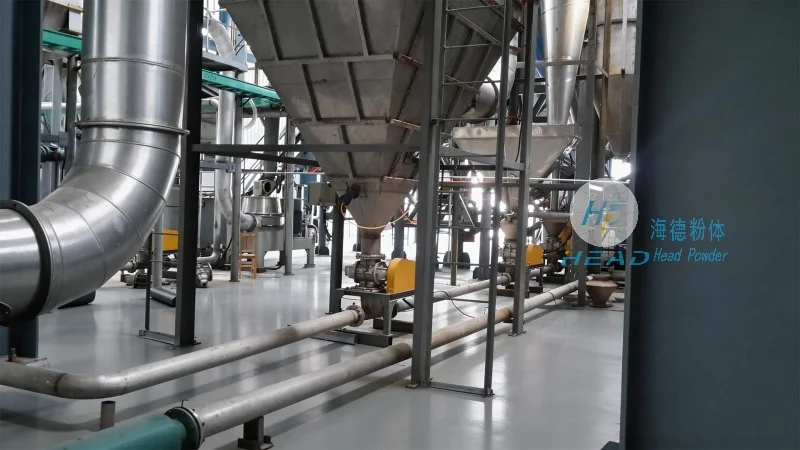
A PUR powder pneumatic conveying system is a type of equipment designed to transport dry, free-flowing powders, such as polyurethane (PUR) powder, using compressed air or other gases. Unlike traditional mechanical conveyors, this system relies on the force of air to move material through a pipeline. The system typically consists of a hopper for material storage, a feeder to control the flow rate, a conveying line, and a receiver to collect the material at the destination. The key advantage of this system is its ability to handle materials that are difficult to convey with mechanical means, such as those that are abrasive, sticky, or prone to dust generation.
Design Principles of the PUR Powder Pneumatic Conveying System
The design of a PUR powder pneumatic conveying system is based on several fundamental principles to ensure efficient and safe operation. The first principle is the selection of the appropriate conveying method, which can be classified as pressure or vacuum systems. Pressure systems use compressed air to push the material through the pipeline, while vacuum systems use a vacuum to pull the material. For PUR powders, a pressure system is often preferred due to the material's properties and the need for consistent flow. The second principle is the calculation of the air velocity and flow rate. The air velocity must be high enough to keep the powder particles suspended in the air stream but not so high as to cause excessive pressure drop or wear on the system components. The third principle is the design of the hopper and feeder. The hopper must be designed to prevent material bridging and agglomeration, which can lead to blockages. The feeder, often a rotary valve or a screw feeder, must be able to control the flow rate accurately to maintain a stable conveying condition. The fourth principle is the selection of the pipeline material and diameter. The pipeline must be made of materials that are resistant to the abrasive nature of PUR powders and must have a diameter that allows for efficient flow without excessive pressure loss. The fifth principle is the inclusion of a receiver and a dust collection system. The receiver is used to collect the material at the end of the conveying line, while the dust collection system is essential for maintaining air quality and preventing dust contamination in the workplace.
Key Components and Their Functions
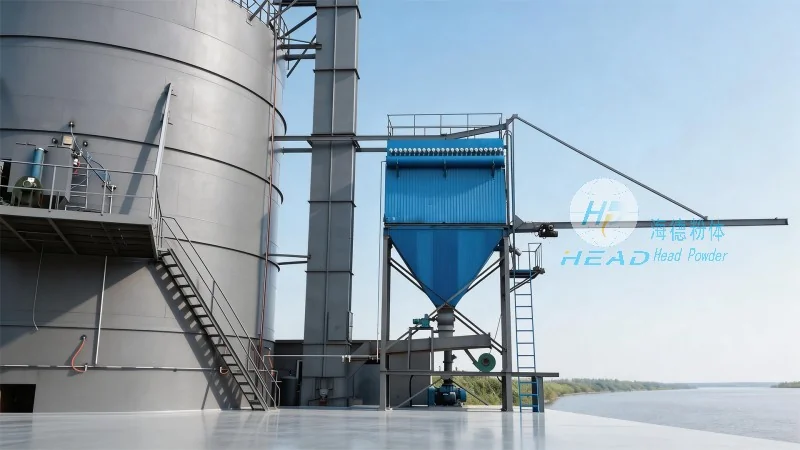
The PUR powder pneumatic conveying system consists of several key components, each playing a critical role in the overall operation. The hopper is the first component and is responsible for storing the material. It is typically made of stainless steel or other corrosion-resistant materials to prevent material degradation. The hopper is equipped with a lid and a discharge port, which is connected to the feeder. The feeder is the second component and is responsible for controlling the flow rate of the material. It is usually a rotary valve or a screw feeder, which can be adjusted to maintain a consistent flow rate. The feeder is connected to the conveying line, which is the third component. The conveying line is a pipeline that transports the material from the feeder to the receiver. It is made of materials such as stainless steel or plastic, depending on the material being conveyed. The conveying line is equipped with bends and elbows to change the direction of the material flow. The receiver is the fourth component and is responsible for collecting the material at the end of the conveying line. It is typically a hopper or a tank, which is connected to the conveying line via a discharge port. The receiver is equipped with a lid and a discharge valve, which allows the material to be discharged when needed. The dust collection system is the fifth component and is responsible for collecting the dust generated during the conveying process. It is typically a bag filter or an electrostatic precipitator, which can be connected to the conveying line or the receiver. The dust collection system is essential for maintaining air quality and preventing dust contamination in the workplace.
Advantages of Using a PUR Powder Pneumatic Conveying System
There are several advantages to using a PUR powder pneumatic conveying system for material handling. The first advantage is its ability to handle difficult-to-convey materials, such as PUR powders, which are abrasive, sticky, or prone to dust generation. The second advantage is its flexibility, as the system can be designed to handle various material types and flow rates. The third advantage is its efficiency, as the system can transport materials over long distances with minimal energy consumption. The fourth advantage is its safety, as the system is enclosed and prevents dust from being released into the workplace. The fifth advantage is its reliability, as the system is designed to operate continuously without frequent maintenance. These advantages make the PUR powder pneumatic conveying system an ideal choice for industries that require efficient and reliable material handling.
Applications of the PUR Powder Pneumatic Conveying System
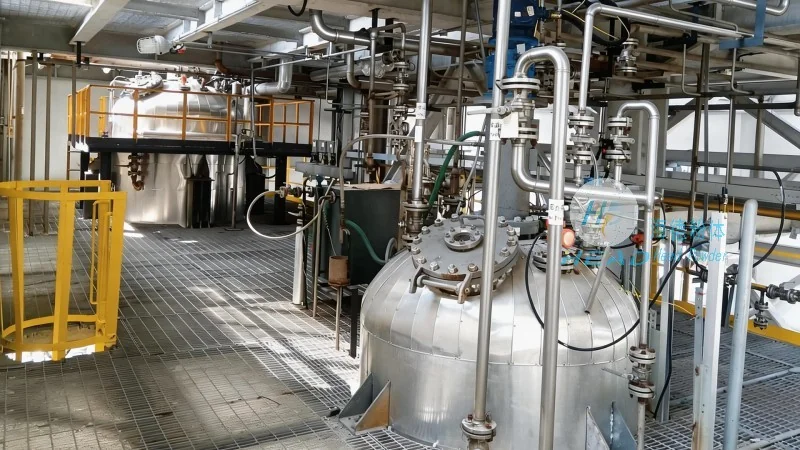
The PUR powder pneumatic conveying system is used in a wide range of industrial applications. The most common applications include the transportation of polyurethane (PUR) powders in the manufacturing of foams, coatings, and adhesives. The system is also used in the food and pharmaceutical industries to transport powders such as sugar, flour, and vitamins. In addition, the system is used in the chemical and petrochemical industries to transport powders such as pigments, fillers, and catalysts. The system is also used in the mining and mineral processing industries to transport powders such as ores and minerals. The versatility of the PUR powder pneumatic conveying system makes it suitable for a wide range of industrial applications.
Conclusion
In conclusion, the PUR powder pneumatic conveying system is a versatile and efficient solution for transporting polyurethane (PUR) powders and other difficult-to-handle materials. The system, developed by Shandong HeadPowder Engineering Co., Ltd., a leading manufacturer based in China, is designed based on several fundamental principles to ensure efficient and safe operation. The system consists of several key components, each playing a critical role in the overall operation. The advantages of using this system include its ability to handle difficult materials, its flexibility, its efficiency, its safety, and its reliability. The system is used in a wide range of industrial applications, including the manufacturing of foams, coatings, and adhesives, as well as in the food, pharmaceutical, chemical, and mining industries. For industries seeking to optimize their material handling processes, the PUR powder pneumatic conveying system is an ideal choice.