

What is a Desulfurization and Denitrification Agent Material Pneumatic Conveying Line? Design Princi
For industrial facilities involved in flue gas treatment, the efficient and reliable transport of desulfurization and denitrification agents is crucial. A pneumatic conveying line specifically designed for these materials offers a solution that combines performance with operational safety. This article explores the concept of a desulfurization and denitrification agent material pneumatic conveying line, detailing its design principles and the technical considerations that ensure optimal performance.
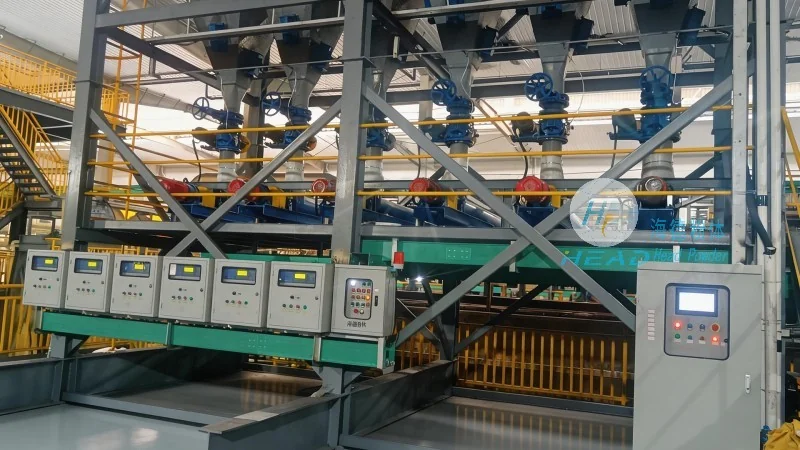
Understanding the Role of Pneumatic Conveying in Desulfurization and Denitrification Processes
In modern power plants and industrial facilities, the removal of sulfur dioxide (SO₂) and nitrogen oxides (NOₓ) from exhaust gases is a critical step in environmental compliance. Desulfurization and denitrification agents, such as limestone slurry or ammonia solutions, are essential reagents in these processes. Transporting these agents from storage to the reaction points within the flue gas treatment system requires a method that minimizes material degradation, ensures consistent flow rates, and maintains system integrity. Pneumatic conveying technology addresses these challenges by using compressed air or other gases to move powders and bulk materials through a pipeline network.
Introduction to HeadPowder Engineering: A Specialist in Pneumatic Conveying Solutions
HeadPowder, operating as Shandong HeadPowder Engineering Co., Ltd., is a leading provider of customized pneumatic conveying systems tailored to the unique demands of desulfurization and denitrification applications. With a base in Shandong, China, the company leverages over two decades of industry experience to design, manufacture, and install high-performance conveying lines that meet the stringent requirements of modern flue gas treatment plants. HeadPowder’s expertise lies in integrating advanced engineering principles with practical operational needs, ensuring that each system is optimized for efficiency, durability, and low maintenance.
Design Principles of a Desulfurization and Denitrification Agent Material Pneumatic Conveying Line
The design of a pneumatic conveying line for desulfurization and denitrification agents involves several key principles that balance material handling efficiency with system reliability. The first consideration is the selection of the appropriate conveying method, typically categorized as dilute-phase or dense-phase. Dilute-phase systems use low air-to-material ratios, suitable for fine powders and requiring higher air velocities to maintain flow. Dense-phase systems, on the other hand, employ higher material concentrations and lower air velocities, ideal for handling larger particles or sensitive materials that require gentler transport. For desulfurization agents like limestone slurry, a combination of both methods may be employed, with dilute-phase for the initial transport and dense-phase for final delivery to the reactor.
Another critical design principle is the selection of materials for the conveying pipeline and components. Since desulfurization and denitrification agents are often alkaline or corrosive, the pipeline must be constructed from materials resistant to chemical attack, such as stainless steel or specialized alloys. Additionally, components like cyclones, separators, and filters must be designed to handle the specific properties of the agent, including particle size distribution and moisture content. HeadPowder engineers carefully evaluate these factors to select components that ensure long-term performance and minimal downtime.
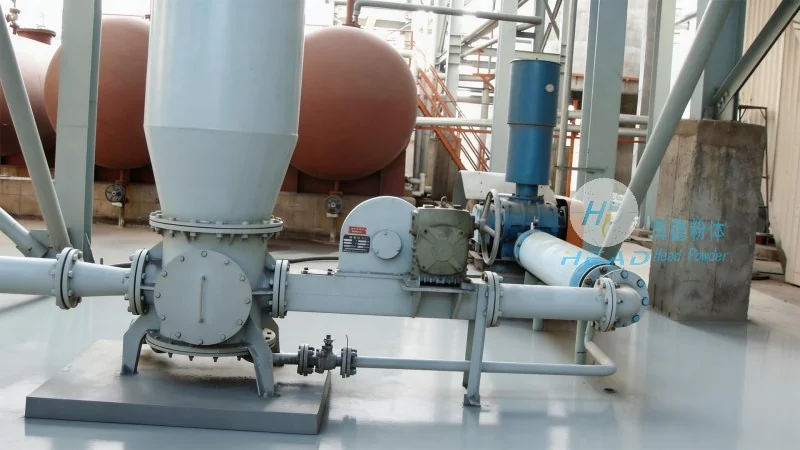
Key Components and Their Functions in the Conveying System
A typical desulfurization and denitrification agent material pneumatic conveying line consists of several interconnected components, each playing a vital role in the overall operation. The system begins with a material feed hopper, which stores the desulfurization agent and regulates the flow rate into the conveying line. From the hopper, the material is fed into a feeder, such as a rotary valve or a screw feeder, which meters the material into the pipeline at a consistent rate. The feeder is connected to a compressor or blower that generates the necessary air pressure to move the material through the pipeline.
The pipeline itself is a network of straight sections and fittings, including elbows, tees, and reducers, designed to guide the material and air mixture to the destination point. At the receiving end, the system includes a separator or cyclone, which separates the material from the air stream and directs the material to the next processing stage. Filters are also included to capture any fine particles that may have escaped the separator, preventing contamination of downstream equipment. Finally, the air is discharged through a vent or a dust collector, which may be equipped with a scrubber to remove any residual pollutants before releasing the air to the atmosphere.
Advantages of Using a Pneumatic Conveying Line for Desulfurization Agents
Implementing a pneumatic conveying line for desulfurization and denitrification agents offers several advantages over traditional methods like bucket elevators or belt conveyors. One of the primary benefits is the ability to transport materials in a closed system, which minimizes dust emissions and protects the environment from contamination. This is particularly important for agents that are fine powders or have high moisture content, as open systems can lead to material loss and increased maintenance costs. Additionally, pneumatic conveying allows for precise control over flow rates and pressure, ensuring consistent delivery of the agent to the reaction point, which is critical for maintaining optimal performance in the flue gas treatment process.
Another advantage is the reduced risk of material degradation. Unlike mechanical conveyors, which can cause attrition or agglomeration of the material, pneumatic systems use air to move the material, minimizing physical stress. This is especially beneficial for desulfurization agents that are sensitive to moisture or temperature changes, as the enclosed system helps maintain stable conditions throughout the transport process. Furthermore, the compact design of pneumatic conveying lines allows for easier integration into existing plant layouts, reducing the need for extensive modifications and minimizing construction time.
Customization and Scalability: Meeting the Specific Needs of Each Facility
HeadPowder Engineering recognizes that every flue gas treatment plant has unique requirements, and therefore, offers fully customizable pneumatic conveying solutions. The company works closely with clients to understand their specific process parameters, including the type and quantity of desulfurization agents, the distance to be covered, and the desired flow rates. Based on this information, HeadPowder’s engineers design a system that is tailored to the client’s needs, ensuring optimal performance and cost-effectiveness. The systems can be scaled from small, low-capacity lines for laboratory or pilot plants to large, high-capacity lines for full-scale industrial facilities, making them suitable for a wide range of applications.
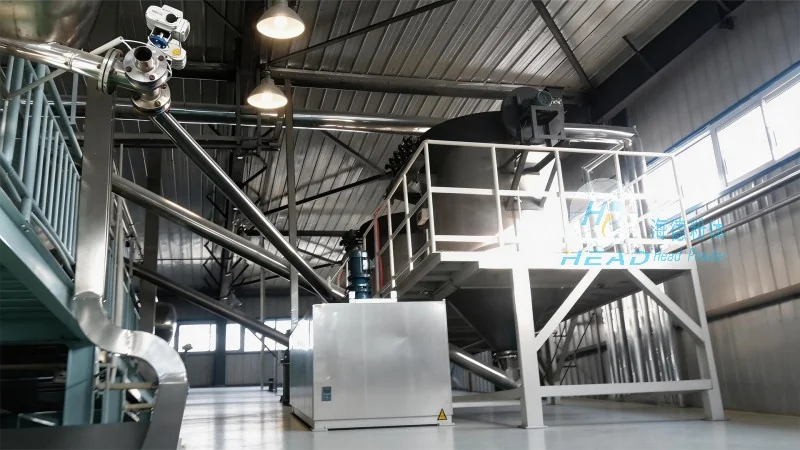
Customization also extends to the selection of components and materials. For example, if a facility handles a highly abrasive agent, HeadPowder may recommend using wear-resistant liners or special coatings on the pipeline to extend the system’s lifespan. Similarly, if the plant operates in a cold climate, the system may include heating elements to prevent the agent from freezing or clogging the pipeline. This level of customization ensures that the conveying line is not only efficient but also durable and reliable, providing long-term value to the client.
Maintenance and Operational Considerations
While pneumatic conveying lines offer many advantages, proper maintenance is essential to ensure their continued performance. HeadPowder provides comprehensive maintenance services and recommendations to clients, including regular inspection of components, cleaning of filters and separators, and replacement of worn parts. The company also offers training programs for facility operators to ensure they understand how to operate and maintain the system effectively, minimizing downtime and maximizing efficiency.
Operational considerations also include the management of air pressure and flow rates. Proper monitoring of these parameters is crucial to prevent overloading the system or causing material blockages. HeadPowder’s systems are equipped with sensors and control panels that allow operators to adjust the air pressure and flow rates in real-time, ensuring that the system operates within its optimal range. This control capability helps prevent issues such as air leaks, which can reduce conveying efficiency, or excessive pressure, which can damage components.
Conclusion: The Importance of a Well-Designed Pneumatic Conveying Line for Desulfurization and Denitrification Agents
A desulfurization and denitrification agent material pneumatic conveying line is a critical component of modern flue gas treatment systems, enabling the efficient and reliable transport of essential reagents. The design principles behind these systems, including the selection of conveying method, materials, and components, are carefully engineered to meet the specific demands of desulfurization and denitrification processes. Companies like HeadPowder Engineering, with their expertise and commitment to customization, play a vital role in providing these solutions to industrial facilities worldwide. By investing in a well-designed pneumatic conveying line, facilities can enhance their operational efficiency, reduce environmental impact, and ensure compliance with stringent environmental regulations.