

What is a Wet Nitrate Ammonium Powder Pneumatic Conveying Machine? And What Are Its Design Principle
Welcome to Shandong HeadPowder Engineering Co., Ltd., a leading manufacturer specializing in industrial conveying solutions. Based in Shandong, China, our company focuses on providing efficient and reliable equipment for the handling of various powders, including wet nitrate ammonium. This article explores the concept of a wet nitrate ammonium powder pneumatic conveying machine and delves into its design principles, highlighting the technology behind this essential industrial tool.
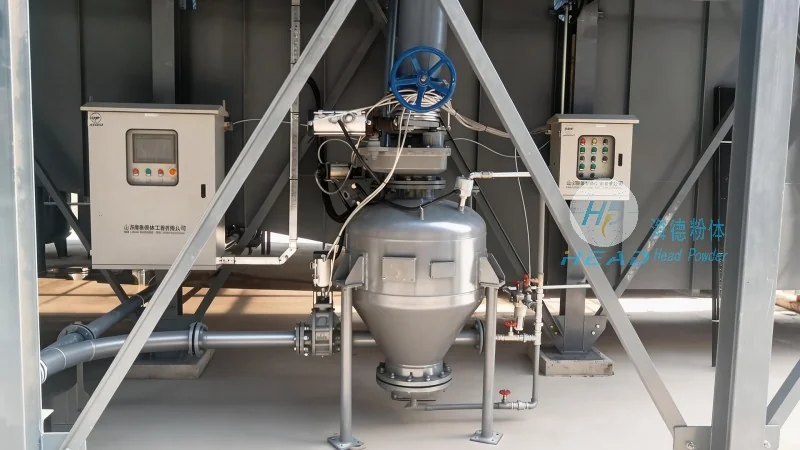
Understanding Wet Nitrate Ammonium Powder Pneumatic Conveying Machines
A wet nitrate ammonium powder pneumatic conveying machine is a specialized system designed to transport wet or slightly moist nitrate ammonium powder through a pipeline using air or gas as the conveying medium. This method is particularly advantageous for materials that are sensitive to mechanical stress or require gentle handling to prevent agglomeration or degradation. The system typically consists of a hopper for material storage, a feeder to control the flow rate, a conveying pipeline, and a receiver for the discharged material. The use of air or gas creates a low-pressure or high-pressure environment that propels the powder particles through the pipeline, ensuring a smooth and continuous transfer process.
Design Principles of Wet Nitrate Ammonium Powder Pneumatic Conveying Systems
The design of a wet nitrate ammonium powder pneumatic conveying machine is based on several key principles to ensure optimal performance and safety. First, the system must consider the physical properties of the wet nitrate ammonium powder, such as its moisture content, particle size distribution, and flowability. These characteristics influence the selection of the conveying velocity, pipeline diameter, and pressure requirements. For example, materials with higher moisture content may require higher conveying velocities to prevent blockages or caking in the pipeline. The design also incorporates considerations for the material's chemical stability, as nitrate ammonium is a sensitive compound that can degrade under certain conditions, such as high temperature or exposure to air.
Second, the system's design emphasizes the need for efficient air or gas flow management. This includes the selection of appropriate air compressors or fans, the sizing of the conveying pipeline, and the placement of check valves or flow control devices to maintain consistent pressure and flow rates. The design also addresses the issue of material separation and cleaning, as wet nitrate ammonium can leave residue in the pipeline or equipment, which may affect the system's performance over time. To mitigate this, the system may include features such as cyclone separators, filters, or cleaning mechanisms to remove excess moisture or particles from the conveying medium.
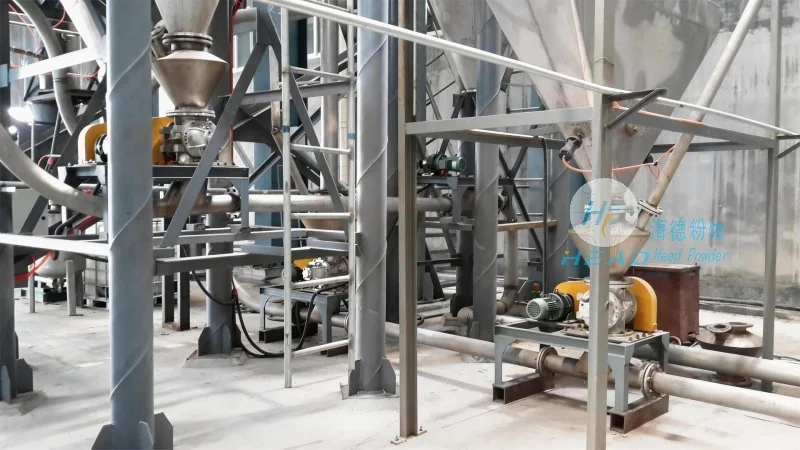
Key Components and Their Functions in the Conveying Machine
The wet nitrate ammonium powder pneumatic conveying machine comprises several critical components, each playing a vital role in the overall operation. The hopper serves as the storage vessel, holding the wet nitrate ammonium powder and providing a controlled feed to the system. The feeder, often a rotary valve or a screw feeder, regulates the flow rate of the material into the conveying pipeline, ensuring a consistent and uniform transfer. The conveying pipeline is typically made of corrosion-resistant materials, such as stainless steel or plastic, to withstand the chemical properties of the wet nitrate ammonium and prevent degradation over time. The pipeline may include bends, elbows, or expansion joints to accommodate changes in direction or elevation, while maintaining the integrity of the material flow.
The air or gas source, such as a blower or compressor, generates the pressure needed to move the powder through the pipeline. The pressure level is carefully selected based on the material's properties and the system's design, ensuring that the conveying velocity is sufficient to prevent blockages but not excessive, which could cause wear and tear on the equipment. The receiver, or discharge hopper, collects the conveyed material and may include a discharge valve or a conveyor to transfer the material to the next processing stage. Additionally, the system may include monitoring and control devices, such as pressure gauges, flow meters, or level sensors, to ensure the system operates within safe and efficient parameters.
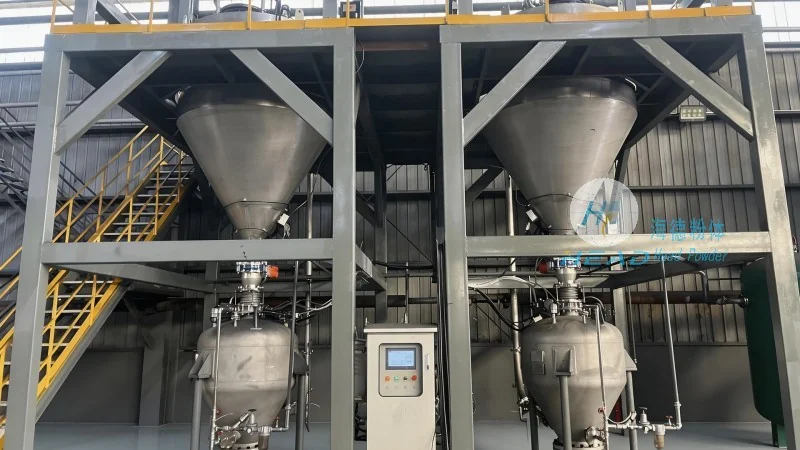
Advantages of Using Wet Nitrate Ammonium Powder Pneumatic Conveying Machines
Implementing a wet nitrate ammonium powder pneumatic conveying machine offers several advantages over traditional mechanical conveying methods. First, the system provides a gentle and non-contact handling of the material, reducing the risk of agglomeration or degradation caused by mechanical stress or friction. This is particularly important for wet nitrate ammonium, which can easily form clumps or lose its properties if not handled carefully. Second, the pneumatic conveying system allows for a continuous and automated transfer of material, improving production efficiency and reducing labor costs. The system can be integrated with other processing equipment, such as mixers or reactors, to create a seamless production line. Third, the system offers flexibility in terms of material handling, as it can transport the wet nitrate ammonium powder over long distances or through complex layouts, without the need for multiple transfer points or equipment. Finally, the system is relatively easy to maintain and clean, as the pipeline and equipment can be designed with features that facilitate regular maintenance and prevent the buildup of residue.
Applications and Industries Utilizing Wet Nitrate Ammonium Powder Pneumatic Conveying Machines
The wet nitrate ammonium powder pneumatic conveying machine is widely used in various industries that require the handling of nitrate ammonium, including the fertilizer industry, chemical manufacturing, and food processing. In the fertilizer industry, the system is used to transport wet nitrate ammonium from storage facilities to production lines, where it is mixed with other ingredients to create fertilizer products. The gentle handling of the material ensures that the fertilizer's quality is maintained, and the system's efficiency reduces production costs. In chemical manufacturing, the system is used to transport wet nitrate ammonium to reactors or processing units, where it is used as a raw material for the production of other chemicals. The system's ability to handle wet materials without degradation is crucial in these applications. In food processing, the system may be used to transport wet nitrate ammonium used as a food additive or preservative, ensuring that the material is handled safely and hygienically.
Conclusion and Future Developments
Wet nitrate ammonium powder pneumatic conveying machines are essential equipment for industries that handle sensitive materials, offering efficient, gentle, and reliable transport solutions. The design principles behind these systems focus on the material's properties, air or gas flow management, and system maintenance to ensure optimal performance. As technology advances, future developments may include more advanced materials for the pipeline and equipment, improved control systems, and more energy-efficient designs. However, the core principles of pneumatic conveying will remain relevant, as they provide a reliable and effective method for handling wet nitrate ammonium powder. Shandong HeadPowder Engineering Co., Ltd. continues to innovate and provide high-quality conveying solutions to meet the evolving needs of the industry.