For industrial applications involving the transport of fine coal powder, efficient and reliable pneumatic conveying systems are essential. These systems utilize air or gas to move powders through pipelines, offering advantages such as reduced dust, minimal maintenance, and the ability to handle materials in a closed environment. The following content will explore the operation process and working principles of such systems, with a focus on the technology provided by Shandong HeadPowder Engineering Co., Ltd., a leading manufacturer in the field.
Key Components of Pneumatic Conveying Lines
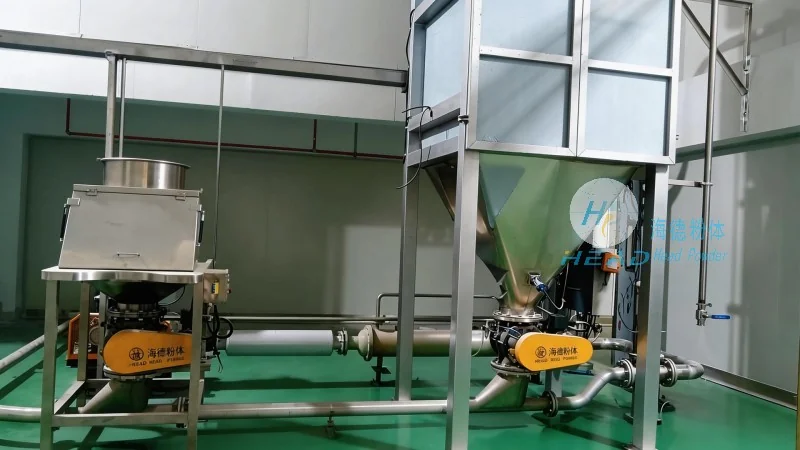
A typical fine coal powder pneumatic conveying line consists of several critical components that work in concert to ensure smooth material transport. These include the material hopper, feeder, air compressor, conveying pipeline, and discharge device. The material hopper is designed to store the coal powder and provide a consistent feed to the system. The feeder, often a rotary valve or screw feeder, controls the flow rate of the powder into the pipeline. The air compressor generates the necessary pressure or vacuum to move the material through the system. The conveying pipeline, usually made of stainless steel or other corrosion-resistant materials, ensures the material is transported safely and efficiently. Finally, the discharge device, such as a rotary valve or cyclone separator, collects the material at the destination.
Operation Process of the Pneumatic Conveying Line
The operation process of a fine coal powder pneumatic conveying line involves several sequential steps. First, the coal powder is loaded into the material hopper. The feeder then regulates the flow of powder into the pipeline, ensuring a steady supply. The air compressor starts and generates the required air pressure, which is then introduced into the pipeline. As the air flows through the pipeline, it entrains the coal powder particles, forming a suspension that moves along the pipeline. The conveying system can operate under either positive pressure (where air pushes the material) or negative pressure (where air pulls the material). The material travels through the pipeline until it reaches the discharge point, where the air and powder are separated. The separated powder is collected, and the air is either vented or recycled back into the system. This process is continuous and can be automated to maintain consistent material flow rates.
Working Principle of the Pneumatic Conveying System
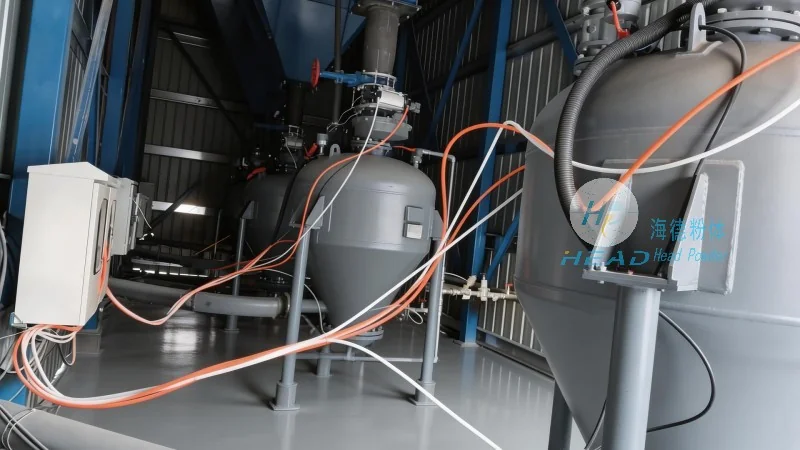
The working principle of a fine coal powder pneumatic conveying system is based on the physics of fluid dynamics and particle motion. When air is introduced into the pipeline, it creates a pressure difference that propels the coal powder particles. The key to efficient conveying is the balance between the air velocity and the particle size. If the air velocity is too low, the powder may settle and cause blockages; if it is too high, excessive energy consumption occurs. The system must be designed to maintain an optimal air-to-powder ratio to ensure smooth transport. Additionally, the pipeline design, including bends and fittings, is crucial to minimize pressure losses and prevent material deposition. The use of appropriate materials for the pipeline and components is also vital to prevent corrosion and ensure long-term reliability.
Advantages of Pneumatic Conveying for Fine Coal Powder
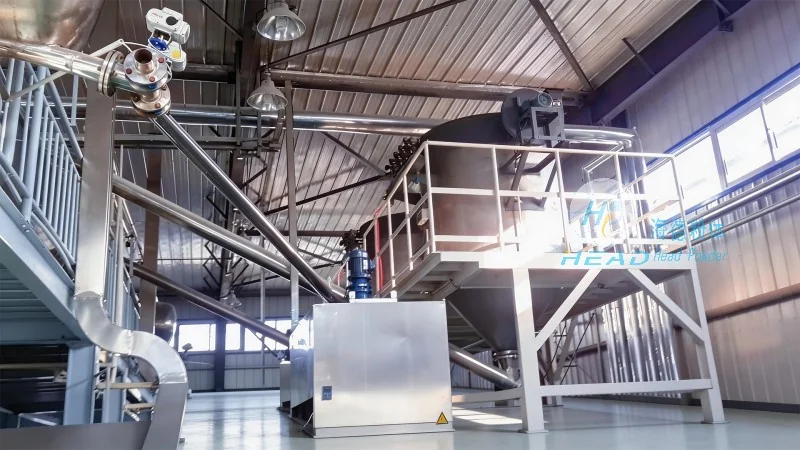
Compared to traditional mechanical conveying methods, pneumatic conveying offers several advantages for handling fine coal powder. These include reduced dust emissions, as the material is contained within the pipeline, minimizing environmental impact. The closed system also prevents contamination from external sources, ensuring the purity of the coal powder. Additionally, pneumatic conveying systems are more flexible in terms of layout, as they can be installed in various configurations without the need for complex machinery. The system is also relatively easy to maintain, with fewer moving parts compared to mechanical conveyors. Overall, pneumatic conveying provides a cost-effective and efficient solution for transporting fine coal powder in industrial settings.
Applications and Industries
Fine coal powder pneumatic conveying systems are widely used in various industries, including power generation, cement production, and chemical processing. In power plants, these systems are used to transport coal from storage to boilers, ensuring a continuous supply of fuel. In cement plants, the system transports raw materials such as limestone and coal to the grinding mills. In chemical industries, the system handles fine powders used in manufacturing processes. The versatility of the system makes it suitable for a wide range of applications where efficient and reliable material transport is critical.




