

Operation Process and Working Principle of Waste Pneumatic Conveying Equipment
Waste management is a critical aspect of urban and industrial operations, and efficient material handling is essential for maintaining cleanliness and operational efficiency. Pneumatic conveying systems, particularly those designed for waste handling, offer a reliable and effective solution for transporting bulk materials like solid waste over short to medium distances. This article delves into the operation process and working principle of waste pneumatic conveying equipment, highlighting the key components, mechanisms, and benefits of such systems.
Key Components of Pneumatic Conveying Systems
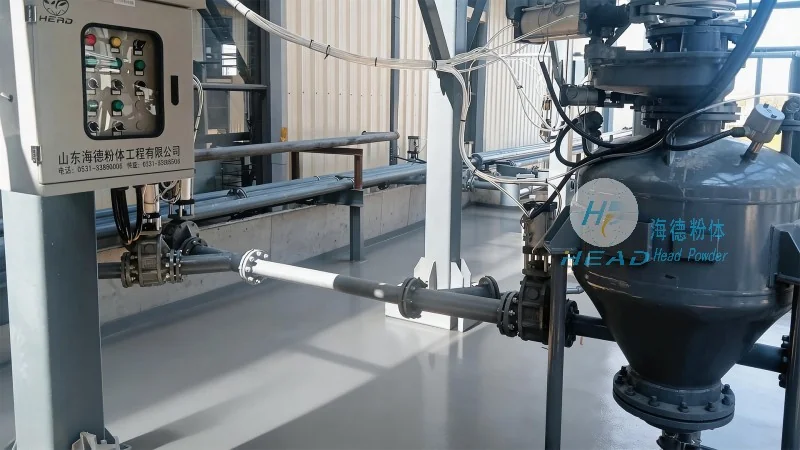
At the core of any pneumatic conveying system is a series of interconnected components that work in tandem to move materials. For waste handling applications, the typical components include a hopper or feeder for material input, a blower or air compressor to generate the air flow, a pipeline network to transport the material, and a receiver or discharge point for the waste. The choice of components depends on the specific characteristics of the waste material, such as particle size, moisture content, and density, as well as the distance and layout of the conveying route.
Working Principle of Pneumatic Conveying
The fundamental principle behind pneumatic conveying is the use of air pressure to transport solid materials. In a typical system, the waste material is fed into the hopper, where it is then drawn into the pipeline by the moving air stream. The air, often supplied by a high-pressure blower, creates a low-pressure zone in the pipeline, which pulls the material particles along with it. This process, known as suction or negative pressure conveying, is particularly effective for fine or dry waste materials. Alternatively, positive pressure conveying uses a blower to push the air and material through the pipeline, which is suitable for heavier or more abrasive materials. The system may also incorporate features like cyclones or filters to separate the material from the air at the discharge point, ensuring that the waste is deposited in the intended location without contamination.
Operation Process of Waste Pneumatic Conveying
The operation process of a waste pneumatic conveying system involves several sequential steps. First, the waste is collected and deposited into the hopper or feeder. The feeder then regulates the flow of material into the pipeline, ensuring a consistent feed rate. Next, the blower or air compressor activates, generating the necessary air pressure to initiate the conveying process. As the air flows through the pipeline, it carries the waste particles, moving them from the inlet to the outlet. At the discharge point, the system may use a cyclone separator to separate the material from the air, allowing the waste to be deposited into a container or processing unit. The air, now free of solid particles, is either vented to the atmosphere or recirculated back into the system, depending on the design and environmental considerations.
Benefits and Applications of Waste Pneumatic Conveying
Waste pneumatic conveying systems offer several advantages over traditional methods like trucks or conveyor belts. These include reduced labor costs, as the system can operate automatically with minimal human intervention; improved safety, as the material is contained within the pipeline, minimizing exposure to workers; and enhanced efficiency, as the system can transport materials over longer distances with less downtime. The technology is widely used in municipal waste management, industrial waste processing, and recycling facilities, where it is essential for moving bulk waste from collection points to treatment or disposal sites.
Company Profile: Shandong HeadPowder Engineering Co., Ltd.
As a leading manufacturer of pneumatic conveying equipment, Shandong HeadPowder Engineering Co., Ltd. specializes in providing customized solutions for waste handling applications. With a focus on innovation and quality, the company has developed advanced systems that meet the diverse needs of waste management industries. HeadPowder's products are designed to be durable, efficient, and environmentally friendly, ensuring that they contribute to sustainable waste management practices. The company's headquarters is located in Shandong, China, where it operates a state-of-the-art manufacturing facility and a dedicated research and development team.