

Role of Pneumatic Conveying in the Transport of Desulfurization Sodium Bicarbonate
Desulfurization processes in modern power plants and industrial facilities rely heavily on the efficient handling of sodium bicarbonate, a critical reagent used to neutralize flue gas emissions. The transport of this material from storage to the reaction point is a key operational step that directly impacts overall plant efficiency and environmental compliance. Pneumatic conveying technology has emerged as a preferred solution for this application due to its ability to handle bulk materials like sodium bicarbonate with precision and reliability.
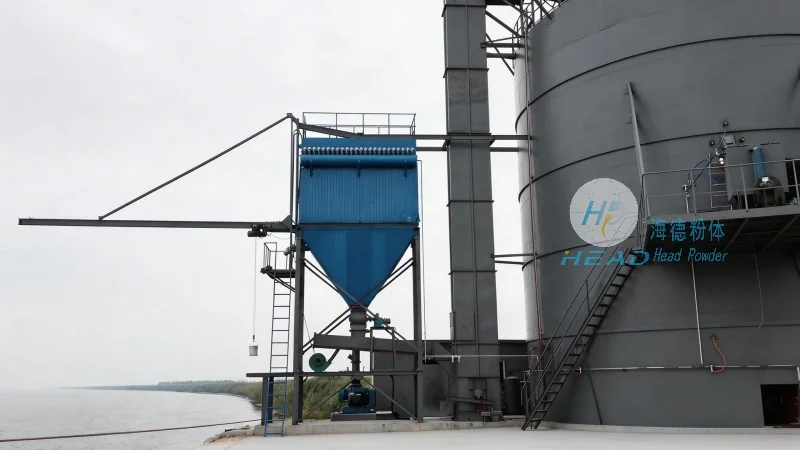
Understanding Pneumatic Conveying Systems
Pneumatic conveying systems utilize air or gas to transport bulk materials through a pipeline network. These systems can be categorized into two main types: dilute phase and dense phase. Dilute phase systems operate at higher velocities, typically using low-pressure air to move material in a suspended state, while dense phase systems use higher pressure and lower velocity to move material in a plug flow, reducing the risk of material degradation and pipeline wear. For sodium bicarbonate, which is a fine, powdery substance, a dilute phase system is often preferred as it ensures consistent flow and minimal product degradation during transport.
The Role of Pneumatic Conveying in Desulfurization
In desulfurization processes, sodium bicarbonate is used as a sorbent to capture sulfur dioxide (SO₂) from flue gases. The efficiency of this process depends on the accurate and timely delivery of the sodium bicarbonate to the absorber tower. Pneumatic conveying systems offer several advantages in this context. First, they provide a closed-loop system that prevents dust emissions and contamination, which is essential for maintaining environmental standards and plant safety. Second, these systems can be integrated with automated control systems to regulate the flow rate and pressure, ensuring that the exact amount of sodium bicarbonate is delivered as needed. This precision helps optimize the desulfurization reaction, reducing the overall chemical consumption and operational costs.
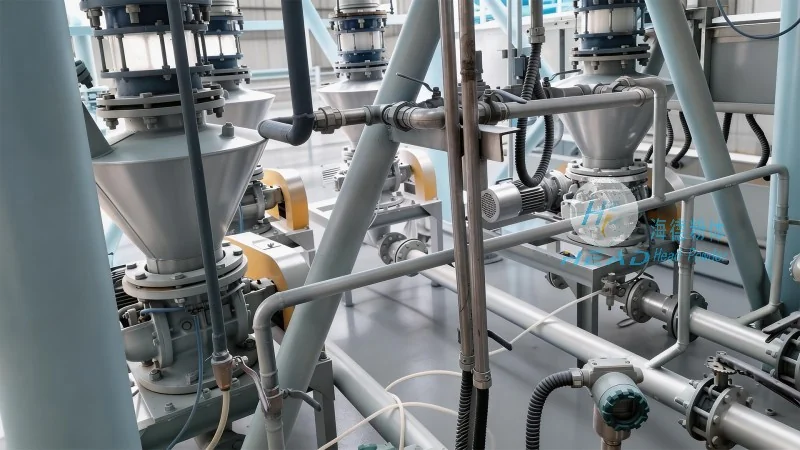
Key Benefits for Sodium Bicarbonate Transport
Implementing pneumatic conveying for sodium bicarbonate transport brings numerous benefits. One of the most significant advantages is the reduction in material handling time and labor costs. Unlike traditional methods such as bucket elevators or belt conveyors, pneumatic systems can transport material over long distances with minimal intermediate storage, streamlining the overall process. Additionally, pneumatic conveying reduces the risk of material caking or agglomeration, which can occur with other transport methods, ensuring that the sodium bicarbonate remains in a free-flowing state throughout the transport process. This consistency is crucial for maintaining the effectiveness of the desulfurization reaction.
System Design and Integration
The design of a pneumatic conveying system for sodium bicarbonate must consider several factors to ensure optimal performance. Material properties, such as particle size, density, and moisture content, are critical in determining the appropriate system configuration. For example, fine particles like sodium bicarbonate may require higher air velocities to prevent blockages in the pipeline. The system must also be equipped with appropriate filters and cyclones to separate the material from the air stream, preventing dust accumulation and maintaining air quality. Furthermore, the integration of the pneumatic system with the desulfurization plant's control system is essential for real-time monitoring and adjustment of the transport parameters. This integration ensures that the system operates efficiently and adapts to changing operational conditions, such as variations in flue gas flow or SO₂ concentration.
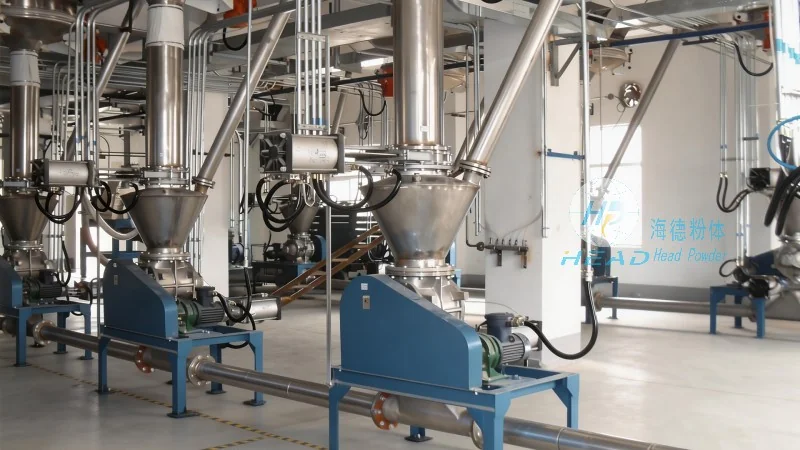
Case Study: Application in a Power Plant
Shandong HeadPowder Engineering Co., Ltd. has successfully implemented a pneumatic conveying system for sodium bicarbonate transport in a large thermal power plant. The system was designed to transport 200 tons of sodium bicarbonate per day from a storage silo to the desulfurization absorber tower, covering a distance of 500 meters. The dilute phase system used in this application operates at a pressure of 0.6 MPa and an air velocity of 20 m/s, ensuring a smooth and continuous flow of the material. The system has been in operation for over two years, achieving a material transfer efficiency of over 98% and maintaining consistent material quality. The plant has reported a reduction in operational costs by approximately 15% due to the reduced labor and maintenance requirements of the pneumatic system compared to traditional methods.
Conclusion and Future Outlook
Pneumatic conveying technology plays a vital role in the efficient transport of sodium bicarbonate for desulfurization applications. By leveraging the advantages of closed-loop systems, automated control, and precise material handling, these systems enhance the overall performance of desulfurization processes while minimizing environmental impact and operational costs. As industrial facilities continue to adopt more stringent environmental regulations, the demand for efficient and reliable material transport solutions like pneumatic conveying is expected to grow. Companies like Shandong HeadPowder Engineering Co., Ltd. are at the forefront of developing and implementing such systems, providing tailored solutions that meet the specific needs of modern desulfurization plants.