

Analysis of Pneumatic Conveying Technology for Lithium-Ion Battery Cathode Materials: Comparison of
Pneumatic conveying technology plays a crucial role in the efficient and safe handling of lithium-ion battery cathode materials. As the demand for high-performance battery materials grows, the selection of appropriate conveying methods becomes critical to ensure process reliability and material integrity. This article provides a detailed analysis of two primary pneumatic conveying modes—positive pressure and negative pressure systems—used in the processing of lithium-ion battery cathode powders, with a focus on their operational principles, advantages, and practical applications.
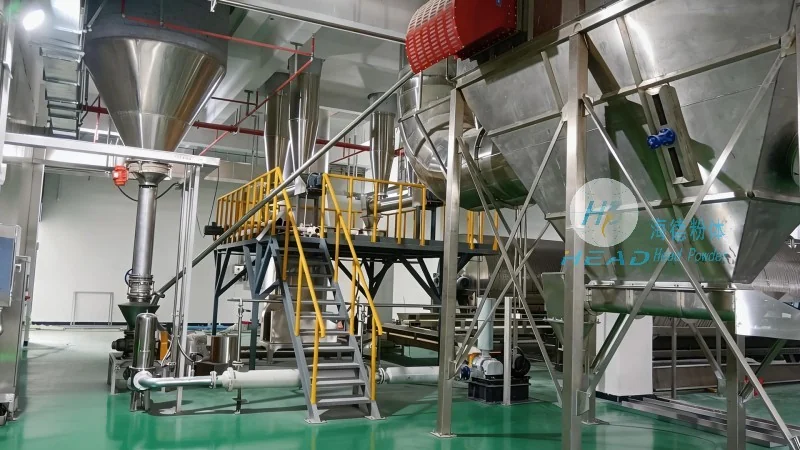
HeadPowder, a leading engineering company based in Shandong, China, specializes in the design and implementation of advanced material handling solutions for the battery industry. With years of experience in the field, HeadPowder has developed tailored pneumatic conveying systems that meet the stringent requirements of cathode material processing.
Positive Pressure Pneumatic Conveying Systems
Positive pressure pneumatic conveying systems operate by blowing air or gas into the material stream, propelling the powder through the pipeline. This mode is particularly effective for conveying fine powders with low density and high moisture content, as the positive pressure helps to maintain material flow and prevent clogging. The system typically includes a blower, a hopper, and a pipeline network, with the air pressure maintained at a level sufficient to overcome the resistance of the material and the pipeline. HeadPowder's positive pressure systems are engineered to handle various cathode materials, such as lithium cobalt oxide (LCO), lithium nickel manganese cobalt oxide (NMC), and lithium iron phosphate (LFP), ensuring consistent and reliable material transport.
Negative Pressure (Vacuum) Pneumatic Conveying Systems
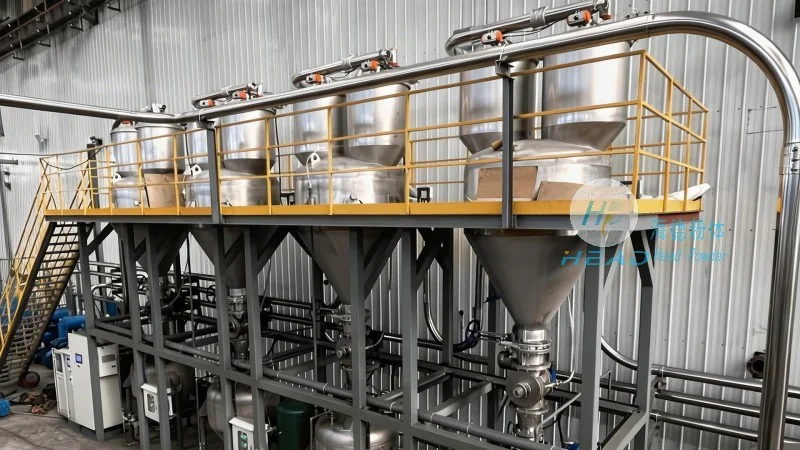
Negative pressure (or vacuum) pneumatic conveying systems, on the other hand, draw material into the pipeline using a vacuum created by a fan or ejector. This mode is ideal for applications where material contamination must be minimized, as the sealed system prevents dust and particles from escaping into the environment. Negative pressure systems are commonly used for conveying materials that are sensitive to air exposure or for long-distance transport, as the vacuum can maintain a stable flow over extended distances. HeadPowder's negative pressure solutions are designed with high-efficiency filters and vacuum pumps to ensure clean and efficient material handling, suitable for cathode powders that require strict purity standards.
Comparison of Positive and Negative Pressure Modes
When comparing positive and negative pressure modes, several factors must be considered. Positive pressure systems generally offer higher conveying rates and are more suitable for short to medium-distance transport, while negative pressure systems excel in long-distance and contamination-sensitive applications. The choice of mode also depends on the specific properties of the cathode material, including particle size, density, and moisture content. For example, fine powders with high moisture content may benefit from positive pressure due to its ability to maintain flow, whereas sensitive materials like high-purity NMC may require negative pressure to prevent contamination.
Practical Applications and Case Studies
HeadPowder has successfully implemented both positive and negative pressure pneumatic conveying systems for major battery manufacturers. In one project, a positive pressure system was used to transport LFP cathode powder from a storage silo to a mixing plant, achieving a conveying rate of 10 tons per hour with minimal material loss. In another project, a negative pressure system was employed to transport LCO powder from a production line to a packaging facility, maintaining a vacuum level of 200 mmHg to ensure the material remained free of contaminants. These case studies highlight the effectiveness of HeadPowder's solutions in optimizing material handling processes and improving overall production efficiency.
Technical Advantages and Customization
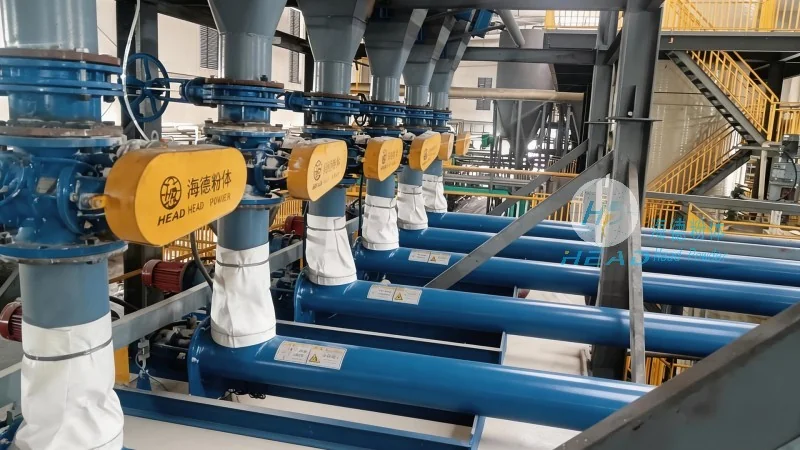
HeadPowder's pneumatic conveying systems are equipped with advanced control systems that monitor pressure, flow rate, and material level in real time. This allows for immediate adjustments to maintain optimal conveying conditions, reducing downtime and improving process reliability. The company also provides customized solutions, including material-specific pipeline designs and filtration systems, to address the unique challenges of each application. By leveraging its expertise in material engineering and process optimization, HeadPowder ensures that its systems deliver consistent performance and meet the evolving needs of the battery industry.
Conclusion
In conclusion, the selection of the appropriate pneumatic conveying mode is critical for the efficient handling of lithium-ion battery cathode materials. Positive and negative pressure systems each offer distinct advantages, and the choice depends on the specific requirements of the application. HeadPowder, with its extensive experience and advanced technology, provides reliable and customized solutions that enhance material transport efficiency, ensure material integrity, and support the growth of the battery industry.